
No Minimum Deposit Casino UK: What £1 Really Means
 Available in GB
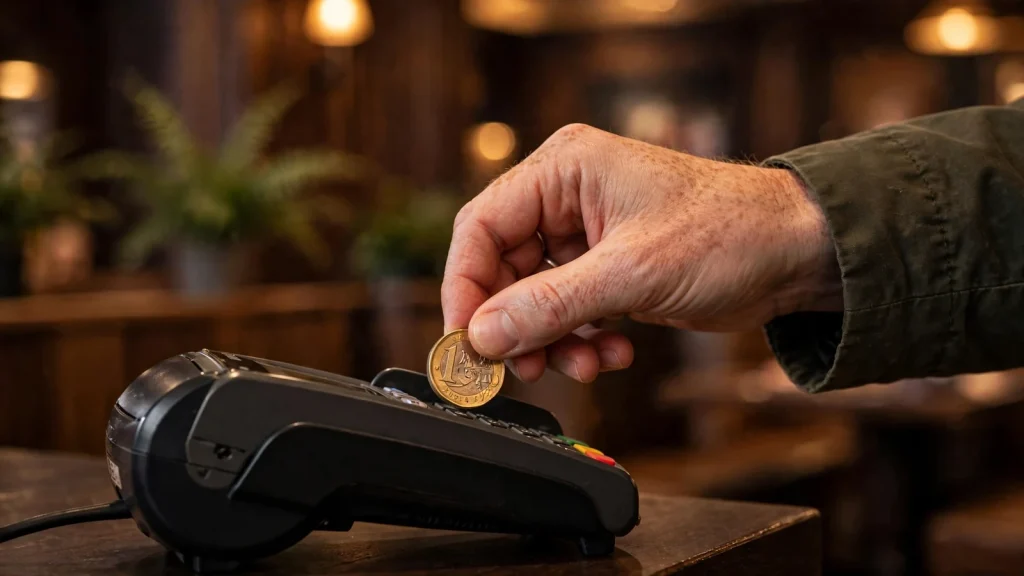
A £1 cashier minimum does not guarantee bonus eligibility, and the amount needed to withdraw can be higher than the deposit.
What a £1 Minimum Deposit Actually Means
A £1 minimum deposit is a cashier rule, not a promise of free play. It means the account can be funded with £1 when that payment route is selected and the operator accepts the transaction. The money is deposited cash: it belongs to the account balance and can be used according to the casino’s normal rules.
That is different from a casino with “no minimum deposit”. In a real-money account, some funding is generally required before cash play can begin. The phrase often describes a very low entry threshold, or it is used loosely around a promotion that does not require an initial deposit. Those are separate arrangements and should not be treated as interchangeable.
I have seen the distinction cause trouble at the cashier stage. A page may advertise a £1 minimum deposit, while the offer attached to the same page starts at a higher qualifying amount. The cashier accepts the smaller payment; the promotion does not.
Cashier minimum versus qualifying deposit
The cashier minimum is the smallest amount the operator allows through a particular deposit route. It answers a narrow question: how much money must be sent to put funds into the gambling account?
A qualifying deposit is an offer condition. It answers a different question: how much must be deposited, and sometimes by which method, to trigger bonus funds, free spins or another incentive?
The two figures can therefore differ:
- a £1 payment may be accepted as account funding;
- a welcome offer may require a deposit between £5 and £10;
- an offer may specify a qualifying deposit of £10 even where the cashier accepts £5.
The £1 payment still reaches the account in the first example, but it does not unlock the welcome deal. Calling that a failed deposit would be wrong. Calling it a bonus-eligible deposit would also be wrong. It has passed one test and failed another.
This is why the wording “minimum deposit” needs careful reading. On a cashier screen, it normally refers to the funding threshold. In promotional terms, the relevant phrase is more likely to be “minimum qualifying deposit” or similar language. The difference is commercial, not cosmetic: the operator is separating access to the account from eligibility for an incentive.
What a £1 account can and cannot establish
A low cashier minimum confirms only that the account can be funded at that level under the stated conditions. It does not establish that every payment method will accept the same amount, that the deposit will count towards a promotion, or that any later account action will use the same threshold.
Nor does a £1 deposit turn bonus money into cash. Promotional funds remain subject to their own rules, including wagering requirements, eligible games and any restrictions in the offer terms. Those conditions apply because the deposit has been linked to an incentive, not because the original payment was small.
The cleanest way to read the arrangement is to separate the account into two questions:
- Can the cashier accept the payment?
- Does that payment meet the offer’s qualifying conditions?
Only the first question is answered by a £1 minimum deposit.
A specialist review reported six UK Gambling Commission-licensed casinos as accepting genuine £1 minimum deposits, and identified NetBet as the only UKGC-listed casino in that particular list with a £1 cashier minimum. That is a dated market check rather than a permanent description of every UK account. Operators can alter cashier settings, and the amount shown after selecting a payment route is the operative detail.
Why the wording matters
Promotional pages often use “low entry” language because it sounds broader than the cashier rule actually is. From the operator’s side, the structure is straightforward: a small deposit lowers the barrier to opening funded play, while a higher qualifying deposit protects the economics of the welcome offer.
The same account can therefore display all of the following without contradiction:
- a low minimum deposit;
- a higher minimum qualifying deposit;
- bonus terms that apply only after activation;
- separate rules for withdrawing funds or bonus winnings.
Only the first item concerns the amount required to fund the account. The rest belongs to a different layer of the account’s terms.
The practical mistake is to see the smallest figure and assume it governs everything. It does not. A £1 deposit may be useful for testing whether an account accepts a small payment, but it should not be described as a way to claim an offer unless the promotion explicitly says so.
Read the cashier and the promotion separately. That is the whole mechanism.
Top online casinos in the UK
- Revery PlayBonus: 100% up to€1,000+ 100 FS · Payout speed: 1-3 business days
- ChanzeBonus: Slots Welcome Bonus #1 200% up to €500 · Payout speed: 1-3 business days
- SlotoSportBonus: 500% up to £ 10 200+ 777 FS · Payout speed: 1-3 business days
- AmunbetBonus: Join now and get 450% up to 2,700 GBP + 450 FS · Payout speed: 1-3 business days
- NightLuckBonus: Welcome Pack + 805% Up To 6400€ + 280 FS · Payout speed: 1-3 business days
- BritsinoBonus: Welcome Package – Get your £2,200 + 2,000 FS · Payout speed: 1-3 business days
Bitcoin Casinos and the UK Deposit Question
Bitcoin wording often makes a casino offer sound simpler than it is. A search for a Bitcoin casino with no minimum deposit may describe two separate interests: using cryptocurrency and finding a very small cashier minimum. Those are not the same feature, and one does not prove the other.
For British customers, the relevant question is whether the operator holds a current licence from the UK Gambling Commission. Remote gambling operators serving Great Britain must have that licence, wherever the business itself is located. An offshore casino may accept Bitcoin and advertise no minimum deposit, but it sits outside the UKGC regulatory system. That status should not be confused with a UK-licensed casino offering.
Remote gambling operators serving Great Britain must hold a licence from the UK Gambling Commission, regardless of where the business itself is located.
Bitcoin acceptance does not establish a £1 cashier minimum
A payment logo or cryptocurrency reference says how an account may be funded. It does not establish the smallest amount accepted by the cashier. Minimums can be set by the operator, the payment route, or both. A Bitcoin casino may therefore promote digital-asset deposits without accepting a £1 transaction, while a UK-licensed casino may accept £1 through another route without accepting Bitcoin at all.
That distinction matters because “no minimum deposit” is often used loosely. In a strict sense, a casino cannot offer real-money play without some balance entering the account. The phrase may instead refer to a very low cashier minimum, a bonus that does not require a deposit, or promotional free play. Each description carries different conditions.
I have seen the payment brand become the headline while the cashier rules sit several clicks away. That is where the confusion starts.
What can be stated about UK-licensed operators
A specialist review identified six UKGC-licensed casinos that accepted genuine £1 minimum deposits at the time it was checked. The same review listed NetBet as the only UKGC-listed casino in that group with a £1 cashier minimum. This is a dated market observation, not a permanent description of every British casino or every payment channel.
£3 Minimum Deposit Casinos in the UK: How It Works · Same Day Payout Casinos in the UK: How Timing Works
The important wording is “cashier minimum”. It describes the amount needed to submit a deposit, not the amount needed to receive a welcome offer and not the amount that every available payment method must accept. A casino can display a £1 option for one route while applying another minimum elsewhere.
That is why a claim about a “no minimum deposit Bitcoin casino UK” cannot be inferred from a list of low-deposit UK operators. The listed operator may not accept Bitcoin, and a Bitcoin casino may not be authorised for British customers. The two claims require separate checks.
Offshore Bitcoin casinos are a different category
Offshore casinos operate without a UKGC licence. They may be freely accessible from Britain, and playing there does not itself create a fine or criminal prosecution for the player. However, they are not UK-regulated casinos. Advertising real-money gambling to the British market is restricted to operators holding the relevant local licence.
Regulatory Status
Offshore casinos operate without a UKGC licence. While accessible, they are not part of the UK regulatory system.
This also affects the meaning of safety language around a low deposit. A small amount does not turn an offshore site into a UK-licensed operator. Nor does Bitcoin change the regulatory category. Cryptocurrency is a funding method; it is not a substitute for the licence required to sell remote gambling to customers in Great Britain.
For a British account, the regulatory position comes first. Only then does the cashier minimum become a useful comparison.
“No minimum” can describe different arrangements
Several phrases used around low-deposit casino offers point to different mechanics:
- A £1 minimum deposit means the cashier accepts a deposit of that value.
- No-deposit play generally refers to promotional funds or free-play terms rather than unrestricted cash in an account.
- A Bitcoin casino identifies a payment or account-funding preference, not a particular deposit amount.
- A UK casino should mean an operator serving Great Britain under a current UK Gambling Commission licence.
These categories can overlap, but none automatically confirms the others. A casino may be UK-licensed and accept a £1 deposit without offering Bitcoin. Another may accept Bitcoin while being offshore. A third may advertise a no-deposit promotion that has no connection with the cashier minimum.
The wording in an advert is therefore less useful than the exact cashier rule and the operator’s licensing position. “No minimum deposit” is a marketing label until the transaction screen confirms what amount can actually be entered and whether the route is available to British customers.
Bitcoin can be relevant to the payment question, but it does not answer the UK licensing question. For the British market, a genuine low cashier minimum and a current UKGC licence are separate facts that must be treated separately.
Real-Money Play on a Small Deposit
A small deposit can be used for real-money play once it has been credited as cash to the gambling balance. The important distinction is between money that has actually been deposited and funds displayed because of a promotion. Deposited cash is the player’s balance for staking, subject to the operator’s game rules and account controls. Promotional funds are conditional: they may be restricted to particular games, linked to wagering terms or unavailable for direct withdrawal until the relevant conditions have been met.
That difference matters because “real money” does not automatically mean “bonus money”. A £1 deposit, where a UK casino accepts one, is cash available for play. It is not necessarily a welcome offer, free spins or any other incentive. A casino can let an account be funded and still treat that payment separately from promotional balances.
What a small cash balance can cover
The practical value of a small deposit depends on the stake selected for each game. On slots, many available titles allow a spin at a cost between £0.10 and £0.20. At those settings, a £1 cash balance represents a limited number of individual spins before the balance reaches zero, assuming there are no wins and no additional charges. Wins can extend play; losses reduce the balance immediately.
Understanding Stakes
On slots, many titles allow a spin at a cost between £0.10 and £0.20. A £1 cash balance represents a limited number of individual spins before the balance reaches zero, assuming there are no wins.
This is why a low minimum deposit should not be described as unlimited play in miniature. It opens access to real-money staking, but the amount of entertainment it buys is governed by the chosen stake and the results of each round. A lower stake may make the balance last longer, while a higher stake can use it quickly. The cashier threshold and the game’s stake settings are separate decisions.
I have seen these two points blurred in promotional copy. “Small entry” sounds like “small-cost session”, but the first phrase concerns the amount accepted by the cashier and the second concerns how quickly money is placed at risk. They are not interchangeable.
Deposited cash and promotional balances
A cash balance is generally the straightforward part of the account: money added through an approved funding route and then used for games. A promotional balance has another layer attached. Its availability may depend on the offer being activated, the qualifying payment, the games permitted and the operator’s rules for converting winnings into withdrawable funds.
For a player interested only in low-cost real-money play, accepting a bonus can make the account harder to read rather than more useful. The balance may show cash and bonus components together, while the terms determine which portion can be staked and how resulting winnings are treated. A £1 payment therefore should not be assumed to create bonus funds, and a bonus shown after a deposit should not be mistaken for cash with no conditions.
The cleanest comparison is simple:
- Deposited cash: money added to the account for staking.
- Promotional funds: money or game credits supplied under an offer’s rules.
- Game winnings: returns generated through play, whose treatment depends on whether the stake came from cash or promotional funds.
The labels in the cashier and wallet sections matter more than the headline attached to the offer.
Setting the spending boundary first
A small deposit is still gambling expenditure. Before the first deposit, UK-licensed operators must prompt new customers to set a financial limit and provide account-level controls for managing that limit. This is particularly relevant when the initial payment feels negligible. A low starting amount can create the impression that the session carries little financial consequence, even though repeated deposits can change the total quickly.
UK players must be at least 18 years old, and age verification is required before a customer can deposit into a gambling account. The same basic checks apply whether the intended stake is large or small. A minimum deposit is not an exemption from account controls.
From an operational standpoint, I would treat the first payment as a test of the planned budget, not as permission to keep adding funds after losses. If the balance is gone, the original spending decision has been used. Chasing it with another payment changes the budget rather than extending the original one.
What “real-money play” does not promise
The phrase “real money” describes the type of stake, not a likely outcome. A £1 deposit can fund genuine play at a qualifying UK casino, but it does not guarantee a win, a particular number of rounds or access to every game. Some titles may require a higher stake setting than the available balance allows; others may offer low-cost stake options.
Nor does a small cash deposit automatically activate an offer. The account may accept the payment for play while treating promotional eligibility as a separate matter. That separation is useful: it allows the value of the deposit to be judged by the games and stakes available, rather than by a bonus headline that may carry conditions.
Spending Boundary
A low deposit is a spending boundary, not a promise of extended play.
In practical terms, a low deposit can provide a controlled, short real-money session when the stake is kept low and the account limit reflects the intended spend. It is a spending boundary, not a promise of extended play.
Payment Methods That Can Handle a £1 Deposit
A £1 cashier minimum is not a universal feature of an online casino. It is a setting attached to the payment route shown in the cashier, and that setting can differ between operators and methods. Visa and Mastercard debit cards are accepted almost everywhere in the UK market and support low minimum deposits, making them the most straightforward starting point for a small transaction.
A debit-card payment is funded from a bank account, not credit. That distinction matters because UK gambling deposits cannot be made with credit cards, including credit-card funding routed through a money service business. E-wallets are permitted where the wallet itself is funded appropriately and does not allow credit-card money to be used for gambling. The cashier may still display a different minimum for an e-wallet than for a card.
Why the cashier minimum changes
Casino payment settings are built around processing costs, risk controls and the way a provider handles small transactions. One operator may apply the same minimum across its available methods, while another may set a higher threshold for direct banking than for cards or e-wallets. That means the phrase “£1 casino” can describe only one route in the cashier, rather than every route attached to the account.
Online Casinos That Accept SMS Deposits: How They Work · 4 Pound Minimum Deposit Casinos in the UK
A specialist review reported that the lowest UK deposit tier is £1 and is uncommon, with such transactions often associated with particular routes such as Boku or Payforit mobile billing. That is a description of a changing market, not a permanent rule. The practical check is the amount displayed after selecting the payment method, before confirming the transaction.
The same review identified debit cards and some e-wallets as capable of handling £1 transactions. This does not mean every Visa, Mastercard or wallet account will be accepted at that level. The casino can impose its own cashier minimum, and the payment provider can apply separate transaction rules. The two layers have to match.
Card and e-wallet payments
Debit cards are generally the clearest option for funding a small balance. Visa and Mastercard have broad acceptance, and their low-deposit support means a £1 transaction may be available where the operator has enabled it. The card must be a genuine debit card linked to an eligible funding source; a credit card cannot be substituted.
Some e-wallets can also process a £1 deposit. Their availability depends on the operator, the wallet, the account’s verification status and the balance’s funding history. A wallet that has received credit-card funds for gambling is not an acceptable route under UK rules. The payment logo alone is therefore not enough; the funding chain matters.
Direct banking is another permitted route, but it is not necessarily the one with the lowest cashier minimum. Some casinos place a higher threshold on bank transfers than on cards or e-wallets. This is why selecting “direct banking” can produce a different minimum from the one shown for a debit card at the same casino.
Transaction Fees
Attention On a £1 deposit, a flat transaction charge of £1 to £3 from some providers changes the economics of the transaction completely.
A small payment can also be affected by a provider fee. An affiliate review reported flat transaction charges of £1 to £3 for some payment providers. On a £1 deposit, such a charge changes the economics of the transaction completely, even when the cashier accepts it. The displayed deposit amount and the final amount leaving the funding account should be treated as separate details.
Before confirming a payment, the useful sequence is simple: choose the route, read its minimum, check the final debit, and confirm that the source of funds complies with UK gambling rules. The method decides the threshold.
Comparing £1, £5 and £10 Deposit Tiers
The difference between £1, £5 and £10 is not simply a question of how much money must be placed in the account. Each figure can describe a different commercial arrangement: the cashier minimum, the amount needed to activate an offer, or the threshold shown for one particular payment route.
The £1 tier is the outlier. Some UK casinos accept a deposit of this size, but it is a narrow entry point rather than a reliable description of the whole account. A specialist review has identified six UKGC-licensed casinos accepting genuine £1 minimum deposits, while another specialist review described the £1 level as rare and often tied to particular payment methods. That distinction matters: an advertised low figure does not mean every method at the casino will accept it.
A £5 minimum sits closer to the practical middle of the comparison. It can be the cashier minimum at some operators, although direct banking is described at £5, £10 or £20 depending on the operator in a specialist review of UK payment arrangements. The same review also notes that a casino may accept £5 as a deposit while setting £10 as the minimum qualifying amount for a promotion.
£20 Minimum Deposit Casinos in the UK: How It Works
The £10 tier therefore has two possible meanings. It may be the amount required to put funds into an account, particularly where direct banking is used, or it may be the separate threshold attached to a welcome offer. Those two rules can coexist. An account can accept £5, yet the promotional terms can recognise only a £10 deposit.
| Deposit tier | What it may mean |
|---|---|
| £1 | A rare cashier minimum, potentially limited by payment route |
| £5 | A lower account-entry threshold at some operators |
| £10 | A direct-banking minimum at some operators or a qualifying offer deposit |
The promotional distinction is where “no minimum deposit” wording becomes misleading. A casino may promote a low minimum deposit while the welcome offer begins only after a higher qualifying deposit. A specialist review reports that welcome offers commonly require deposits of £5 to £10, so a £1 payment can fund the account without activating a sign-up deal. Another specialist review records cases where the qualifying requirement is £10 even though the cashier accepts £5.
That does not make the £1 option worthless. It can be useful where the purpose is simply to open play with a tightly controlled amount and no promotional expectation. It does mean that the headline figure should be read alongside the bonus terms, not treated as the cost of obtaining every advertised benefit.
My own comparison rule is straightforward: record the smallest accepted deposit separately from the smallest deposit that qualifies for an offer. Calling both figures the “minimum deposit” hides the decision that matters.
Deposit Thresholds
- The £1 tier is a narrow and relatively rare entry point.
- A £5 minimum is a more common account-entry threshold.
- A £10 tier may represent a direct-banking minimum or a qualifying deposit for offers.
Two thresholds. One account.
The Withdrawal Minimum Can Be Higher Than the Deposit
A £1 cashier minimum answers one narrow question: how little can be placed into the gambling account. It does not answer how much must be available before a cash-out request can be submitted. These are separate controls, often displayed in different parts of the cashier or withdrawal terms.
That distinction matters when assessing a no minimum deposit casino in the UK. A small deposit may be accepted, yet a balance below the operator’s withdrawal threshold may remain in the account until more funds are available. A specialist review gives many UK casinos minimum withdrawal thresholds of £10 to £20. That is materially higher than the entry amount, so a £1 deposit should never be treated as evidence of unrestricted withdrawals.
Other arrangements exist. Debit cards and some e-wallets can handle £1 transactions, while a specialist review places minimum withdrawals for some services between £1 and £5. The applicable figure belongs to the operator, the selected withdrawal route, or both. The cashier is the controlling document, not the promotional label.
Three separate checks
The practical distinction is:
- Deposit minimum: the smallest amount accepted when funding the account.
- Withdrawal minimum: the balance required before a withdrawal request can be made or processed.
- Available balance: money that is genuinely eligible for withdrawal, rather than locked promotional value.
That last point is where “no deposit bonus no minimum withdrawable” wording becomes misleading. A withdrawal threshold and a bonus condition are not the same thing. If promotional funds or winnings carry wagering requirements, the balance may be unavailable until those requirements have been completed. The withdrawal threshold can still apply afterwards.
A low-deposit casino may also treat the £1 level differently from higher deposits. A specialist review reports that many UK casinos exclude £1 deposits from welcome offers, restrict some payment methods at that level, or set the withdrawal minimum above £1. The account can therefore be funded, played, and left with a balance that cannot yet be withdrawn.
“Fast withdrawal” describes processing speed, not eligibility. An instant withdrawal casino still needs the request to meet its minimum, identity checks, payment rules and any applicable bonus conditions. Speed begins only after those gates have been cleared.
From my time checking cashier rules, the common mistake was reading the deposit panel and ignoring the withdrawal tab. The small number attracted attention; the larger condition decided the outcome.
Small entry. Different exit.
PayPal, Phone Billing and Other Small-Deposit Routes
PayPal is often treated as the obvious route for a small casino deposit, but the payment button does not set the cashier minimum by itself. The casino decides the permitted amount, while PayPal applies its own account and transaction rules. Some e-wallets support a £1 transaction, as do debit cards, but that does not mean every UK casino will offer that amount through PayPal.
Payment Methods
The ability of a method like PayPal to handle small sums does not guarantee that a specific casino is configured to accept that amount through that route.
The practical distinction is between a payment method that can technically transfer a small sum and a cashier configured to accept it. A casino may show PayPal in the cashier while applying a higher minimum to that route. Another operator may allow a small deposit by card but set a different threshold for an e-wallet. The method therefore needs checking at the point where the amount is entered, not inferred from the presence of a familiar logo.
There can also be a cost problem. A specialist review of small-deposit payment routes reports flat transaction charges of £1 to £3 from some payment providers. On a small payment, a fixed fee changes the real cost substantially. A £1 transaction with a £1 fee is not economically equivalent to a fee-free £1 transaction. The charge belongs to the payment arrangement, not to the casino balance.
Phone billing is a separate route. Services such as mobile billing can place the charge against a phone account rather than using a debit card or e-wallet. The lowest deposit tier in Britain has been associated with specific mobile-billing services, including Boku and Payforit, but availability depends on the operator, mobile network and cashier settings. “Pay by phone” is therefore not a universal no-minimum deposit facility, and it should not be read as permission to use a credit card indirectly.
Paysafecard works differently again. It is sold in fixed values of £5, £10, £25, £50 and £100, so it is not a £1 payment instrument. A single voucher can, however, be used for several smaller deposits where the casino accepts that method and the remaining balance is permitted. The voucher value is the purchase amount; it does not force one deposit of the same size.
£1 Minimum Deposit Casinos in the UK: How It Works
For a PayPal casino with a small cashier minimum, the relevant checks are simple: the displayed minimum, any payment fee, and whether the route is available to the UK account. The payment method may handle £1; the casino still has the final say.
Low-Stake Slots and Free Spins
A small casino deposit can be stretched further on slots with low stake settings. Many games accept bets from £0.10 to £0.20 per spin, so the cashier minimum and the cost of each spin are separate matters. A £1 account entry does not mean that every game will offer the same stake, nor does it create a special “no minimum deposit” slot mode. The game’s own paytable and stake controls determine the available options.
That distinction matters when comparing casino slots with no minimum deposit claims. A site may advertise a very small deposit while the games remain ordinary real-money titles. The deposit gets funds into the account; it does not make the spins free. In my experience, the wording “free slots” is often doing two jobs at once: describing a demo game in one place and a promotional free-spin allowance in another.
Free spins linked to a £1 deposit are a separate promotion. A specialist review places such offers in the range of 10 to 100 spins, but that figure is not a standing promise for every UK casino or every account. The promotion may specify which slot receives the spins, whether the spins must be claimed, and when they expire. Those details matter more than the headline count.
Free Spins Terms
Free spins linked to a £1 deposit are a separate promotion, often ranging from 10 to 100 spins. Winnings from these spins may be subject to wagering requirements, such as 30x to 65x the total winnings.
The balance produced by free spins is not automatically cash that can be withdrawn. A specialist review reports wagering conditions of between 30x and 65x the total winnings from free spins. The multiplier applies to the winnings, not simply to the number of spins. A small win can therefore carry a substantial playthrough condition before any withdrawal request is processed.
Bonus spins may also have a separate maximum stake, game restriction or expiry rule. A low-cost slot can reduce the amount spent per round, but it does not remove promotional terms. For UK play, age verification is required before depositing, and online slot autoplay is not permitted. Each spin must last at least 2.5 seconds, while the maximum stake per game cycle is £5 for customers aged 25 and over and £2 for those aged 18 to 24.
Small stake, not free money.
Why “Best” Depends on the Deposit and Bonus Terms
“Best” is not a fixed label in the low-deposit casino market. From the operator side, it often describes the most attractive headline, while the useful comparison sits in the cashier and promotion rules. A casino may accept a very small deposit but attach no welcome offer to that tier. A different site may require more at the cashier yet provide a qualifying promotion.
£2 Minimum Deposit Casinos in the UK: How They Work · Casinos That Accept Instadebit in the UK
The first check is the cashier minimum for the intended payment method. At a given UK operator, this is generally consistent across payment methods, although some casinos set a higher threshold for direct banking than for cards or e-wallets. That distinction matters when a review presents one minimum as though it applies everywhere.
The second check is the qualifying deposit. A low entry amount and a bonus-triggering amount are separate conditions. Specialist reviews have reported that some UK casinos exclude their lowest deposit bracket from welcome promotions. Therefore, a £5 minimum deposit slots offer may describe account funding, not eligibility for the advertised bonus. The promotion’s own terms decide the point.
PayPal should be assessed in the same way. A claim about the best PayPal casino with no minimum deposit needs two separate answers: whether PayPal is available at the cashier, and whether a PayPal deposit at the advertised level qualifies for the offer. Payment availability alone does not establish promotional value.
I compare three lines before treating a “best” claim seriously:
- cashier minimum for the chosen route;
- minimum qualifying deposit;
- exclusions and conditions attached to the offer.
A no-minimum-deposit casino guide is useful only when it keeps those lines apart. Otherwise, “best” is just packaging.
GamStop Searches and Responsible Gambling Controls
A request for a no-minimum-deposit casino outside GamStop often signals a conflict between access and control. GamStop is designed to support self-exclusion, so looking for a non-GamStop casino should not be treated as a harmless payment preference or a shortcut around an existing restriction. I would not frame offshore or otherwise unlicensed sites as a solution. They sit outside the UK Gambling Commission system, while operators offering real-money gambling to customers in Great Britain must hold the relevant licence.
The deposit size does not change the need for safeguards. Before a first deposit, a UK-licensed operator must prompt a new customer to set a financial limit and provide account-level controls for adjusting it. Age verification is also required before funds can be deposited, and UK players must be at least 18. A small cashier minimum is therefore not a substitute for deciding how much gambling can be afforded.
The practical controls matter more than the headline amount:
- set a financial limit before depositing;
- use the account tools to restrict future spending;
- treat self-exclusion as a protection to maintain, not an obstacle to bypass;
- stop if gambling is being used to recover losses or defeat an existing restriction;
- use GamStop where self-exclusion from participating operators is needed.
Licensed operators must also provide an internal complaints process and access to an approved Alternative Dispute Resolution service. That does not make a low-deposit casino risk-free. It does mean there is a defined regulatory framework around the account. The responsible choice is control first, access second.
Which payment method is best for low-deposit casino players?
Debit cards and some e-wallets support £1 deposits. Check the cashier’s minimum for your chosen payment method, as some routes have higher limits or transaction fees.
Can I use a £1 deposit to claim all welcome bonuses?
No. Welcome offers typically require a £5 to £10 deposit, and some exclude the lowest deposit bracket, so a £1 payment may fund your account without qualifying for a bonus.
What is the maximum wagering requirement in Great Britain?
Since 19 January 2026, gambling incentives in Great Britain cannot require more than 10x wagering of bonus funds.
Can I take out winnings from a £1 deposit?
Yes, but withdrawal minimums are often higher than £1: many UK casinos set them at £10 to £20, while some allow withdrawals from £1 to £5.
Do all games count toward bonus wagering?
No. Bonus terms can restrict which games count toward wagering, so check the offer rules for eligible games.
Can I use a credit card at 333 Casino in Great Britain?
No. Credit card gambling is banned in Great Britain; deposits must use a debit card, an e-wallet funded by debit, or a bank account.
Payments
Prepared by the Casino Not on Gamstop editorial staff.