
UK iGaming guide
Casino not on GamStop: a UK guide to the non-GamStop sector
 Available in GB
An independent, source-led look at how British players actually encounter the offshore casino market in 2026, what GAMSTOP does and does not cover, and which UKGC protections sit on the other side of the line.

The short version for readers in a hurry
- A casino not on GamStop is any online casino that holds no UK Gambling Commission remote operating licence, and therefore is not connected to the GAMSTOP / NOSES self-exclusion register.
- More than 562,000 UK players were registered with GAMSTOP by the end of 2025, with 58,675 new registrations in the second half of 2025 alone.
- Section 33 of the Gambling Act 2005 targets unlicensed operators, not the individual player; no UK player has been prosecuted for using an offshore site.
- Stepping outside the UKGC perimeter forfeits the £5 stake cap (online slots, 25+, from 9 April 2025), the £2 cap (18 to 24, from 21 May 2025), the £150 / 30-day financial vulnerability check (from 28 February 2025), and IBAS dispute resolution.
- Most non-GamStop operators rely on a Curaçao licence (post-LOK regime from 24 December 2024), an MGA licence, or an Anjouan permit, none of which carry GAMSTOP interoperability.
- The GamCare National Gambling Helpline runs 24/7 on 0808 8020 133, free and confidential.
Operators reviewed in structured comparison
The table below sets out a neutral, side-by-side view of eight operators that surface frequently in UK searches for casinos not on GamStop. Each entry records the licence the site itself states, the year of public launch as published by the operator, a short note on practical characteristics, and one objective risk-marker that follows from the licence being held outside the UKGC perimeter. Nothing in this table should be read as a ranking, endorsement, or recommendation; the framing is "reviewed", not "best".
Licence and launch details are as stated by operators on their public pages and may change without notice. Readers should verify directly before any commitment, and should refer to the operator comparison in depth and to Curaçao, Anjouan, MGA and Kahnawake compared for the licensing context.
| Operator | Stated licence and jurisdiction | Stated launch year | Key practical features | Objective risk-marker |
|---|---|---|---|---|
| MyStake | Curaçao GCB licence | 2020 | Multi-currency wallet, GBP and crypto deposits, sports and casino sections | No UKGC oversight and no IBAS ADR access for a UK player |
| Velobet | Curaçao GCB licence | 2022 | Crypto-friendly, GBP optional, sports book alongside casino | Self-exclusion does not interoperate with the GAMSTOP register |
| Goldenbet | Curaçao GCB licence | 2021 | Stated GBP support, sports and casino mix, e-wallet routes limited | No UKGC affordability or financial vulnerability checks apply |
| Cosmobet | Curaçao GCB licence (post-LOK regime) | 2024 | Crypto-first, multi-currency, sports and live casino | LCCP 3.5.5 self-exclusion duty does not apply to this operator |
| Donbet | Curaçao GCB licence | 2023 | Crypto deposits, limited card support, sports-heavy | Section 33 protections do not sit behind a UK player at this site |
| Freshbet | Curaçao GCB licence | 2021 | Sports and slots, GBP wallet support stated, e-wallet patchy | Dispute resolution sits outside the UK ADR framework |
| Lucky Mister | Anjouan licence | 2023 | Sports book plus casino, crypto-leaning deposits | The Anjouan framework is restricted in stated terms for UK customers |
| Pub Casino | Malta Gaming Authority (MGA) licence | 2019 | British-themed lobby, GBP support, card-friendly payment routes | MGA standards do not extend GAMSTOP cover or UKGC remit to a UK player |
All eight operators above were examined in greater depth in our operator comparison in depth, which covers sister-site networks, complaint patterns and licence detail per brand.
Disclaimer: this table is a structured, non-promotional summary. It is not a ranking and contains no recommendation. UK players remain outside the UKGC remit at every operator listed. Readers in distress about gambling should jump to support and helplines before reading further.
What does a casino not on GamStop actually mean?
The phrase "casino not on GamStop" is a UK search term with a precise underlying definition. It refers to any online casino that does not hold a remote operating licence from the UK Gambling Commission (UKGC) and is therefore not integrated with the GAMSTOP self-exclusion register operated by National Online Self-Exclusion Scheme Limited (NOSES). The integration with GAMSTOP is not optional for UKGC-licensed operators: it is mandated through the Licence Conditions and Codes of Practice (LCCP) Social Responsibility Code 3.5.5, which came into force on 31 March 2020. An offshore site, by definition, sits outside that obligation.
That makes the category a regulatory boundary rather than a marketing label. A site is "not on GamStop" because it is not regulated by the UKGC; the absence of self-exclusion follows from the absence of a UK licence, not the other way around. Most of these operators serve British traffic on a non-targeted basis under offshore licences from jurisdictions the UK Gambling Commission does not recognise for the British market, which is exactly the structural fact that creates both the demand from self-excluded players and the regulatory concern from the Commission.
The category matters because the GAMSTOP scheme has reached a meaningful share of the UK player population. By the end of 2025, more than 562,000 individuals were registered with the scheme. In the second half of 2025 alone, 58,675 new registrations were recorded, an average of roughly 319 per day. Around 29 per cent of registrants are aged between 16 and 24, and approximately 47 per cent select the five-year exclusion period. This is a substantial cohort whose continued search activity for "casino not on GamStop" feeds the wider non-GamStop sector.
Key takeaway
"Not on GamStop" describes a regulatory status, not a feature. A site cannot be partially on GamStop. Either it holds a UKGC remote operating licence and is integrated with NOSES, or it does not and is not.
How does the GAMSTOP register actually operate?
GAMSTOP was launched in April 2018 as a voluntary scheme. The decisive shift came on 31 March 2020, when the UK Gambling Commission made participation mandatory for every operator holding a remote operating licence covering British customers. From that date, registration with NOSES became part of the LCCP, specifically Social Responsibility Code Provision 3.5.5. A player who registers with the central database is thereby self-excluded from every UKGC-licensed online operator within roughly twenty-four hours of registration, by way of an API synchronisation handled at the operator side. The technical guidance and primary source for the register sits at gamstop.co.uk.
The scheme offers four exclusion options: six months, one year, five years, and a five-year option introduced in December 2024 that renews automatically unless the player initiates a deactivation request at the end of the term. There is no shortcut. The minimum period cannot be shortened. When the term ends the registration enters a 24-hour cooling-off period, after which the player can request deactivation by following the route documented at how GamStop expiry works. Operators must continue to deny access until that deactivation flows through the same API back to them.
Two structural points are worth holding in mind when reading anything about the non-GamStop sector. First, GAMSTOP only covers online gambling licensed in Great Britain. It does not cover the National Lottery, land-based casinos (covered separately by the SENSE scheme), or any operator without a UKGC licence. Second, GAMSTOP cannot reach across the regulatory boundary. A self-excluded UK player who creates an account at a Curaçao-licensed casino is not blocked at registration, because that operator has no obligation, and indeed no contractual route, to query the NOSES database. For a deeper technical walkthrough of how the scheme integrates with operator systems, see the GamStop scheme explained.

What is the legal position for a UK player outside the UKGC perimeter?
The Gambling Act 2005, primary legislation available at legislation.gov.uk, sets the framework. Section 33 creates the offence of providing facilities for gambling to British consumers without a UK Gambling Commission licence. The Gambling (Licensing and Advertising) Act 2014 closed the previous "white list" route by requiring any operator transacting with British customers to hold a UKGC licence, irrespective of the operator's domicile. The combined effect is straightforward: the criminal exposure attaches to the operator, not to the individual player.
That distinction matters and is frequently misunderstood. No UK player has been prosecuted for using a casino not on GamStop. The Gambling Commission has the statutory power to act against operators that target British consumers without a licence (publishing names, working with payment providers, and pursuing enforcement under Section 33), but it has neither the power nor the policy intent to prosecute the consumer. For the detailed legal walkthrough, the dedicated page on is non-GamStop play legal sets out the statutory route, the ASA position on advertising, and the practical effect on contracts and dispute resolution.
"Not illegal for the player" is not the same as "no risk". The Section 33 framework is silent on the consumer-protection side because the protections live elsewhere: in the LCCP that applies only to UKGC-licensed operators, in the IBAS alternative dispute resolution route that the UKGC accredits, in the ASA codes that police gambling advertising in the UK, and in the GAMSTOP register itself. None of these reach across the boundary. The legal position, in short, is that the player commits no offence by using an offshore site, but loses every UK consumer protection that is tied to the UKGC licence in the same step.
Worth knowing
The 2023 White Paper on Gambling Reform, published by the Department for Culture, Media and Sport and available through gov.uk, set the direction of travel for the recent UKGC reforms (£5 and £2 stake caps, financial vulnerability checks). It does not change the underlying Section 33 framework but tightens what UKGC-licensed operators must offer their UK players.
Which licensing jurisdictions sit behind these casinos?
Operators serving UK traffic outside the UKGC perimeter rely on a small set of recurring jurisdictions. Each one has its own regulator, its own complaints route, and its own historical relationship to UK enforcement. Understanding which licence sits behind a site is the single most useful piece of context a reader can hold, because everything else (dispute resolution, payment behaviour, marketing rules) follows from it.
Curaçao under the post-LOK regime
The Curaçao Gaming Control Board (GCB) issued licences for many years under a master-and-sublicensee model that was widely criticised for opacity. The Landsverordening op de kansspelen (LOK) reform came into force on 24 December 2024, replacing that model with direct GCB-issued licences and a stronger compliance perimeter. The reform tightened due diligence on operators and aligned Curaçao closer to international AML standards, but it did not create UK-recognised consumer protections; a Curaçao licence still gives a UK player no UKGC-style ADR route.
Malta Gaming Authority
The MGA, regulator headquartered on Malta and primary source at mga.org.mt, is the longest-established EU-level licensing authority. MGA-licensed operators serving UK searches generally invoke the perceived rigour of MGA standards as a trust signal. The relevant point for the UK reader is that an MGA licence does not extend GAMSTOP cover, does not create a Section 33-equivalent statutory complaint route in the UK, and does not bring the operator within the UKGC remit.

Anjouan and Kahnawake
The Anjouan eGaming licence (issued from the Union of the Comoros) and the Kahnawake Gaming Commission permit (from the Mohawk territory of Kahnawake, Quebec) appear less frequently and tend to be issued under restricted terms regarding direct UK customer acceptance. Operators citing either licence as their primary regulator should be read with particular care; a fuller treatment of the four regimes side by side is in Curaçao, Anjouan, MGA and Kahnawake compared.
Which UKGC protections does a player forfeit at a non-GamStop site?
The protection layer behind a UKGC licence is denser than many readers realise, and it has thickened materially in the past eighteen months. A player who steps outside that perimeter forfeits every item in the list below in the same step. None of these are restored by an offshore licence, however well-regarded.

What sits behind a UKGC licence
- GAMSTOP / NOSES self-exclusion register under LCCP 3.5.5
- IBAS accredited alternative dispute resolution route
- £150 / 30-day financial vulnerability check from 28 February 2025
- £5 stake cap on online slots for 25+ from 9 April 2025
- £2 stake cap on online slots for 18 to 24 year olds from 21 May 2025
- ASA gambling advertising codes via asa.org.uk
- Section 33 enforcement against the operator behind the player
What is not replaced offshore
- No UKGC ADR; complaints sit with the offshore regulator only
- No statutory affordability or vulnerability check thresholds
- No GAMSTOP cover, including for already self-excluded UK players
- No UK-side stake caps; deposit and stake limits are operator policy
- No ASA jurisdiction over the operator's promotional terms
- No UK regulatory escalation against the operator
- Bonus terms enforceable only under the offshore licence
For UK players who have not been self-excluded, the most consequential losses tend to be the affordability framework and the stake caps. For UK players who have already registered with GAMSTOP, the most consequential loss is the GAMSTOP cover itself: an offshore casino has no contractual or technical means to recognise the registration. A full treatment of which protections matter most in practice is in UKGC safeguards forfeited outside the perimeter.
How do deposits, withdrawals and currency work at non-GamStop sites?
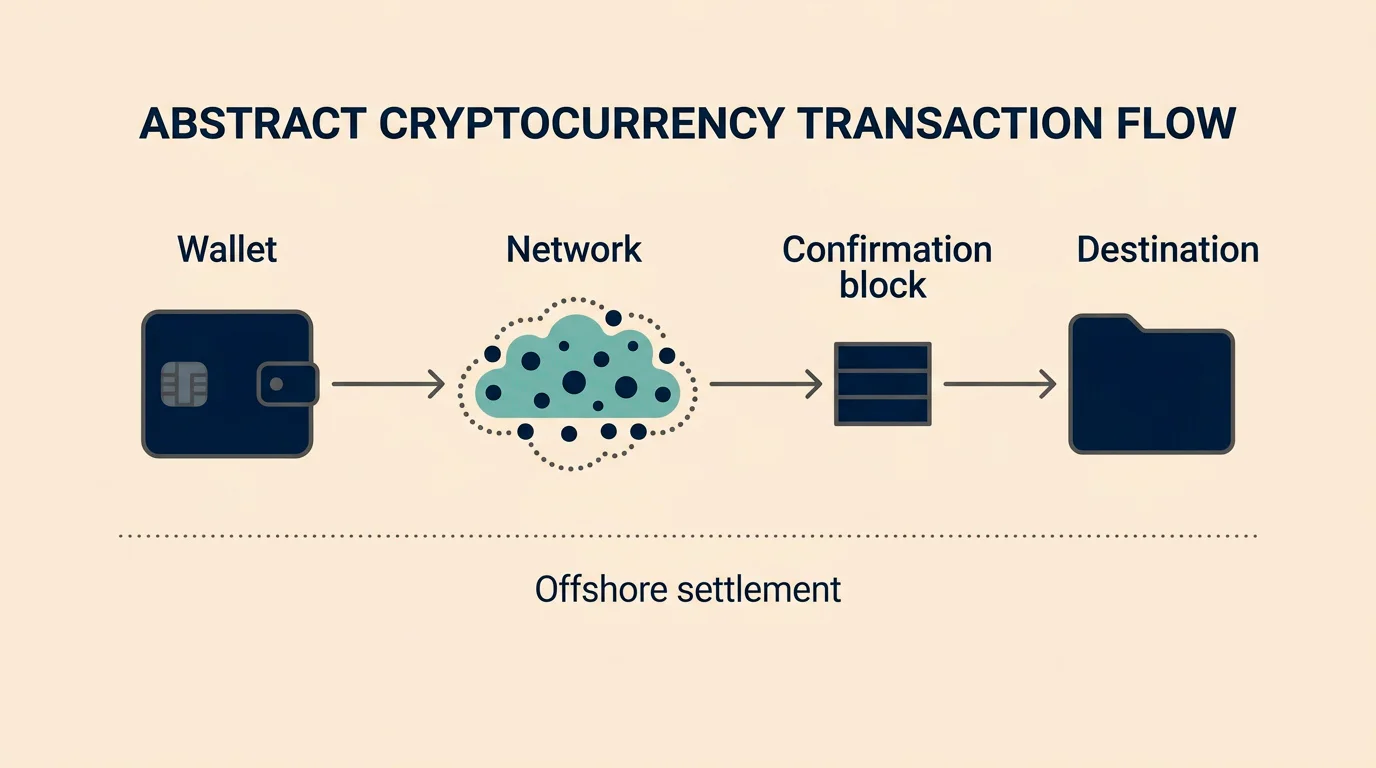
Payment behaviour at non-GamStop operators differs from UKGC-licensed sites in three structural ways. First, the ban on credit card deposits that the UKGC imposed on its own licensees from 14 April 2020 does not apply offshore; some non-GamStop sites accept credit cards while others do not, by operator policy. Second, GBP support is variable: a site may settle the player in GBP, EUR, or in some cases only in cryptocurrency, which has implications for fees and dispute resolution. Third, the payment processors handling UK-card deposits to offshore casinos sit in a more complex compliance position, which can produce intermittent declines and longer settlement times.
Cryptocurrency has become the dominant deposit route at a sizeable share of operators, particularly those licensed under Curaçao post-LOK. Crypto deposits sit outside the UK retail banking layer entirely, with no chargeback route and no UK statutory complaint pathway for a disputed transaction. The trade-off is faster settlement and higher anonymity at the deposit side; the cost is the absence of any UK-side recourse if a withdrawal stalls. A fuller treatment of how crypto deposits behave at non-GamStop sites covers the practical mechanics in depth.
Has the UK picture shifted in 2025 and 2026?
The UK regulatory layer behind GAMSTOP has changed materially in the past eighteen months, and these changes form part of the calculus for any reader thinking about the non-GamStop sector. The reforms are tightening the protections that apply to UKGC-licensed operators, which has the side-effect of widening the practical gap between the UKGC perimeter and the offshore market.
Stake caps and affordability
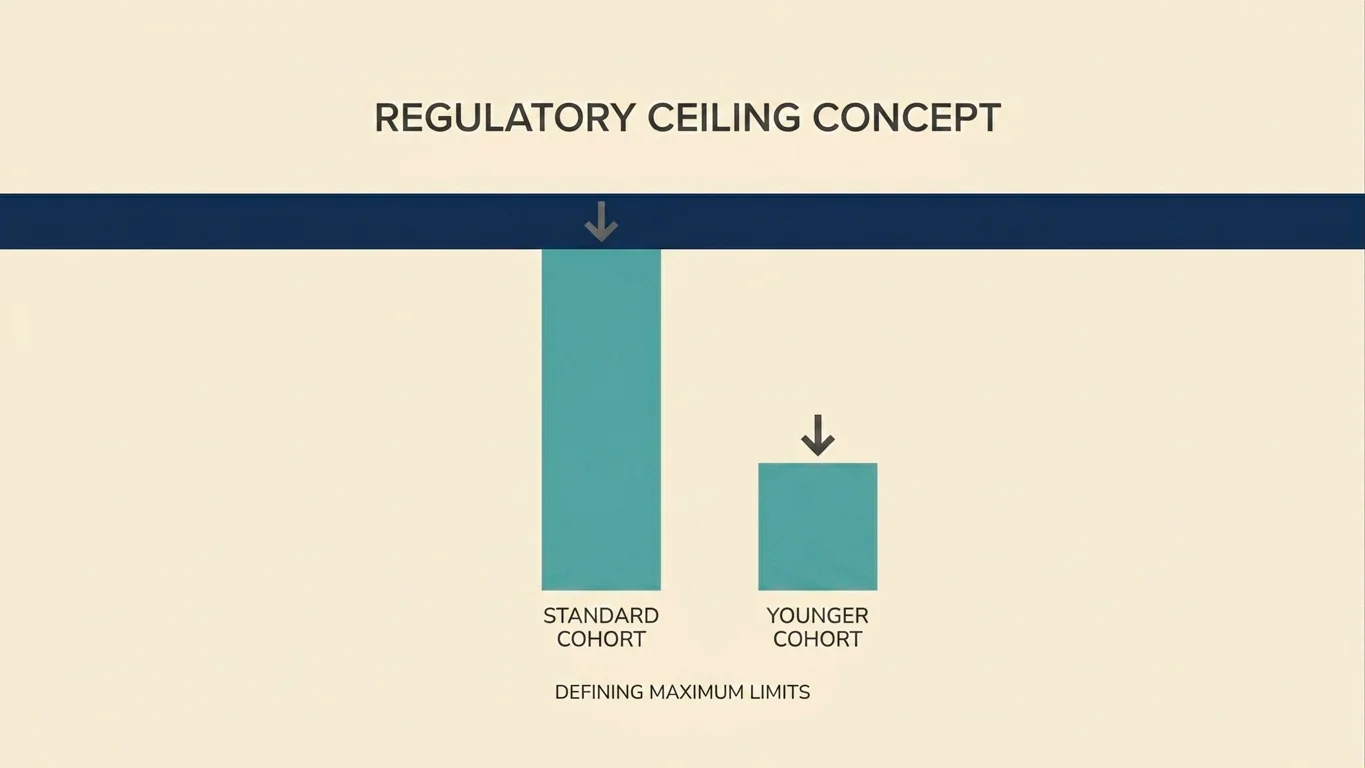
From 9 April 2025 the maximum stake on a single online slot spin at any UKGC-licensed casino is £5 for players aged 25 and over. From 21 May 2025 the corresponding cap for players aged 18 to 24 is £2. These caps do not apply to live casino, sports betting, or non-slot products, and they do not apply to any operator without a UKGC licence. From 28 February 2025 the financial vulnerability check became mandatory at the £150 net loss / 30-day threshold for UKGC operators, again with no equivalent at offshore sites.
Tax and operator economics
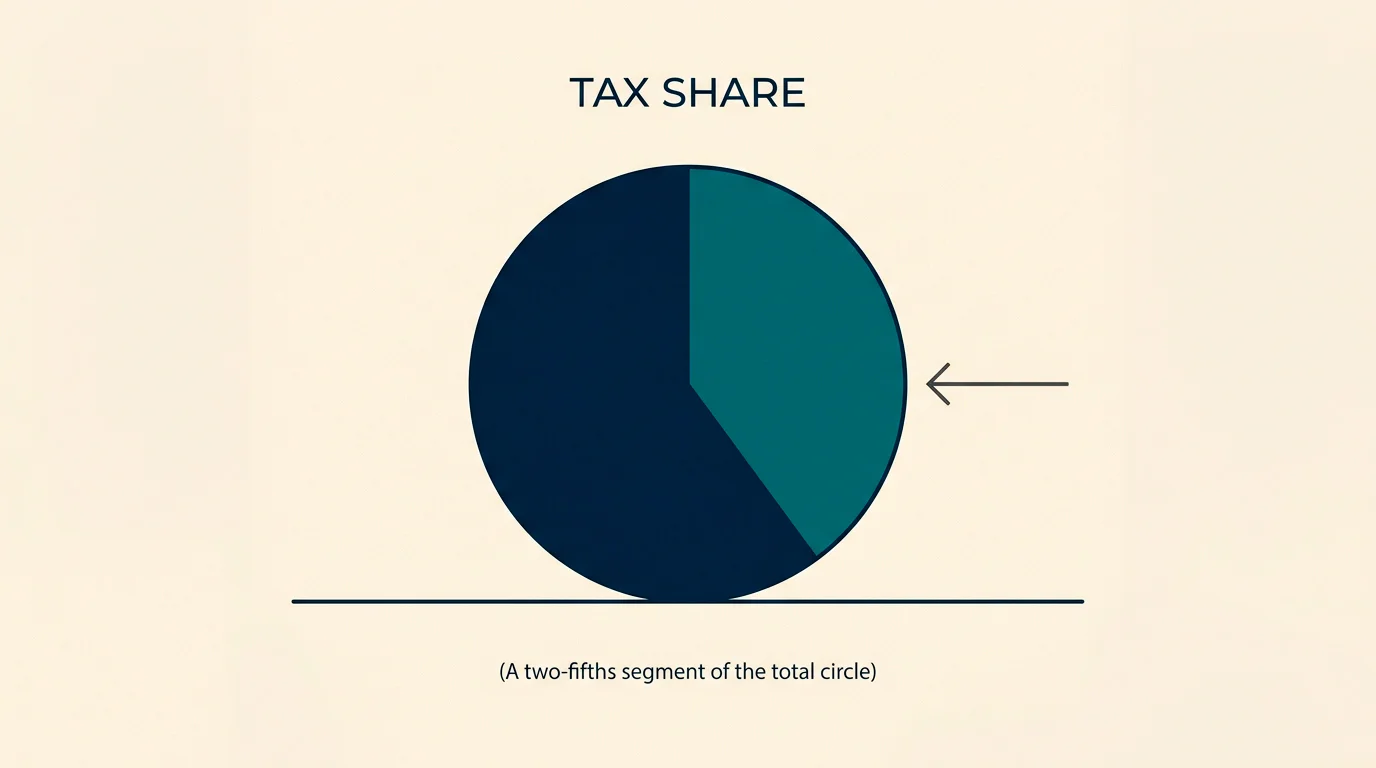
From 1 April 2026 the Remote Gaming Duty rises to 40 per cent for UKGC-licensed remote casino, betting, and bingo. This is a significant cost increase for UKGC operators that does not affect the offshore market directly, but is likely to shape the commercial gap between the two segments over the rest of 2026.
GAMSTOP itself
Inside the GAMSTOP scheme, a five-year auto-renewal option was introduced in December 2024. Phone and email betting integration came into the scheme from 1 April 2024. The scheme recorded 10,344 registrations in May 2025, a record month, and 437 registrations on 7 April 2025 in the wake of the Grand National, a record day. The institutional position of GAMSTOP has also evolved, with Fiona Palmer in post as Chief Executive and Chris Pond as Chair from September 2025.
Why do some UK players step outside the perimeter?
The Gambling Commission's own data, drawn from the Gambling Survey for Great Britain published at gamblingcommission.gov.uk, indicates that around 2.5 per cent of UK adults, equivalent to roughly 1.3 million people, reported using an unlicensed operator in the past twelve months. The motivations are heterogeneous and worth setting out neutrally, because reasoning about the category in any direction is impossible without understanding why a player might end up there.
Recurring reasons reported by UK players
- Active GAMSTOP registration in place, with the desire (clinical or commercial) to override it
- Discomfort with affordability checks and the £150 / 30-day vulnerability threshold
- Preference for higher-stake play not permitted by the £5 / £2 caps
- Preference for bonus structures and wagering terms not allowed under UKGC marketing rules
- Preference for cryptocurrency settlement
- Use by overseas visitors temporarily resident in the UK, where the player believes their home regulator applies
The first reason on that list is the most regulatorily fraught. A UK player who has registered with GAMSTOP and is actively seeking to circumvent that registration is, by clinical definition, in a position where harm risk is elevated. The offshore route does not solve the underlying problem; it removes the friction the player themselves placed in their own path. For that population specifically, the responsible route is the support pathway summarised in UK support resources, not a sister operator.
What this means for UK players in 2026
The honest, source-led picture for a UK reader sitting at the end of May 2026 looks like this. The non-GamStop sector exists because there is demand for it, and it is not illegal for a player to use one of these sites. The trade-off is regulatory, not legal. Every UK consumer protection that is tied to a UKGC licence sits on one side of the boundary, and every site without that licence sits on the other side, with no licence anywhere in the offshore market replacing what the UKGC offers.
For a player who has not used GAMSTOP and is weighing the choice on its merits, the decision rests on whether the trade-offs (no stake cap, no affordability check, no IBAS, no ASA, no UKGC complaint route) are worth the things some offshore sites offer that UKGC sites cannot (higher stakes, different bonus structures, crypto settlement). That is a personal calculation, but it should be made with the full list visible, not with a partial one.
For a player who has used GAMSTOP and is actively searching for non-GamStop options, the picture is different. The registration is in place precisely because the player decided, at the moment of clearest judgement, that the friction was needed. The offshore route removes the friction without removing the underlying drive. The UK support pathway, including the GamCare helpline on 0808 8020 133, exists for exactly this moment.

Common questions
Is it illegal for a UK player to use a casino not on GamStop?
Section 33 of the Gambling Act 2005 targets operators who provide gambling facilities to British consumers without a UK Gambling Commission licence, not the individuals who play. No UK player has been prosecuted for using an offshore casino. The legal exposure sits with the operator, while the practical exposure (lost dispute resolution, lost affordability checks, lost GAMSTOP self-exclusion) sits with the player.
How many UK players are registered with GamStop?
More than 562,000 individuals were registered with GAMSTOP by the end of 2025, with 58,675 new registrations recorded in the second half of 2025 alone, an average of roughly 319 per day. Around 29 per cent of registrants were aged 16 to 24, and 47 per cent selected the five-year exclusion period.
Can a UK player remove themselves from GamStop early?
No. Once a minimum exclusion period (six months, one year, or five years) is selected, it cannot be shortened. After the period ends the registration enters a 24-hour cooling-off, after which a request to deactivate can be made. The legitimate route is to let the term expire, as set out in the dedicated walkthrough on how GamStop expiry works.
Which licences do non-GamStop casinos typically hold?
Most non-GamStop operators serving UK traffic operate under a Curaçao licence (with the LOK reform in force from 24 December 2024 tightening that regime), a Malta Gaming Authority licence, an Anjouan licence, or in a small number of cases a Kahnawake permit. None of these regulators provide the protections that flow from a UKGC remote operating licence.
What UKGC protections does a player give up when using an offshore site?
A player steps outside the LCCP Social Responsibility Code, including the 3.5.5 self-exclusion duty, the financial vulnerability check (in force from 28 February 2025 at the £150 / 30-day threshold), the new £5 stake cap on online slots for 25+ (from 9 April 2025) and the £2 cap for 18 to 24 year olds (from 21 May 2025), and the IBAS alternative dispute resolution route. There is no UK regulator to escalate a complaint to.
Where can a UK player get help if non-GamStop play has caused harm?
The GamCare National Gambling Helpline runs 24 hours a day on 0808 8020 133 and is free, confidential, and accredited through Helplines Partnership. BeGambleAware, the NHS National Gambling Clinic, Gamblers Anonymous UK, and software tools such as GamBan provide further pathways. Contacting these services has no legal consequence.
Why is the non-GamStop sector growing if the UKGC keeps tightening rules?
The two are connected. As UKGC-licensed operators take on the £5 and £2 stake caps, the £150 affordability threshold, and the 40 per cent Remote Gaming Duty from 1 April 2026, the practical gap between UKGC sites and offshore sites widens. Some UK players treat that gap as an opportunity; others treat the protections that create the gap as the point of the regulation. Both readings exist in the data.
Recommend
Prepared by the Casino Not on Gamstop editorial staff.