
How can a UK player legitimately remove a GamStop registration?
 Available in GB
There is no shortcut off GamStop. That is the honest opening, and it is worth stating before any of the procedural detail. The only route the scheme actually supports is the natural elapse of the exclusion period the player originally chose, followed by a fixed 24-hour cooling-off window and an active re-application step. Anyone offering an instant removal, a back-door cancellation, or a paid service to clear the register is not connected to the National Online Self-Exclusion Scheme Limited and cannot deliver what is being marketed. This walkthrough sets out the legitimate process step by step, alongside the harm-reduction context that should sit beside the decision.
Why early removal is not possible at all
The scheme is built on a deliberate friction by design. A player who has registered with GamStop selected one of four exclusion periods: six months, one year, five years, or five years on auto-renewal. Each runs to its full duration. The friction is intentional. Self-exclusion is meant to be a meaningful intervention rather than a casual pause, and the design choice traces back to harm-reduction evidence that early-exit options materially reduce the protective effect of the scheme. The mechanics of those four options are covered in detail in our walkthrough of how the GamStop scheme operates.
That design has practical consequences. There is no support ticket, no escalation path, and no compassionate-grounds exception that produces an early lift. The only authority over the register is NOSES itself, and NOSES does not operate an early-removal facility. Reports to the contrary are usually misunderstandings of the cooling-off process described below.
The legitimate route, step by step
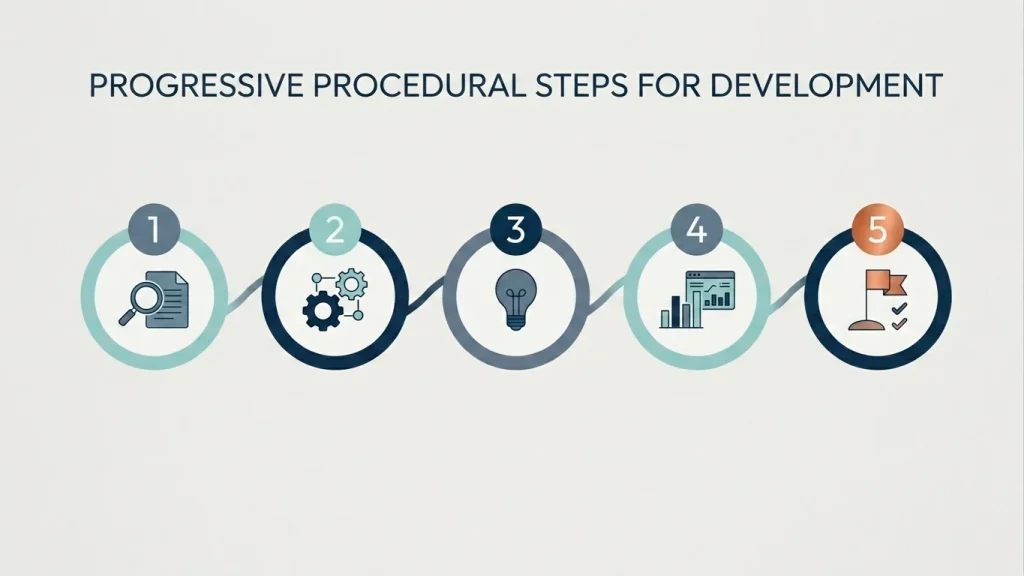
For a player whose exclusion period is genuinely approaching its end, the route is procedural and well-defined. It runs through five steps, each of which is necessary and none of which can be skipped.
- Confirm the minimum period has actually elapsed. The clock starts on the registration date, not on the first failed log-in attempt. Six-month registrations expire at month six, one-year at twelve months, and five-year at sixty months. Auto-renewal registrations roll forward unless a removal request is made within the available window at the end of a cycle.
- Contact GamStop directly through the official channels. The scheme provides phone and email routes via the GamStop website. A player should not engage any third-party site or paid service: GamStop does not authorise removal agents, brokers, or expedited services of any kind. Third-party “remove GamStop” services advertised through search are commercial impostors.
- Complete the identity verification. The scheme uses the same identity fields used at registration: full name, date of birth, postcode and email at minimum. Where any of those have changed, additional verification may be required.
- Observe the mandatory 24-hour cooling-off period. This is not optional and cannot be waived. The cooling-off is a fixed pause between the verified request and the active deactivation step, and it is part of the regulatory backbone of the scheme.
- Submit the active re-application to lift the exclusion. Without this final step the registration remains in force. A passive expiry does not by itself produce a lift on the auto-renewal option, and on all options the operator-side block requires the player’s explicit re-activation request to be honoured.
What about “instant GamStop removal” services?
A persistent category of paid advertising offers same-day or instant lifting of a GamStop registration for a fee. These services do not work, because they cannot work. The register is held by NOSES on a closed-access basis and is queried via authenticated API by licensed operators. No third party has the technical access to alter the record, no matter what the marketing material claims.
What such services actually deliver, when they deliver anything, is a list of non-GamStop sites where the player would not be on any equivalent self-exclusion register because they were never registered there in the first place. That is a redirection rather than a removal. It is also a useful diagnostic: a service marketing itself with “instant” or “guaranteed” GamStop removal is by definition not connected to NOSES, and any payment is being made for something the operator cannot deliver.

What changes for the player after a successful removal?
A player who has completed the route above is no longer on the GamStop register and can register again at UKGC-licensed sites. The regulatory environment they return to in 2026 looks materially different from the one they left, even from twelve months earlier. From 28 February 2025 a new financial vulnerability check applies at UKGC-licensed operators where a player’s net deposits cross £150 in a 30-day window. From 9 April 2025 a £5 stake cap per slot spin applies to players aged 25 and above, and from 21 May 2025 a £2 cap applies to players aged 18 to 24.
These checks and limits are part of the wider Licence Conditions and Codes of Practice framework, and they reflect a clear shift in UKGC posture toward affordability and harm reduction. The fuller picture of what a returning player gains and forgoes is set out in our analysis of the protections context at UKGC operators.

Where does GamBan fit alongside GamStop?
GamBan is a separate paid software tool that blocks gambling sites and apps at the device level on phones, tablets and computers. Unlike GamStop, GamBan is not a register: it is software, and it works at the device rather than at the operator. That distinction makes it a useful complement for any player concerned that GamStop’s scope is narrower than they need. GamStop blocks UKGC-licensed remote operators; GamBan blocks attempted access to gambling sites on the device regardless of whether the operator is UKGC-licensed.
For someone considering removal of a GamStop registration, GamBan is also worth knowing about because it can be retained even where GamStop is lifted. The combination provides a layered approach and can be configured deliberately. GamBan is a paid product and is not endorsed here on any commercial basis: it is mentioned because it is the most directly relevant device-level option in the current UK harm-reduction toolkit.

The decision before the procedure
The steps above describe how removal happens; they do not address whether removal is the right step. A player who registered at a point of acute concern and whose circumstances have not meaningfully changed may find that the same concern returns once the block is lifted. The point of the 24-hour cooling-off period is to create space for that reflection, and the point of the active re-application requirement is to ensure that returning to gambling is a deliberate act rather than a passive default.
UK support services are available regardless of where a player chooses to gamble afterwards. GamCare runs the National Gambling Helpline on 0808 8020 133 free and confidential 24 hours a day. NHS specialist services are accessible through the National Gambling Clinic, the NHS Northern Gambling Service, and the NHS Primary Care Gambling Service. The dedicated overview of UK help resources sets out the full route map.

What this means for the wider non-GamStop conversation
Players sometimes arrive at the non-GamStop topic via a search for ways off the register. That order of operations is worth reflecting on. The legitimate route off GamStop is procedural and slow by design; the offshore segment is fast by design and operates outside the protections the original registration was meant to deliver. For the wider context, the Beyond GamStop guide sets out the sector at a glance, and the non-GamStop position has implications that go well beyond the simple question of access.
The full picture is in our guide to casinos not on GamStop.
If the urge is the problem: where to get help.
Recommend
Created by the "Casino Not on Gamstop" editorial team.