
What player protections do you lose outside the UKGC perimeter?
 Available in GB
The UK Gambling Commission framework is not a single rule but a stacked set of obligations on every UKGC-licensed operator. Stepping outside that perimeter does not simply remove one or two safeguards. It removes the whole stack in a co-ordinated way, and the gaps appear most sharply at the moments players least expect them, which is usually at the first significant withdrawal or the first dispute. What follows is the central reference for what specifically falls away, written as a complement to the Beyond GamStop UK guide.
Why does the perimeter matter as a framing?
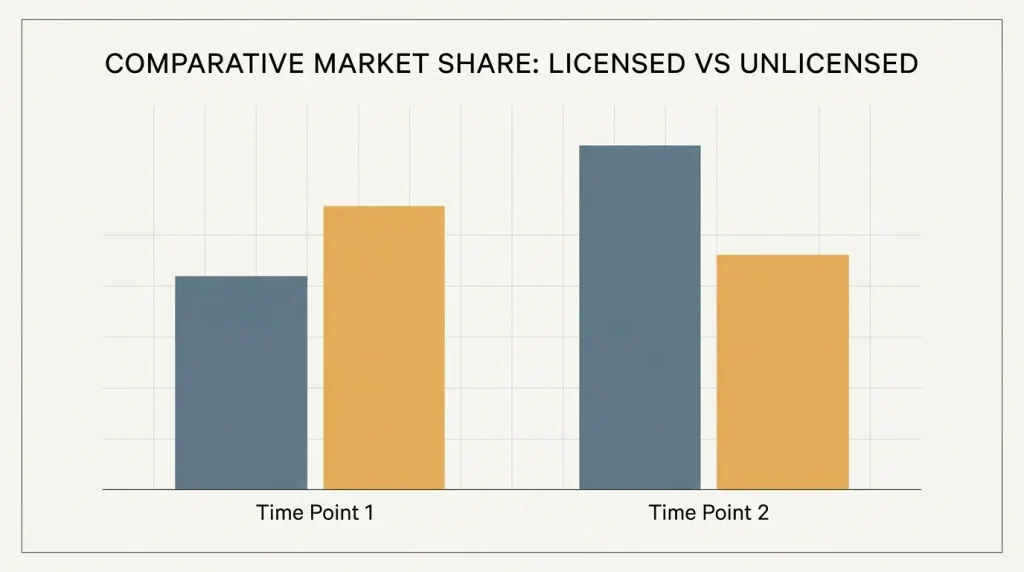
Two figures set the scene. The black-market share of UK online gambling reached approximately 9 per cent of the online stakes total in the first half of 2025 according to the Commission’s published estimates, against 7 per cent the year before. Stakes routed through unlicensed operators reached an estimated £16.6 billion across 2025 per Howard Galloway Consulting analysis, up from roughly £5 billion in 2019. Around 2.5 per cent of UK adults, or roughly 1.3 million people, used at least one unlicensed gambling operator over the past 12 months in the most recent Commission research. The legal share of the regulated market accordingly contracted from around 97 per cent to around 92 per cent over the same span.
Those numbers matter because they shape what follows: a meaningful share of UK players who think they are getting a comparable product offshore are systematically losing protections that have hardened in the UKGC sector since early 2025. The legal exposure side, distinct from the protection side, is covered separately in the UK legal context.
What happens to self-exclusion outside GamStop?
GAMSTOP enforcement does not extend to non-UKGC-licensed operators. The scheme is anchored in LCCP Social Responsibility Code 3.5.5, which mandates integration only for UKGC remote licensees. A self-excluded UK player who registers a fresh account at a Curaçao-licensed casino will, in the typical case, complete onboarding without being flagged, because the operator never queried the GAMSTOP register and is under no obligation to do so. For the operational mechanics of what GamStop itself actually does, see the scheme behind UKGC self-exclusion.
The gap is the structural reason GAMSTOP-adjacent harm-reduction tools have grown in importance. GamBan, software-level blocking that operates at the device level, is the dominant compensating layer because it does not depend on operator co-operation. Bank-level gambling-block toggles at Lloyds, Barclays, HSBC, NatWest, Santander UK, Monzo, Revolut and Starling provide a second layer.
What does the absence of UK Alternative Dispute Resolution mean in practice?
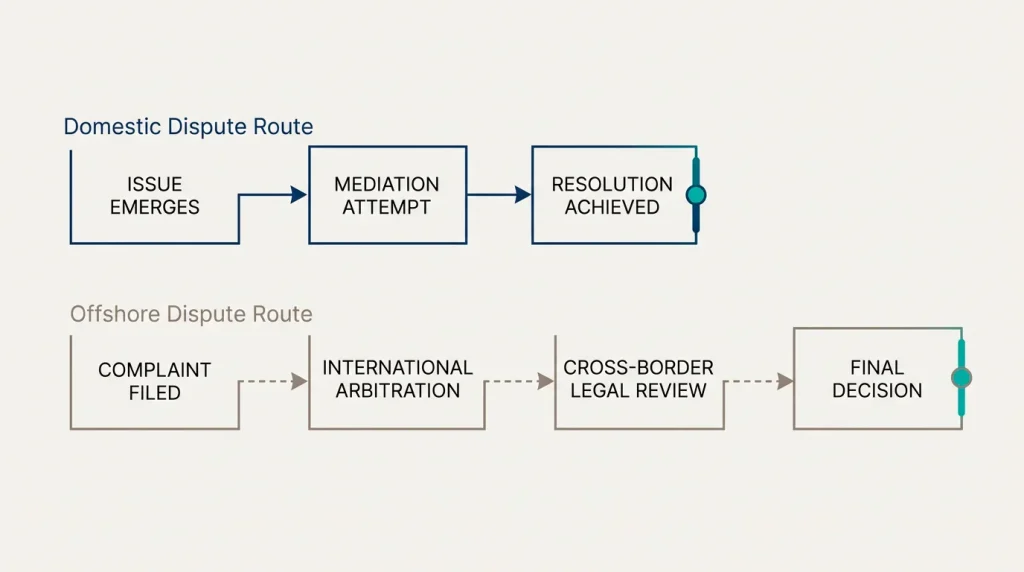
UKGC operators are required to participate in a Commission-approved Alternative Dispute Resolution (ADR) scheme. In the UK casino sector that means routes such as IBAS and eCOGRA, both free at the point of use for the player and binding on the operator within their remit. A non-GamStop casino is not subject to that requirement. Disputes default to the regulator of the operator’s licensing jurisdiction.
That route works differently. The Curaçao Gambling Control Board operates a complaints process under the post-LOK 2024 framework, accessible by email, with case-by-case timelines that practitioners commonly observe at six to twelve weeks. Malta’s Gaming Authority operates a more structured Player Support Unit with sharper service levels but applies only to MGA licensees. The Anjouan regulator does not currently accept complaints from UK residents through any published channel, on the basis that the licence regime does not cover the UK market.
The practical consequence is that the dispute pathway requires the player to navigate the operator’s own escalation tiers first, then the offshore regulator, and that the median resolution timescale runs longer than the IBAS service-level commitment of 90 days. The player has no UK route of recourse for the gambling transaction itself, although the underlying payment instrument (the card, the e-wallet, the exchange) retains its own complaint and ombudsman pathways for the payment leg.
Do the new affordability and stake-limit safeguards apply offshore?
They do not, and the gap has widened sharply since early 2025. The Commission’s financial vulnerability check, requiring operators to undertake a frictionless assessment at a £150 loss threshold within a rolling 30-day window, came into force on 28 February 2025 under LCCP Social Responsibility Code 3.4.4. The same check does not apply to a Curaçao-licensed operator, and the typical offshore cashier imposes no equivalent.
The slot stake limits widened the gap further. The £5 maximum stake per spin for adult players came into force on 9 April 2025; the tightened £2 maximum stake for players aged 18 to 24 followed on 21 May 2025. Both apply to UKGC licensees only. A non-GamStop operator can and routinely does offer slots at stake levels well above those caps, with maximum bets per spin commonly £50 or £100 at higher tiers. The differential is one of the largest behavioural-design gaps between the two markets.
The Commission also retained the prohibition on credit-card gambling that took effect on 14 April 2020. That prohibition is the most visible single difference at the cashier: an offshore site accepting Visa Credit or Mastercard Credit is by definition operating outside the UK framework. The full payment-method analysis sits in the wider context page.
What about player fund segregation?
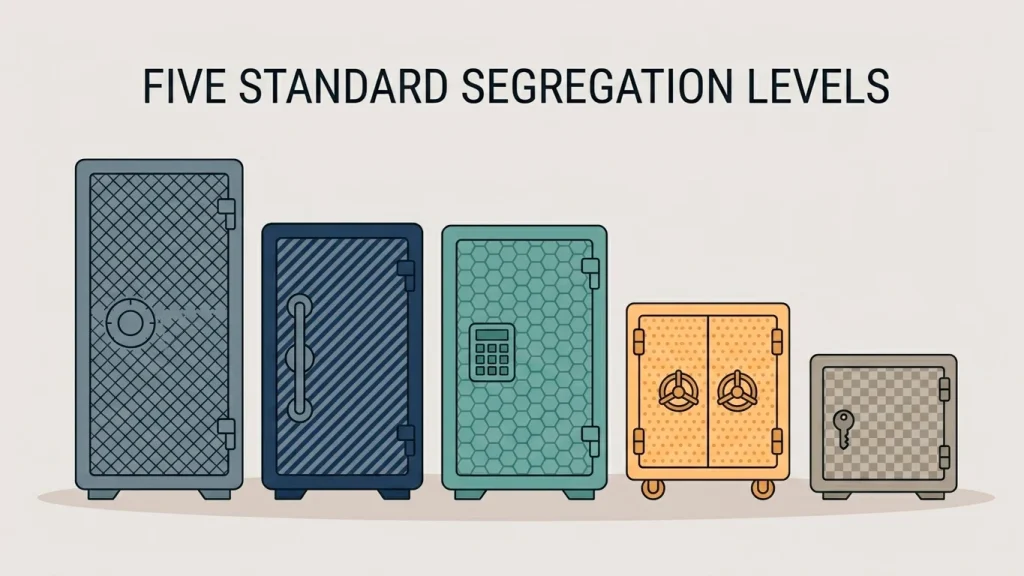
UKGC operators are subject to defined customer-funds protection requirements under their operating licence conditions, with three tiers (basic, medium and high) that operators must publicly state and adhere to. The Commission requires medium or high in many circumstances, and the regime sets out how customer balances are held separately from operating capital.
Outside the UK, the picture varies sharply by jurisdiction. The Malta Gaming Authority requires segregation in line with its Player Protection Directive. The post-LOK Curaçao framework has tightened expectations but allows substance requirements to phase in fully only by 1 April 2027. Anjouan does not currently impose a public segregation standard equivalent to either. The result is that the financial integrity layer behind a UK player’s balance varies between operators in the offshore market in ways the player cannot fully assess from a cashier page, and the regulators behind offshore operators page covers the licence-by-licence detail.
Which behavioural safeguards fall away?
The UKGC framework includes a layered set of behavioural prompts that, taken together, form a meaningful friction layer in the gambling session itself. Mandatory reality check notifications interrupt play at customer-set intervals; deposit-limit prompts surface at registration and on incremental deposit decisions; loss-limit and session-time tools must be offered visibly. Mixed-product bonuses (combining casino and sportsbook within a single offer) were prohibited from 19 January 2026, and wagering requirements on UKGC bonuses are capped at 10x from that date.
None of those design constraints apply to a non-GamStop casino. Reality-check prompts may exist as a UI feature but are typically opt-in and applied with lower default rigour. Deposit-limit tools usually exist but are not enforced with the same audit trail. Wagering multipliers on welcome offers in the offshore sector commonly run at 30x to 50x, which is the underlying reason headline percentages in this segment look larger than UKGC equivalents; the mathematics is the subject of the bonus and wagering reality page.

What about funding for research, prevention and treatment?
From 6 April 2025 the UK statutory levy on gambling operators came into force under the Gambling Levy Regulations 2025. The rate is 0.1 per cent to 1.1 per cent of Gross Gambling Yield depending on operator licence category, paid through HMRC and channelled into research, prevention and treatment of gambling harms. UKGC licensees are obliged to pay; offshore operators serving UK players are not, and the consequence is that revenue flowing offshore does not contribute to UK harm-reduction infrastructure.
The corollary, separately announced in the Autumn Statement, is the 40 per cent Remote Gaming Duty rate due to take effect on 1 April 2026. UK-licensed online casino revenue will be taxed at that level; offshore revenue from UK players will not, which is the single largest commercial reason operators choose to remain outside UKGC scope.
Where do real-world pain points cluster?
Aggregated data from public review platforms (Trustpilot, AskGamblers, Casinomeister) and Reddit threads through 2024 and 2025 cluster reader complaints into five recurring categories. The complaints themselves are not authoritative evidence, but the pattern across hundreds of cases is informative.
- Withdrawal delays
- First sizeable withdrawal stalls in KYC review for periods materially longer than deposit clearance; players cite 5 to 21 days waits against operator marketing of 24 to 48 hours.
- “No KYC” marketing against reality
- Operators promote frictionless onboarding but trigger a full identity check at the withdrawal stage rather than the deposit stage, creating the impression of changing rules mid-game.
- Account freezes under “investigation”
- Indefinite holds applied with limited information, sometimes resulting in confiscated balances under bonus-abuse clauses, with no ADR route to challenge.
- Bonus term rejections
- Maximum-bet-during-wagering rules and game-weighting clauses applied retroactively to forfeit balances built during what the player believed was compliant play.
- Account reopening after closure
- Operators reopen previously closed accounts on player request without applying meaningful cooling-off, and in some documented cases reopen accounts that the customer had asked to be permanently closed.
These pain points are not universal to every operator. They are, however, materially more common in the non-GamStop segment than in the UKGC sector, where the same behaviour would trigger Commission enforcement and a route to ADR.
How should a UK reader weigh this?
The honest framing is not whether non-GamStop play is “safe” or “unsafe” in absolute terms but whether the trade-offs are visible to the player making the decision. The UKGC perimeter buys a stacked set of protections that have been hardened by regulatory change through 2024, 2025 and into 2026. Outside it, the player swaps that stack for whatever protections the offshore regulator chooses to provide, plus whatever the operator volunteers in its terms.
For readers who registered on GAMSTOP and now want to understand the legitimate route back to UKGC operators rather than play offshore, the mechanics sit in our coverage of how a GamStop registration is legitimately removed and how the GAMSTOP scheme itself operates. For readers who are experiencing gambling-related harm or who are concerned about someone they know, the UK support pathway is set out in full on the UK support resources and helplines page; that pathway is free, confidential and does not depend on which sector the play occurred in.
The full picture is in our guide to casinos not on GamStop.
Who is meant to be supervising: the licences.
Recommend
Created by the "Casino Not on Gamstop" editorial team.