
How does the GamStop self-exclusion scheme actually work?
 Available in GB
For UK players weighing the non-GamStop sector, understanding the mechanics of the register they would be stepping outside of is the natural starting point. GamStop is not a marketing gimmick or a soft prompt: it is a mandated technical infrastructure that links every remote licence holder in Great Britain to a single exclusion database, refreshed on a 24-hour API cycle. This walkthrough sets out who runs the scheme, how registration translates into a hard block, what exclusion periods are available, and the scale the register has reached by the end of 2025.
Where did the GamStop scheme come from?
GamStop launched in April 2018 as a voluntary tool offered by the British remote gambling industry, but its decisive moment arrived two years later. From 31 March 2020 the UK Gambling Commission made integration with the scheme mandatory for every remote operating licence holder through Social Responsibility Code Provision 3.5.5 of the Licence Conditions and Codes of Practice. The text of that condition is published openly on the UKGC website and remains the central regulatory hook that compels participation, with extensions in subsequent years bringing phone and email-channel betting into the same regime from 1 April 2024.
The shift from voluntary to mandatory matters because it transformed GamStop from a useful add-on into the spine of UK remote self-exclusion. Once integration became a licence condition, an operator failing to honour a GamStop block was no longer simply behaving poorly: it was risking regulatory action against its operating licence. That is the structural reason the scheme is effective inside the UK perimeter, and equally the reason it has no reach over operators that have never held a UKGC licence in the first place.

Who actually runs GamStop, and how is it funded?
The scheme is operated by The National Online Self-Exclusion Scheme Limited, usually abbreviated to NOSES. NOSES is a company limited by guarantee, structured as a not-for-profit entity, and it is funded by the licensed remote gambling sector through a per-operator levy. The funding structure is deliberate: it makes the scheme financially independent of any single operator while keeping it outside the public budget.
At the operational level, the chief executive is Fiona Palmer, who has led the organisation since its earliest growth phase and remains in post through 2025-26. The board has been chaired since September 2025 by Chris Pond, taking over from Jenny Watson CBE, whose tenure spanned much of the scheme’s regulatory consolidation. Pond’s background in consumer protection policy signals the direction of travel that the GamStop group has set out publicly: tighter alignment with harm-reduction policy and a steadier expansion of communication channels covered.
The wider Gamstop Group also rebranded its land-based and betting-shop component during 2025. The legacy MOSES branding was retired in favour of Gamstop Betting Shops, a positioning that mirrors the parent name and signals the group’s intent to operate a unified self-exclusion ecosystem across remote, betting-shop and (separately) land-based casino channels.
How does registration translate into a block at every UKGC site?
The technical core of GamStop is a centralised register held by NOSES and queried by every UKGC remote licence holder via an authenticated API. When a UK player registers, NOSES stores the identifying record and operators are required to reflect that record across their customer base within 24 hours. In practice the larger operators sync more frequently than the 24-hour ceiling, but 24 hours is the regulatory backstop.
The matching logic uses a combination of identity fields, principally full name, date of birth, postcode and email address, with phone number and address history strengthening the match. The system is designed to defeat low-effort circumvention attempts such as variant spellings or a fresh email account, although it has acknowledged blind spots around materially different identity data and around operators that simply do not subscribe to it. The latter category is the entire premise of the non-GamStop sector and is covered in our analysis of the legal position of non-GamStop play for UK residents.
From the player’s perspective, the block manifests on the operator side: log-in attempts fail, registration attempts at new UKGC sites are rejected at the verification stage, and marketing communications are suppressed. There is no consumer-facing dashboard at NOSES showing which operators have received the block; that visibility sits at the operator level, which is one of several reasons why a direct verification route is essential (see below).

What exclusion periods can a UK player choose?
At registration, a player selects one of four exclusion periods. The first three have been available since the early years of the scheme: six months, one year, and five years. The fourth option, a five-year period with automatic renewal at the end of each cycle, was introduced in December 2024 and has measurably shifted the distribution of new registrations toward longer durations.
The most commonly selected option is the five-year exclusion, taken by roughly 47% of registrants in the most recent reporting period. This figure has been broadly stable across the scheme’s life and reflects the typical user pattern: people register at a point of acute concern and elect the most decisive option available. The six-month minimum is intended as a meaningful intervention rather than a casual cooling-off period, and there is no facility to shorten an exclusion once selected. Anyone considering registration should also read our walkthrough of how to come off GamStop legitimately, which sets out the only route the scheme actually supports.
| Option | Duration | Behaviour at expiry |
|---|---|---|
| Six months | 180 days | Lapses on expiry; player must re-apply to lift the block |
| One year | 365 days | Lapses on expiry; same re-application route |
| Five years | 1,825 days | Lapses on expiry; explicit re-application required |
| Five years, auto-renewal | Rolling 1,825-day cycles | Renews automatically unless the player initiates removal at end of cycle |
How big has the scheme become by the end of 2025?
By the close of 2025, GamStop held more than 562,000 active registrations from UK players. The second half of 2025 alone added 58,675 new registrations, averaging roughly 319 sign-ups per day. The age profile is also a meaningful data point: 29% of new registrants were aged between 16 and 24, a heavy skew toward younger adults that the scheme’s leadership has cited repeatedly in its public commentary.
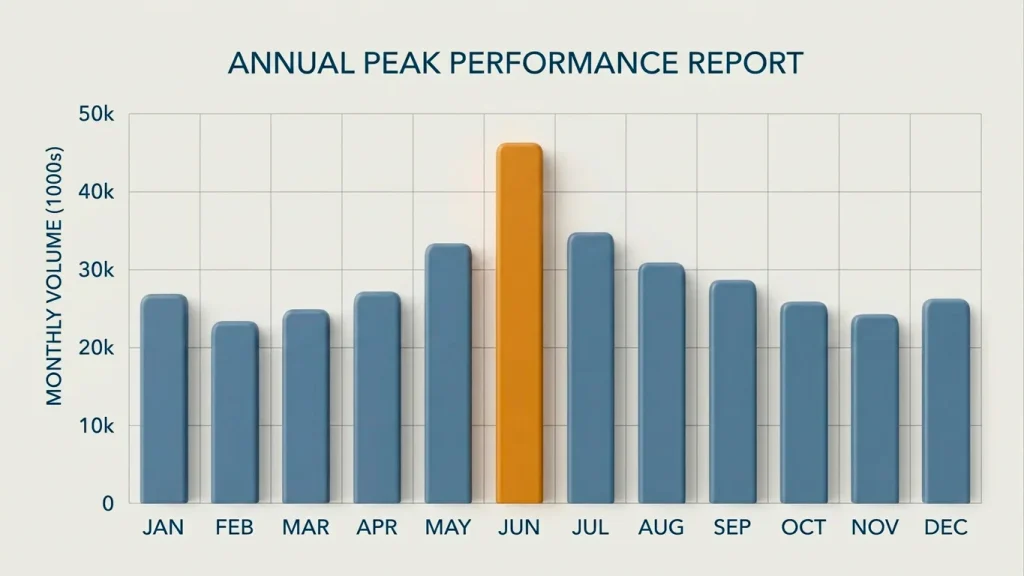
The single most active month on record was May 2025, with 10,344 registrations, and the busiest individual day was 7 April 2025, the day after the Grand National, which produced 437 sign-ups in a 24-hour window. Sporting calendar peaks are an established pattern in the scheme’s data, and the post-Grand-National spike has been a recurring feature since the scheme’s earliest years.
These figures are taken from the official Gamstop corporate communications and from the operational statistics that the group publishes periodically. They are also consistent with broader UK Gambling Commission statistics on participation and harm, including the Gambling Survey for Great Britain, and they form part of the context behind the wider UKGC safeguard package that sits behind self-exclusion.
What does GamStop not cover?
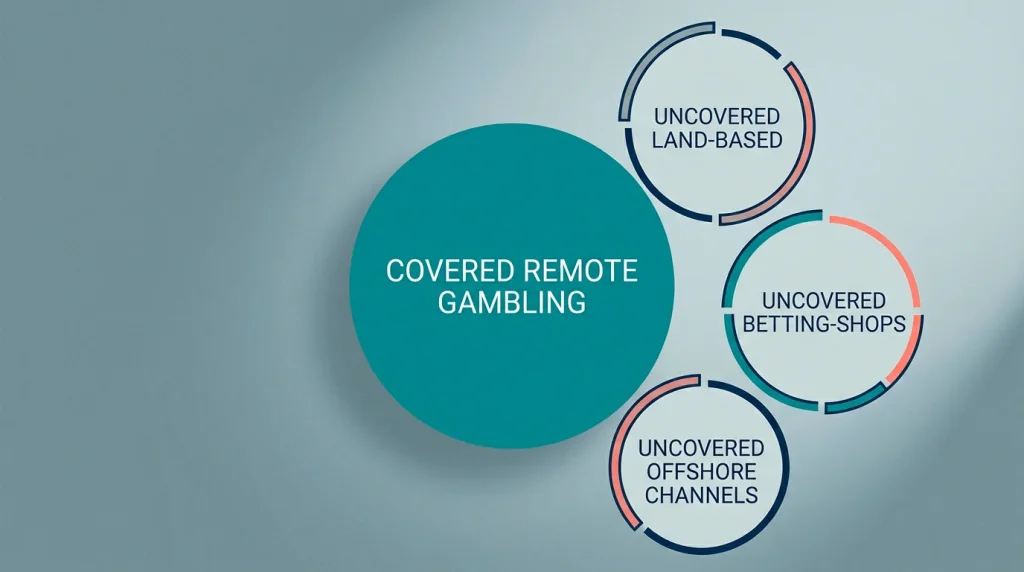
The scope of the scheme is precise and the gaps are equally precise. GamStop covers remote gambling provided under a UKGC operating licence: online casinos, online slots, online bingo, online sports betting, phone and email betting, and remote lottery products from licensed operators. It does not cover any operator that has never held a UKGC remote licence, which is the technical definition of the entire non-GamStop sector.
It also does not cover land-based casinos, where exclusion is handled separately through the SENSE programme operated by the casino industry. Retail betting shop exclusion is handled by Gamstop Betting Shops following the 2025 rebrand. Society lotteries and the National Lottery sit under their own self-exclusion arrangements, and these are not synchronised with GamStop. A player can therefore be registered with GamStop and still be able to walk into a casino floor, place a bet at a high-street bookmaker counter, or buy a National Lottery ticket unless they have separately enrolled in the relevant programme.
How can a player verify their own registration?
NOSES provides a registration check on the official GamStop website. A player can request confirmation by submitting the identity details used at registration, after which the scheme will respond by email confirming the status of the record and the remaining exclusion period. This is the only authoritative source: third-party sites that purport to check or alter a GamStop registration are not connected to NOSES and should be treated as commercial impostors at best.
For anyone who has lost track of their exclusion expiry, the verification route is also the gateway to any subsequent steps. The cooling-off period that follows the end of an exclusion is fixed at 24 hours, and the re-application requirement is active rather than passive. None of those mechanics can be bypassed; they are part of the scheme’s design, not optional add-ons.
What this tells UK players considering non-GamStop sites
Understanding the mechanics of GamStop is the first step in evaluating any platform that sits outside it. The scheme’s reach is precisely defined by the boundaries of the UKGC remote licence: where there is no licence, there is no scheme. Operators that market themselves as non-GamStop are simply outside that perimeter, which means none of the protections set out above apply to them by default. For a fuller account, see our non-GamStop casino guide and the dedicated analysis of what protections sit behind GamStop for UK players.
The full picture is in our guide to casinos not on GamStop.
Ending a registration properly: the legitimate route.
Recommend
Published by the Casino Not on Gamstop team.