
Where can a UK player get help if non-GamStop play has caused harm?
 Available in GB
If non-GamStop gambling, or any gambling, has caused difficulty for you or someone close to you, free and confidential support is available across the UK. Reaching out is a normal step rather than a remarkable one. The most recent Gambling Survey for Great Britain estimates that 2.7 per cent of UK adults score in the problem-gambling range on the PGSI screening, 3.7 per cent in the moderate-risk range, and 8.3 per cent at low risk; the support pathway exists precisely because the experience is more common than the public conversation around it suggests. The full set of UK routes is laid out below, organised by what each one offers and how to access it. The wider context, including the protections that fall away outside the UKGC perimeter, sits on the wider risk picture for UK players.
What should you expect when you contact a support service?
Three things to know before reaching out. First, every service listed below is free at the point of use. Second, every conversation is confidential within the bounds of the service’s safeguarding framework, and contacting any of these routes does not trigger any legal consequence in the UK. Third, none of these services will pressure you into a particular course of action; they exist to listen, to share information, and to support you in a direction you choose.
If you have come to this page directly because you are in distress, the single fastest route is the GamCare National Gambling Helpline on 0808 8020 133. It is open 24 hours a day, seven days a week, and the line is staffed by trained advisers. You do not need to have a specific question prepared. If you are concerned about someone close to you rather than yourself, the same line takes calls from family members and friends.
What phone-based support is available?
The GamCare National Gambling Helpline on 0808 8020 133 is the central UK helpline for gambling-related harm. It operates 24 hours a day, is free from any UK landline or mobile, does not appear on itemised bills, and is accredited through the Helplines Partnership. Conversations are confidential and the line offers signposting to all the other routes listed on this page where appropriate.
Gamblers Anonymous UK runs a national helpline on 0330 094 0322 for those seeking peer-support meeting information, alongside its website. The line is staffed by GA volunteers rather than by professional advisers; the focus is on connecting callers to local meetings, both in person and online.
What online and charity-based support is there?
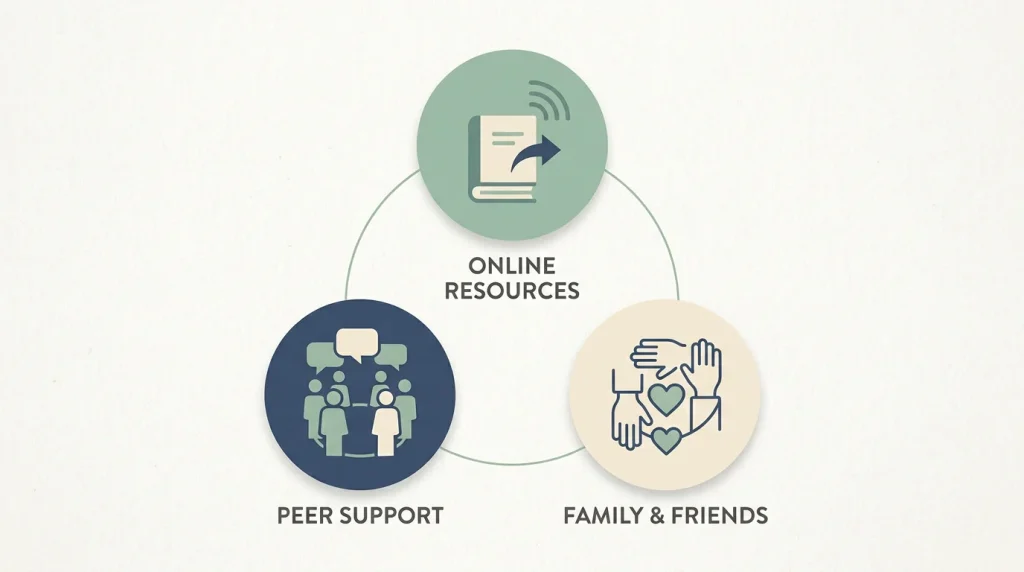
GamCare’s online services, accessible via the same gamcare.org.uk address, include an online forum, real-time chat with advisers, structured online groups, and access to short-course talking therapies delivered by GamCare-affiliated counsellors. The GamCare website also hosts the National Gambling Treatment Service service-finder.
GambleAware operates as the strategic commissioning charity for treatment, prevention and harm-reduction in Great Britain. Its public-facing site hosts the same treatment service-finder, plus the Bet Regret behavioural campaign and a substantial library of self-help materials. GambleAware does not deliver direct treatment itself; it commissions services delivered by other providers.
Gamblers Anonymous UK is a peer-led twelve-step fellowship. Meetings are open to anyone with a gambling problem and are free to attend. GamAnon operates in parallel as a peer-support route for family and friends of people affected by gambling.
What NHS clinical services exist?
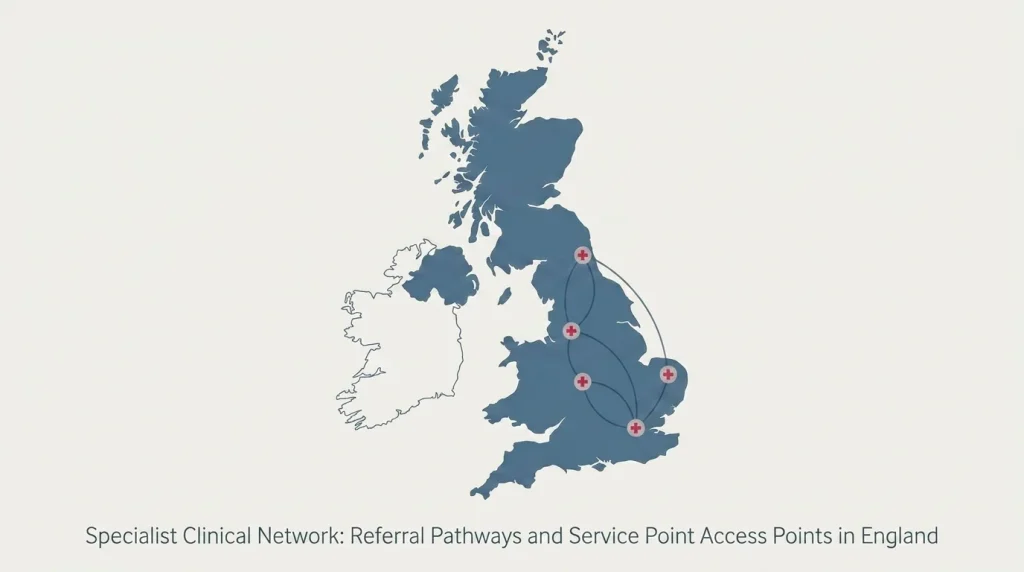
The NHS provides specialist gambling treatment through the National Gambling Support Network (NGSN). Five regional services cover England and parts of the wider UK as at 2026.
- NHS National Gambling Clinic
- Based at Central and North West London NHS Foundation Trust. Referral by self-referral or via primary care. Contact email: [email protected]. The clinic provides assessment, structured cognitive behavioural therapy, and group work.
- NHS Northern Gambling Service
- Covers the north of England with bases including Leeds, Manchester, and Sunderland. Self-referral accepted. Offers assessment and treatment for both gambling and gambling-related mental health needs.
- NHS Primary Care Gambling Service (PCGS)
- A specialist primary-care service running structured treatment for adults experiencing gambling harm.
- East of England Gambling Service
- Regional NHS-commissioned gambling service covering the eastern region.
- NHS Midlands Gambling Service
- Regional NHS-commissioned service covering the Midlands footprint.
Published National Gambling Support Network data indicates an average wait of five to nine days between first contact and the start of structured treatment, and that 10,754 people received support across the network during 2024. Of those who completed structured treatment, around 95 per cent reported improvements at the harm level on assessment scales used by the network.
Is residential treatment available?
Yes. Gordon Moody is the principal residential provider in the UK for severe gambling harm. The charity runs residential programmes for men and for women, alongside online structured programmes and an outreach service. Residential treatment is free at the point of access for those accepted onto the programme, with referral typically via GamCare or direct application to Gordon Moody.
Residential treatment is appropriate for a specific cohort of people experiencing severe and complex difficulty; the assessment process screens for fit. For most people the structured outpatient or online routes through the NGSN or GamCare are the appropriate first step.
What software-level blocking tools work for non-GamStop sites?
GAMSTOP itself does not block non-GamStop operators, because those operators are not bound by the UKGC integration requirement. Software-level blocking sits at the device level and is the most effective tool against non-GamStop access.
GamBan is the dominant paid option in this category. It installs as an application or browser-level filter across Windows, macOS, iOS, Android and Chrome, and blocks access to a continuously updated list of gambling sites including non-GamStop and offshore operators. Subscription is annual; the cost in 2026 sits in the region of £25 to £30 per year. GamBan is supplied free of charge to anyone in active treatment through the NGSN.
Bank-level gambling-block toggles at Lloyds, Barclays, HSBC, NatWest, Santander UK, Monzo, Revolut and Starling provide a complementary layer at the payment level. They do not block website access but they block the transaction; the combination of device-level and bank-level blocking covers most realistic relapse paths.
For readers who registered on GAMSTOP and now want to understand the legitimate exit route from the scheme rather than circumvent it, the procedure sits on how to come off GamStop properly.
What about self-exclusion routes themselves?
Three distinct UK self-exclusion mechanisms exist. GAMSTOP covers UKGC-licensed remote operators; SENSE covers UK land-based casinos under the Betting and Gaming Council scheme; Gamstop Betting Shops covers UK high-street betting shops and is contactable on 0800 294 2060. Each operates independently and a player wanting comprehensive coverage of the regulated UK sector typically signs up to all three.
The combined coverage still does not extend to non-GamStop operators, which is why device-level blocking via GamBan and bank-level transaction blocks remain the complementary layers. The complete picture of what UKGC self-exclusion covers and does not cover is set out on lost protections context.
What financial support exists for gambling-related debt?
Two UK charities specialise in free debt advice that is well suited to people whose debt has built up through gambling. StepChange Debt Charity offers free regulated debt advice, budgeting support, and access to formal debt solutions where appropriate. National Debtline provides free confidential debt advice by phone, webchat and a structured online tool.
Neither service is a gambling-specific service, but both have substantial experience of clients whose debt is gambling-related and treat the situation without judgement. Practical first steps commonly include freezing access to credit, putting a hold on gambling-coded transactions through the bank’s gambling-block toggle, and triage of the debt portfolio with the adviser.
If the route into the debt was bonus chasing or wagering pressure at a non-GamStop operator, the underlying bonus arithmetic is worth understanding on how bonus dynamics can drive harm; reading it can sometimes help the conversation with a debt adviser by clarifying the path that produced the position.
What if you are based outside the UK or want anonymous online support?
Gambling Therapy is an international service operated by the Gordon Moody charity, providing online support across multiple languages. It is a useful route for UK residents who prefer an entirely online and text-based service, and for anyone outside the UK.
A direct closing note
Contacting any of the services on this page is free. None of them require disclosure of operator names, deposit amounts, or anything else you are not comfortable sharing. None of them will report you to a regulator or to any other body. The conversation belongs to you, and the next step you take from it belongs to you. Reaching out earlier is, in nearly every recorded case, easier than reaching out later.
The full picture is in our guide to casinos not on GamStop.
The formal UK scheme itself: how GamStop works.
Recommend
Created by the "Casino Not on Gamstop" editorial team.