
How does cryptocurrency deposit and withdrawal work at non-GamStop casinos?
 Available in GB
Cryptocurrency does not sit on any UK Gambling Commission cashier. That single fact frames the entire topic: any UK resident who decides to use Bitcoin, Ethereum, Tether or any other digital asset to fund online gambling is by definition transacting with an operator outside the UKGC perimeter. The mechanics, the speed, the tax position and the volatility exposure all flow from that starting point, and this guide walks through each in turn for readers reaching it from the wider Beyond GamStop overview.
Why is crypto absent from UKGC-licensed casinos?
The Gambling Commission has consistently treated cryptocurrency as outside the payment methods compatible with UK remote operating licences. The position is grounded in Licence Condition 5.1.2 on payment methods, which requires operators to ensure transparent traceability of funds and consistent application of source-of-funds checks. Crypto deposits, with their pseudonymous on-chain origins, cut across that requirement, and the Commission has publicly reiterated its supervisory concern through late 2025.
For operators outside the UK, that supervisory position is not binding. Curaçao, Anjouan and Kahnawake licensees may accept crypto as they see fit, subject to their own anti-money-laundering frameworks. The result is a clear segmentation: every crypto-accepting casino accessible to a UK resident is, by definition, non-GamStop. If you are weighing this route specifically because UKGC sites do not offer it, the licences behind crypto operators page sets out which regulators sit behind them.
Which cryptocurrencies are typically accepted?
The asset roster at non-GamStop crypto casinos has consolidated over the past two years. The near-universal core is Bitcoin (BTC), Ethereum (ETH), Tether (USDT, typically on the Tron TRC-20 chain for lower fees), Litecoin (LTC), Dogecoin (DOGE) and USD Coin (USDC). Solana (SOL), Ripple (XRP), Dash and Bitcoin Cash (BCH) appear at roughly two-thirds of cashiers. Monero (XMR), the privacy-focused asset, persists at a smaller subset and is the asset that draws the most operator policy variance.
Stablecoins matter disproportionately. A meaningful share of UK players who use crypto do so via USDT or USDC precisely to neutralise volatility on the deposit-to-withdrawal cycle. The trade-off is counterparty exposure to the stablecoin issuer; readers should not treat the dollar peg as identical to fiat custody.

| Asset | Typical confirmations required | Withdrawal speed once approved | Volatility on cycle |
|---|---|---|---|
| Bitcoin (BTC) | 1 to 3 confirmations | 30 to 90 minutes | High |
| Ethereum (ETH) | 10 to 30 confirmations | 5 to 20 minutes | High |
| Tether USDT (TRC-20) | 1 to 20 confirmations | 2 to 10 minutes | Low (stable peg) |
| Litecoin (LTC) | 3 to 6 confirmations | 5 to 15 minutes | Moderate |
| USDC | 10 to 30 confirmations | 5 to 15 minutes | Low (stable peg) |
What does the actual deposit flow look like?
The flow is consistent across operators. The cashier requests the asset; the system generates a single-use receiving address (and where applicable a memo or destination tag); the player sends from their own exchange account or self-custodied wallet; once the required number of network confirmations have been observed, the balance posts in the operator’s denominated currency (often GBP-equivalent, sometimes EUR or USD).
The friction points are predictable. Sending to the wrong network is the most common loss; an USDT on Ethereum sent to a TRC-20 address may be unrecoverable. Memo omission for assets such as XRP routes funds to a holding wallet that requires manual reconciliation. Gas fees on Ethereum at busy network times can exceed the deposit minimum itself, which is why the Layer-2 versions and Tron-based USDT have become dominant.

Withdrawal is the mirror image: the player provides an address in their wallet, the operator processes a payout once internal review completes, and the network broadcasts the transaction. UK exchanges including Coinbase, Kraken and the UK-regulated entity of Binance apply their own anti-money-laundering monitoring on inbound transactions; significant amounts attributed to gambling-associated wallets can trigger source-of-funds requests at the exchange end, separate from anything the casino itself has done.
How does the speed compare against cards and e-wallets?
The speed differential is the headline reason most readers consider crypto in the first place. Once operator approval has been issued, a crypto withdrawal arrives in the player’s wallet inside minutes to a couple of hours, depending on the network. The card and e-wallet equivalents discussed in the non-crypto payment routes guide require one to three business days for cards and 12 to 48 hours for e-wallets, and that is after the same operator approval step.
The qualifier is important. Operator approval is the slow stage in either route, and a crypto cashier does not bypass KYC. A first significant withdrawal commonly triggers a full identity and source-of-funds review that can run 48 to 96 hours regardless of asset. The speed advantage materialises on the settlement leg, not on the operator’s internal pipeline.
How do crypto-specific bonuses differ?
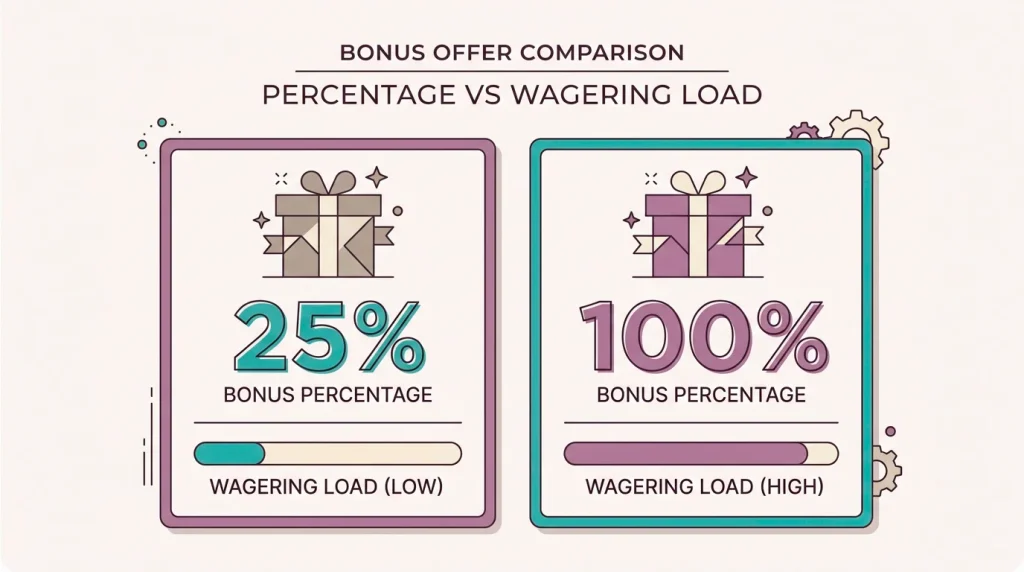
Crypto deposits at non-GamStop casinos often attract their own bonus tier, parallel to but distinct from the fiat welcome offer. Match percentages on the crypto leg sometimes reach 300 to 500 per cent, against typical fiat ranges of 100 to 200 per cent. Wagering multipliers on those crypto bonuses are also frequently lower, occasionally as light as 1x to 10x on dedicated stablecoin offers, against 30x to 50x on fiat welcome packs.
The arithmetic still demands attention. A 500 per cent match with a £100 deposit looks generous on the front page, but a max-bet cap during wagering, weighted game contributions and a 10x maximum-cashout multiplier can compress the headline figure substantially. The mechanics are the same as on fiat, and the underlying mathematics is explored in the bonus terms behind the offers page.
What does HMRC say about crypto gambling winnings?
The UK position on gambling winnings is straightforward and long-standing: winnings from gambling are not taxable for the player, irrespective of whether the operator is UKGC-licensed or offshore, and irrespective of whether the wager was placed in pounds sterling or in crypto. The HMRC reference is set out in the HMRC Cryptoassets Manual, which is the authoritative position on tax treatment of digital assets across the relevant scenarios.
What does carry tax consequences is the disposal of crypto outside the gambling transaction. If a UK resident acquired Bitcoin as an investment in, say, 2020, holds an unrealised gain, and uses that Bitcoin to fund a casino deposit, HMRC’s general capital gains rules treat the disposal as a chargeable event at the moment the deposit is made. The taxable event is the disposal, not the wager. The annual capital gains exempt amount applies in the usual way; the rest is reportable on the relevant self-assessment return.
This is the single most under-explained nuance in the popular coverage of crypto gambling. The deposit does not become taxable; the disposal of the underlying asset is what HMRC focuses on. Readers with material crypto investment positions should treat that as a question for a qualified tax adviser rather than rely on operator marketing pages or forum threads.
What is the volatility risk on the deposit-to-withdrawal cycle?
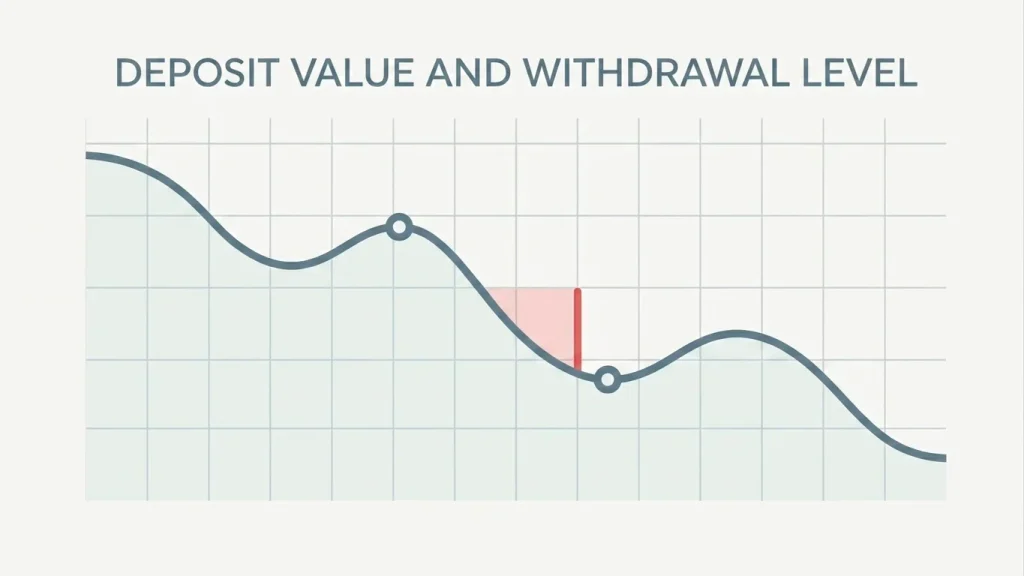
Most coverage of crypto gambling positions the asset as pure upside on speed and privacy. The volatility leg is what tends to be skipped over. A worked example clarifies the dynamic: a UK player deposits 0.005 BTC at a price of £50,000 per BTC (a notional deposit of £250). Over an eight-hour playing session, the player has net winnings of 0.001 BTC; the balance for withdrawal is therefore 0.006 BTC. During the operator approval period the BTC price drops 12 per cent to £44,000. The withdrawal lands intact in the player’s wallet, but converted back to GBP it is worth £264 rather than the £300 the wallet balance implied earlier in the session.
Stablecoins mitigate that risk and are, for that reason, the rational default for any player whose objective is straightforward gambling rather than directional crypto exposure. The trade-off is the residual counterparty exposure to the stablecoin issuer, and a small spread cost on conversion at the exchange end.
What practical checks should you run before a crypto deposit?
Three checks materially reduce avoidable loss. First, confirm the receiving address and network match the asset being sent; copy and paste, do not retype, and verify the first six and last six characters after pasting. Second, run a small test transaction before a meaningful deposit, especially on a network the player has not used previously. Third, screenshot the cashier confirmation, the on-chain transaction hash and the operator’s stated withdrawal policy; this triad is the only evidence base if a dispute arises later. Disputes outside the UKGC perimeter cannot rely on the UK Alternative Dispute Resolution route, as the wider crypto-accepting operators in detail comparison sets out.
None of this is advice to use crypto for gambling. It is the operational reality for readers who have already decided to do so. The volatility leg, the HMRC disposal point and the absence of UK consumer-protection rails are the three considerations that distinguish crypto routes from card or e-wallet routes, and they deserve to be weighed individually rather than as a single package.
The full picture is in our guide to casinos not on GamStop.
The conventional routes compared: cards and e-wallets.
Recommend
Published by the Casino Not on Gamstop team.