
UK Casino Sites That Accept Credit Cards: The Rules
 Available in GB
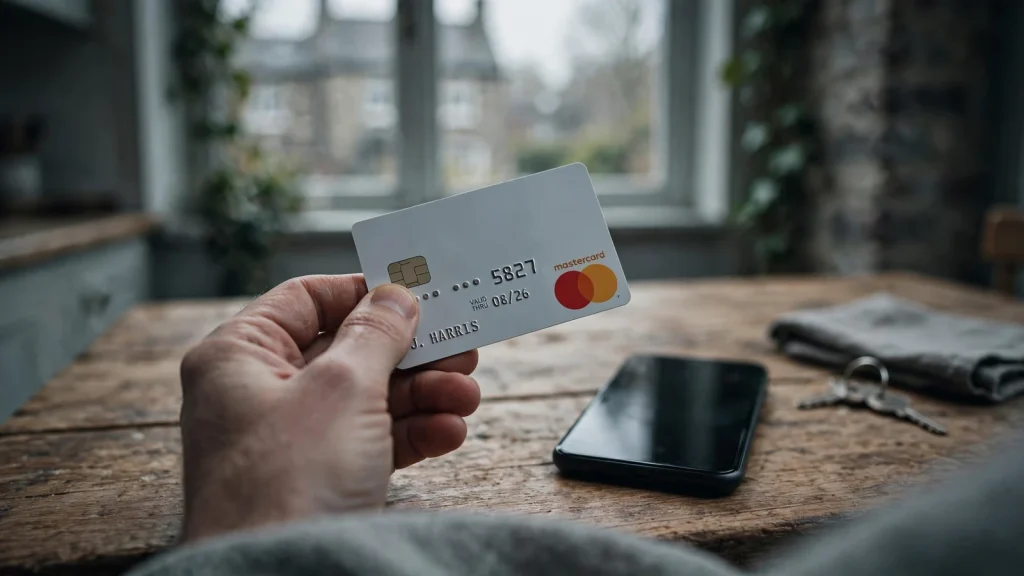
UK rules prevent licensed casinos from accepting credit cards for gambling, so deposits and withdrawals depend on other payment methods.
Why UK-Licensed Casinos Don’t Take Credit Cards
Credit-card payments for gambling are not permitted at UK-licensed casinos. The restriction applies to remote gambling licensees serving the British market, so a site holding the relevant UK Gambling Commission authorisation cannot accept a credit card as a gambling deposit method.
The ban took effect on 14 April 2020. It has not subsequently been relaxed. That date matters because older payment guides, cached pages and general casino advertising may describe card deposits in terms that no longer fit the rules applying to the British market.
The policy was introduced to prevent gambling from being funded with borrowed money. A debit-card transaction draws on money already available in the linked account; a credit-card transaction creates or uses borrowing. The regulatory distinction is therefore about the source of the funds, not simply the shape of the card or the payment screen used to submit the transaction.
This also covers indirect arrangements. A remote gambling licensee cannot accept credit-card payments through a money service business, and a wallet cannot be used for gambling where its balance has been funded with a credit card for that purpose. Moving the payment through another layer does not change the underlying character of the funds.
Why casino pages still mention cards
The phrase “cards accepted” is often used as shorthand for card payments generally. At a UK-licensed casino, that wording cannot lawfully mean that credit-card deposits are available. It may refer to debit-card processing, to an international page written for several markets, or to a payment-method description that has not been updated for the customer’s jurisdiction.
That is where promotional wording becomes less precise than the regulation. “Visa” or “Mastercard” identifies a card network, not whether the card is debit or credit and not whether a particular product can be used for gambling. The cashier and the account’s location determine what the operator can actually process.
In my experience, this is one of the easiest distinctions to miss when a payment logo appears beside a casino registration button. The logo is a signpost, not permission.
Casino Payments in the UK: Deposit and Withdrawal Options
A British customer may therefore find a card symbol on a casino page while being unable to use a credit card at the deposit stage. For a UKGC-licensed operation, refusing that transaction is not an optional policy or a temporary cashier setting. It is part of the operator’s compliance obligations.
The same rule should be understood alongside the wider licensing framework. Remote gambling licensees selling into Great Britain must hold a Gambling Commission licence, and licensed casinos cannot treat a credit-card deposit as acceptable merely because the issuer, wallet or intermediary is located elsewhere.
The practical result is straightforward: “casino sites that accept credit card” is not an accurate description of a lawful credit-card deposit route at a UK-licensed casino. Any card-related claim needs to be read as a question about the permitted card type and the specific cashier, not as evidence that gambling credit has returned.
Top online casinos in the UK
- Revery PlayBonus: 100% up to€1,000+ 100 FS · Payout speed: 1-3 business days
- ChanzeBonus: Slots Welcome Bonus #1 200% up to €500 · Payout speed: 1-3 business days
- SlotoSportBonus: 500% up to £ 10 200+ 777 FS · Payout speed: 1-3 business days
- AmunbetBonus: Join now and get 450% up to 2,700 GBP + 450 FS · Payout speed: 1-3 business days
- NightLuckBonus: Welcome Pack + 805% Up To 6400€ + 280 FS · Payout speed: 1-3 business days
- BritsinoBonus: Welcome Package – Get your £2,200 + 2,000 FS · Payout speed: 1-3 business days
What “Credit Card Casino” Means in the UK
The phrase “credit card casino” is misleading in the British market. It sounds like a casino where a credit card can be selected at the cashier, entered as the funding source and used for gambling deposits. That is not how a UK-licensed casino payment menu should be understood. The practical distinction is between a credit card and a debit card, even when both carry the Visa or Mastercard name.
A debit card spends money already held in the linked bank account. A credit card draws against a borrowing facility. The brand printed on the card does not determine which of those two products it is. Visa and Mastercard operate payment networks; they do not, by themselves, say whether the card is debit or credit. That product classification matters at a gambling cashier.
Why Visa and Mastercard do not settle the question
Casino pages often display familiar card logos. A reader can see Visa and Mastercard and reasonably assume that any Visa or Mastercard will work. In practice, the logo identifies the network, not guaranteed acceptance of every card product. A Visa debit card and a Visa credit card are not interchangeable for this purpose.
Visa
Identifies a card network, not whether the card is debit or credit.
Mastercard
Identifies a card network, not whether the card is debit or credit.
Debit Card
A card that draws on money already available in the linked account.
Credit Card
A card that creates or uses borrowing and is not permitted for gambling deposits.
UK casinos commonly offer debit-card deposits, including cards issued on the Visa and Mastercard networks. That is why a payment page may appear to support “cards” while a credit card is rejected, absent from the cashier or blocked when the transaction is attempted. The wording is broad; the transaction control is narrower.
I have seen this cause confusion during payment checks. A marketing panel says “Visa and Mastercard”, while the cashier accepts only eligible debit products for a particular British account. The two statements can coexist without the casino accepting credit-card payments for gambling. The logo is a signpost, not a promise.
A useful reading of card-related wording is therefore:
- “Visa accepted” may refer to an eligible Visa debit card.
- “Mastercard accepted” may refer to an eligible Mastercard debit card.
- “Card deposits” may describe the payment category rather than every type of card.
- A displayed logo does not confirm that the method is available to every customer or for every card product.
The important word is “eligible”. Quietly decisive.
“Credit card” may describe the search, not the cashier
People often use the language of the payment problem rather than the technical wording used by the operator. Someone looking for a way to fund a casino account may type a phrase about credit-card casinos while actually needing a card-based deposit option, a replacement for a refused payment, or a casino where a debit card can be used.
That does not make the underlying distinction less important. A debit card is not a credit card simply because it carries the same network logo or is used at the same type of cashier. Treating the terms as synonyms creates the wrong expectation about what a UK-licensed remote gambling operator will accept.
The same issue appears in descriptions of “casino sites that accept credit cards”. A page may be using loose card terminology, referring to debit-card support or repeating a generic payment icon. It should not be read as evidence that credit-card deposits are available at the UK-licensed site. The only meaningful confirmation is the payment option presented for the relevant account and the product category allowed by the operator.
What the word “best” can conceal
A label such as “best credit card casino sites” can also hide several different requirements. It might mean a site with a familiar card logo, a debit-card cashier, a particular withdrawal route, or simply a payment page that is easy to understand. Those are different tests.
The logo alone says little about:
- whether the account is configured for a customer in Great Britain;
- whether the selected card is debit or credit;
- whether the card can be used for deposits only or also for withdrawals;
- whether the account currency matches the card account;
- whether the casino has placed a payment restriction on the account;
- whether the card belongs to the same customer as the gambling account.
These details are not decorative terms and conditions. They determine whether a payment attempt proceeds, is declined or creates additional ownership checks. A casino can publish a card brand while the live cashier presents a narrower set of options.
A specialist review may list Visa and Mastercard among the payment methods associated with the sites it examines. That kind of list is useful as an indication of the payment categories discussed, but it is not a substitute for checking the current British cashier and the particular card product. Availability changes, and a general payment page may not reflect the customer-specific options shown after registration and verification.
Debit-card wording in practical terms
When a UK casino says that Visa or Mastercard is accepted, the realistic interpretation is commonly an eligible debit card rather than a credit card. The debit card must still pass the operator’s checks and the payment provider’s authorisation. A declined transaction does not automatically mean that all card payments are unavailable; it may relate to the product type, issuer decision, account details or the cashier’s current configuration.
The cleanest terminology is therefore:
- Credit card: a borrowing facility and not an accepted gambling funding route at a UK-licensed casino.
- Debit card: a card linked to available funds in a bank account and commonly supported by UK casinos, subject to the cashier’s conditions.
- Visa or Mastercard: a payment network name, not a guarantee that either a debit or credit product will be accepted.
This vocabulary prevents a common mistake: assuming that a card bearing Mastercard must be treated like every other Mastercard. The casino and payment processor see more than the logo.
“Not on GamStop” does not change card terminology
The addition of “not on GamStop” to a card-related description does not turn a credit card into an accepted payment method. It also does not make a site a UK-licensed casino or alter the product distinction between credit and debit cards. A separate claim about self-exclusion status cannot be used to infer card acceptance.
For a British customer, the relevant question remains what the licensed cashier allows for that account and card. Payment wording should not be stretched to create an exception that the payment control does not provide. A different site description, a foreign payment page or a reference to a card logo does not establish that credit-card deposits are available at a UK-licensed casino.
How to read a card payment page
The useful check is not whether a page contains the word “card” or displays a familiar logo. It is whether the live cashier identifies the available card product and permits the intended transaction for the account. The account’s location, status and currency can affect what appears. The card’s type and ownership matter as well.
A short card-payment description should therefore be read cautiously:
- Identify whether the option is labelled as debit, credit or simply card.
- Check which card products the cashier actually permits.
- Confirm that the option is active for the British account rather than shown in a general payment list.
- Check whether the route is intended for deposits, withdrawals or both.
- Ensure the payment instrument belongs to the same customer as the casino account.
A specialist review can point towards the relevant payment category, but the cashier is the operational test. That distinction is particularly important where a page has been updated at a different time from the payment system.
The phrase “credit card casino UK” is thus best understood as shorthand for a search about card-funded casino payments, not as proof that UK-licensed casinos accept credit cards. In the regulated British setting, the card logo may be familiar, the debit-card option may be genuine, and the credit-card interpretation may still be wrong. Read the product, not the logo.
Depositing and Withdrawing Without a Credit Card
Funding a UK casino account does not depend on a credit card. The practical choice is between a payment route that can put money into the balance, one that can also receive winnings, and a method that may work for only one side of the transaction.
That distinction matters because a cashier can display a payment logo without offering the same function in both directions. A method may be available for deposits but absent from the withdrawal screen. Paysafecard is the clearest example: it is a prepaid voucher intended for deposits, so it should not be treated as a route for receiving casino winnings.
Funding a UK casino account does not depend on a credit card, but rather on choosing appropriate deposit and withdrawal methods.
Debit cards and digital wallets
Debit cards are among the familiar alternatives. UK casinos commonly show Visa and Mastercard debit-card payments, although the exact card product and its current eligibility still belong to the individual cashier. A debit card is not the same as a credit card, even where the branding looks similar.
Digital wallets provide another route. PayPal is widely associated with quick account funding and convenience, but a specialist review may report that some casinos exclude PayPal transactions from bonus eligibility. That is a promotional condition, not evidence that the wallet can be used for every transaction or under every offer.
Skrill and Neteller are also present at some sites. A specialist review may note that these wallets are excluded from particular promotions, so the payment method and the bonus terms need to be read separately. Skrill remains one of the most common deposit choices reported for UK-friendly casino sites in 2026, while Jeton is still found at a handful of UK online casinos in the same year. Availability is narrower, and neither name should be assumed to appear in every cashier.
Digital Wallets
Digital wallets like PayPal, Skrill, and Neteller are common alternatives, though some may have specific restrictions regarding bonus eligibility or transaction types.
Skrill is a common choice for UK-friendly sites in 2026, while Jeton is also found at a handful of casinos. Note that EcoPayz changed its name to Payz in 2022.
EcoPayz is another name that can cause confusion in older payment lists. The service adopted the Payz name in 2022, so an old reference and a current cashier label may describe the same payment brand at different points in its history.
Apple Pay is accepted for deposits by some UKGC-licensed casinos. That wording is deliberate: deposit support does not automatically establish withdrawal support. The wallet account, the linked card and the casino’s own payment policy can all affect what happens when funds need to leave the gambling account.
Open banking and bank transfers
Open banking connects a casino payment page with a bank account through an authorised banking flow. Bank transfer is the broader category, and the two should not be treated as identical in every cashier. A specialist review may describe open banking or bank transfer deposits as instant and withdrawals as fast at many sites, but that is a report about the sites covered, not a permanent feature of the whole market.
Cashier Check
- Open the cashier while logged in
- Separate the deposit and withdrawal tabs
- Check which methods are actually selectable
- Confirm the method matches the account holder’s details
- Verify the currency shown before entering an amount
The money route can also depend on the currency held by the casino account and the bank account. Where GBP is supported, keeping the account and payment route in the same currency avoids introducing an unnecessary conversion step. Bank-transfer delivery can also be affected by cut-off times, weekends and currency conversion. The payment page may show a route as available while the bank still applies its own processing timetable.
For account ownership, the cleanest arrangement is often one named account used consistently for both directions. Matching the casino account details with the bank or payment account reduces the chance that basic ownership checks interrupt a deposit or withdrawal. It does not remove KYC, but it avoids creating an avoidable mismatch.
Deposit-only is not a withdrawal route
A payment method should be classified by what it actually does:
- Deposit and withdrawal: a route that the cashier expressly supports in both directions.
- Deposit-only: a method that can fund the balance but cannot receive winnings.
- Conditional: a route whose availability depends on the customer, currency, account status or transaction type.
Paysafecard belongs in the deposit-only category. Some wallet and mobile-wallet arrangements may also be limited in one direction, even where their logos appear beside several payment options. Bank transfer and open banking can support both movements at many sites, according to a specialist review, but the active cashier remains the operative reference.
The same principle applies to debit cards. A card may be accepted for a deposit yet not be the destination selected for the withdrawal. UK anti-money-laundering controls generally require winnings to be sent back to the original payment source. If that route cannot accept a payout, the casino may request another method or additional verification rather than simply sending the money wherever requested.
That is the closed-loop logic behind many payment checks. The aim is to connect the withdrawal with the funding trail and the verified account holder. It can feel inconvenient when a deposit method is available immediately but the matching payout route is restricted. From the operator’s side, it is an ownership and anti-fraud control.
What happens when a withdrawal is requested
A withdrawal is not the reverse of a deposit at the same speed. The casino must approve the request internally, and the first payout can take longer while KYC documents and account details are completed. A specialist review identifies internal approval and verification status as key factors in withdrawal speed.
Casino Sites That Accept Skrill in the UK
This is why a fast deposit does not establish a fast payout. Open banking, bank transfer, PayPal and debit cards connected to fast payout systems are described in a specialist review as being among the quicker withdrawal routes, but the operator’s approval stage remains part of the overall process. A payment provider cannot complete a transfer that the casino has not yet released.
The original-source rule may also shape the sequence. A casino can return funds to the method used to deposit, then require another verified route for any remaining amount or for a method that is deposit-only. Additional checks may follow when the requested destination does not match the established payment trail.
The practical check is therefore simple: identify the funding method, confirm whether it is deposit-only or supports withdrawals, and keep the account ownership details consistent. The cashier decides the available route. Not the logo.
Payment Methods, Compatibility and the Cashier Check
A payment logo on a casino page is not the same thing as an available payment route. It may describe a method supported somewhere in the operator’s network, appear in general banking information, or remain on a page after the cashier rules have changed. The practical question is narrower: does the method appear for this account, in this jurisdiction, and for the transaction being attempted?
Final Authority
The live cashier is the only definitive source of payment availability for your specific account.
That distinction matters particularly when a site is described with phrases such as “credit card casino” or “online casino accepting credit cards”. At a UK-licensed casino, a card logo cannot be treated as permission for credit-card payments for gambling. Visa and Mastercard may refer to debit cards, and the exact card product still has to be accepted by the cashier. The label alone proves very little.
Why the cashier has the final say
Casino payment pages are often written at a general level. The cashier is account-specific. It can apply the customer’s country, age and verification status, the account currency, internal risk controls, the selected product, and the direction of the transaction. A method visible in a help article may therefore fail to appear after login, while another method may be displayed only for deposits or only for withdrawals.
This is why payment compatibility should be checked in the following order:
- Open the cashier while logged in.
- Separate the deposit and withdrawal tabs.
- Check which methods are actually selectable.
- Confirm that the chosen method matches the account holder’s details.
- Check the currency shown before entering an amount.
- Read any method-specific conditions displayed beside the option.
That sequence is less impressive than a payment-logo strip, but it reflects how transactions are actually controlled.
An industry review may describe the payment range as Visa, Mastercard, bank transfer, e-wallets and several cryptocurrencies. Such a description can be useful as an indication of what the operator has presented publicly, but it is not confirmation that every method is active for every UK account. Payment availability changes, and the cashier is the operative screen.
Deposit support is not withdrawal support
A method can be available for adding funds without being available for receiving winnings. Paysafecard, for instance, is a deposit-only prepaid voucher. Treating every deposit icon as a complete banking solution creates a problem at the point where funds need to leave the casino.
The same issue can arise with cards and e-wallets. The cashier may accept a particular route for funding but direct a withdrawal through another route, subject to closed-loop rules and ownership checks. UK anti-money laundering controls commonly require winnings to be returned to the original payment source. Where that is not technically possible, an alternative may require additional verification rather than becoming an automatic replacement.
The cleanest arrangement is often one named account used consistently for both sides of the transaction. The account holder’s details and the payment account should belong to the same customer. That alignment reduces avoidable friction over ownership, though it does not remove the casino’s right to request KYC documents or complete its internal checks.
A payment method should therefore be described precisely:
- Deposit and withdrawal: available for both directions, subject to the cashier’s current rules.
- Deposit-only: usable for funding but not for receiving a payout through that route.
- Displayed but unavailable: named in public material but not selectable for the account.
- Conditional: shown only after verification, within certain account settings, or for a particular currency.
“Available” is not a single status.
Card brands and card products
Visa and Mastercard are payment networks, not a guarantee that every card carrying those marks will work. A debit card, prepaid card or another card product can be treated differently by the operator, issuer or payment processor. The decisive question is not whether the brand appears in a banner; it is whether the specific card product is eligible when the cashier processes the transaction.
This also explains why a person searching for the best online casinos that accept credit cards may encounter card branding without finding a legitimate credit-card deposit option. The visible logo may concern debit-card acceptance, or it may be a general statement that requires account-level confirmation. It should never be read as permission to bypass the UK restriction on credit-card payments for gambling.
The same caution applies to e-wallets. A wallet is not automatically suitable merely because its name appears in a payment list. UK remote gambling operators cannot accept wallet payments where the wallet permits credit-card funds to be used for gambling. The funding path matters as much as the wallet name.
Attention UK remote gambling operators cannot accept wallet payments if the wallet balance has been funded with a credit card for that purpose.
A specialist review can identify methods mentioned in an operator’s public material, but it cannot replace the logged-in cashier for the final eligibility check.
Country, account status and changing availability
Payment menus are not fixed catalogues. They can differ according to the customer’s location within the UK, the operator’s current processor arrangements, the account’s verification stage and the product selected. Account status can also affect transaction limits and the appearance of particular options.
Age verification comes before depositing funds into a gambling account. Financial controls are part of the same account environment: remote gambling operators must prompt a new customer to set a financial limit before the first deposit and provide accessible account-level limit controls. These controls can affect how the cashier behaves, but they should not be confused with payment compatibility.
A method may also be restricted by the casino’s commercial terms. An e-wallet can accept a deposit while being excluded from a promotion, as some specialist reviews have reported for methods such as Skrill or Neteller. That is a bonus condition, not proof that the method works for withdrawals or remains available to every account. The transaction screen and the promotion terms answer different questions.
Currency must be checked before the first transaction
The currency displayed in the account is easy to overlook because the payment method may be familiar. Public pages may state that GBP is supported, yet the account’s actual currency still needs confirmation before the first deposit. If the account or payment route uses another currency, conversion can occur even when the casino accepts the card or wallet itself.
The relevant check is not only the currency symbol beside the deposit field. It includes:
- the casino account currency;
- the currency accepted by the payment provider;
- the currency of the bank or card account;
- any conversion applied by the casino, provider or issuer;
- the currency that would be used for a withdrawal.
A route that appears compatible can become expensive or confusing when these currencies do not align. A displayed balance may not represent the amount that leaves the bank account, and a payout may be converted again on its way back. Confirming GBP before the first transaction helps prevent that mismatch.
A practical cashier record
I treat the cashier as a transaction record rather than a menu to browse. Before committing funds, the useful details are the method’s direction, the account currency, the stated minimum and maximum, any fee notice, and the identity information required for confirmation. The available options should be recorded at the time of the transaction because payment menus can change.
A simple check looks like this:
| Check | What it establishes |
|---|---|
| Method visible after login | It is being offered to that account at that moment |
| Deposit or withdrawal tab | The direction in which it can be used |
| Card or wallet product | Whether the specific product is eligible |
| Account currency | Whether conversion may be involved |
| Name and ownership details | Whether basic payment matching is consistent |
| Terms beside the method | Whether separate conditions apply |
This does not turn a payment logo into a guarantee. It does something more useful: it shows what the casino is prepared to process for the particular account, under the particular conditions shown at the time.
The cashier is the real specification.
Paying by Card: What Happens at Deposit and Withdrawal
A card deposit and a card withdrawal are separate processes, even when they appear under the same payment logo in a casino cashier. The deposit is an authorisation request: the card issuer approves the charge, the casino records the balance, and the funds can appear almost immediately. A specialist review describes the opposite side of the transaction as slower, with a payout taking several business days.
That difference is not necessarily a fault in the card network. A withdrawal can pass through internal checks before it is released. The casino may review account status, transaction history and ownership details, then send the approved amount through the payment provider and banking system. The visible “withdrawal requested” status therefore does not mean that the money has already reached the card account.
Withdrawal Speed
Withdrawal speed is influenced by internal casino approval, KYC verification, and the specific payment provider’s processing time.
Why payouts may return to the card
Anti-fraud controls and UK anti-money-laundering requirements commonly direct funds back to the original payment source. The purpose is to keep the deposit and withdrawal connected to the same account holder and reduce the risk of a payment route being used to move money between unrelated parties.
This is often called a return-to-source control. It can make the process look less flexible than the cashier suggests. A different payout route may appear as an option, but switching away from the original source can trigger extra ownership checks or document requests. A specialist review also links payout speed with the casino’s internal approval and the state of account verification.
The practical sequence is therefore simple: the card charge may show quickly, while the withdrawal remains pending until approval, payment routing and any required verification are complete.
Fast in, slower out.
What the “Best” Deposit Route Really Depends On
The “best” deposit route is not a permanent label attached to one payment method. It is the result of two separate calculations: what the transaction costs and how long the money takes to arrive or become usable. I have seen a method described as “free” when the charge was simply sitting in the exchange rate or being applied by another company.
The full cost of a deposit
The amount deducted from a bank account is not always determined by the casino. Possible charges can come from several points in the payment chain:
- a fee imposed by the casino;
- a charge from the payment provider;
- an issuer or bank fee;
- the exchange-rate spread;
- a network fee.
Some of these appear clearly before confirmation. Others are shown only in a bank statement or provider account. A card issuer, for instance, may treat a transaction according to its own fee policy, while a wallet or transfer service can apply its own charge independently of the casino cashier.
The meaningful comparison is therefore based on the actual transaction amount, not on a generic claim such as “low-cost payments”. The same route can produce a different result when the amount, account currency or charging party changes. A visible flat fee is only one line of the calculation.
The exchange rate deserves particular attention. A conversion spread is the difference between the underlying rate and the rate used for the transaction. It may look harmless beside a stated fee, yet the spread can cost more than that obvious charge. This is why a payment route advertised as having no fee is not automatically the cheapest route in practice.
Exchange-rate spread
The difference between the underlying rate and the rate used for the transaction, which can add hidden costs to a deposit.
“No fee” describes one line, not necessarily the whole transaction.
A specialist review may describe fee structures in broad terms, but the charge that matters is the one attached to the account, currency and payment route being used. Provider terms and the casino’s cashier remain more relevant than a general comparison label.
Speed is a separate decision
Cost and processing speed do not move together. A route may make a deposit available quickly while a bank transfer takes longer to arrive because the payment must pass through banking schedules. Bank-transfer delivery can be affected by the bank’s cut-off time, weekends and currency conversion. A transfer sent after a cut-off may be handled on the next processing cycle rather than immediately, even when the casino has accepted the request.
That makes the stated processing point important. “Processed” can refer to the casino accepting or releasing a transaction; it does not necessarily mean that the receiving bank has completed delivery. Currency conversion can add another stage, particularly where the casino account and bank account do not use the same currency.
A players’ forum may report that a bank transfer arrived quickly, but that experience does not establish a fixed timetable for every transaction. Timing depends on the route through the casino, provider and banks involved. The practical comparison is between the complete path and the actual need for the funds, not between isolated marketing descriptions.
A sensible comparison
For a fair comparison, the payment route should be assessed in this order:
- Check whether the casino adds a charge.
- Check the provider’s fee schedule.
- Establish whether the bank or card issuer adds a separate cost.
- Compare the applied exchange rate with the account currency.
- Look for network charges.
- Consider cut-off times, weekends and conversion stages where a bank transfer is involved.
There is no single payment method that remains the cheapest in every case. The correct result depends on the combined charges for that particular amount and currency. A method with a small stated fee may still be more expensive once provider costs, exchange spread and network charges are included. Mechanics matter more than the badge.
Playing Slots Without Credit-Card Funding
The game and the funding method are separate things. A slot is a casino game; a credit card is a payment instrument. In Britain, the question is therefore not whether a particular slot accepts a card. The relevant point is whether the remote gambling operator can accept credit-card payments for the gambling account. UK rules prohibit that route, so a UK-licensed casino cannot be used to fund slot play with a credit card.
That prohibition took effect on 14 April 2020 and has not been relaxed. It also covers credit-card funding routed through a money service business. A wallet does not solve the issue where its balance is funded by a credit card and then used for gambling: remote gambling operators cannot accept that arrangement either.
Casinos That Accept Wirecard in the UK: Payment Options · Casinos That Accept Citadel in the UK: How to Check · Casinos That Accept Upaycard in the UK: What to Check · Casinos That Accept E-Checks in the UK: Payment Guide
This leaves the slot itself unchanged. It remains available through a properly funded gambling account, subject to the operator’s account checks and the controls applied to online play. The payment method does not alter the game’s classification, and a slot does not become a “credit-card game” because a card appears in a search description.
There is a separate stake rule for online slots. For customers aged 25 and over, the maximum stake per game cycle is £5. For customers aged 18 to 24, it is £2 per game cycle. The £5 limit for all adults came into force on 9 April 2025. These are stake limits, not payment limits, and they do not restore credit-card funding.
Online slot autoplay is also banned in Britain, while each online slot spin must last at least 2.5 seconds. Those requirements concern how the game operates, not how the account is funded.
The practical distinction is simple: slot play may be legal at a UKGC-licensed casino for an eligible adult, but credit-card funding for that play is not. Different question.
Why must withdrawals return to the deposit method?
Returning funds to the original payment source is a common anti-fraud and anti-money-laundering control. Using a different method may require additional verification.
What is the fastest withdrawal method for UK casinos?
PayPal, open banking services, and debit cards linked to fast payout systems are generally among the quickest options. The casino’s approval process and whether your account is fully verified also affect how quickly funds arrive.
Is Skrill available?
Yes, Skrill remains a common deposit option at UK-friendly casino sites, although some casinos exclude it from promotions.
Do UK casino withdrawals require verification?
Verification may be completed before a first withdrawal, and payouts can take longer while checks are underway. Keeping account details and payment routes in your own name can help avoid basic ownership-related delays.
Can I use a credit card at 333 Casino in Great Britain?
No. UK-licensed casinos cannot accept credit-card payments for gambling deposits; eligible debit cards may be accepted instead.
Payments
Written by the editors at Casino Not on Gamstop.