
£1 Minimum Deposit Casinos in the UK: How It Works
 Available in GB
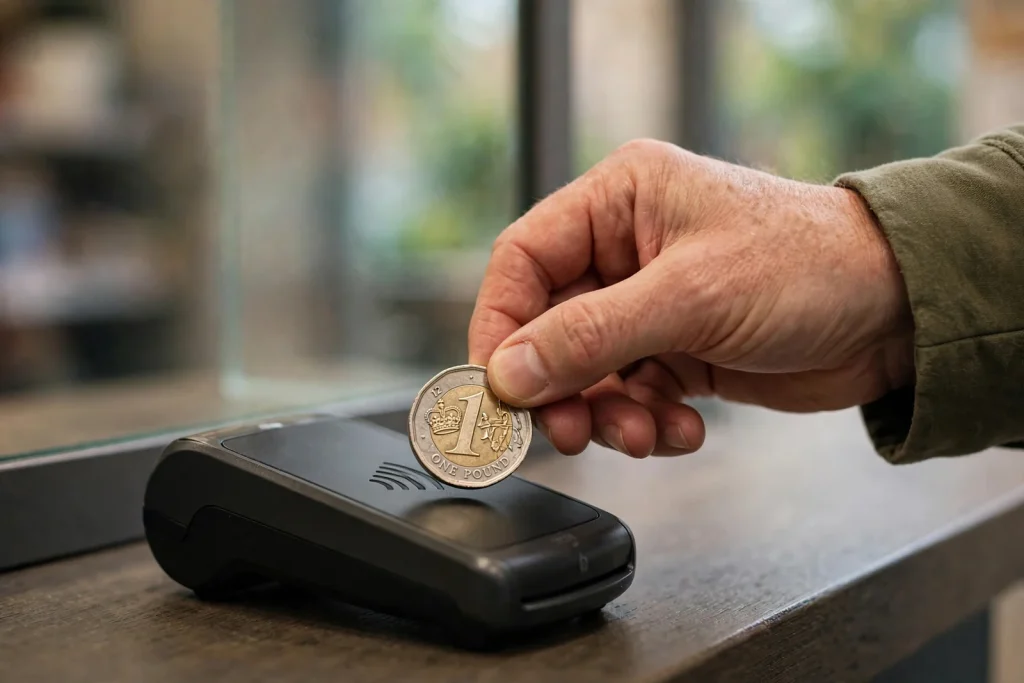
A £1 cashier minimum depends on the payment route and account eligibility, and does not necessarily qualify a deposit for a bonus.
What a £1 Minimum Deposit Actually Gets Into the Account
A £1 minimum deposit is a cashier rule, not a promise of a particular gambling experience. It means the account can be funded with a payment of one pound when the transaction is submitted through an eligible route and accepted by the operator. Once processed, that money becomes a real-money balance rather than a voucher, free-play credit or promotional allowance.
That distinction matters because “£1 minimum” is often used loosely. A casino may display a low entry figure beside a particular payment icon while applying a different threshold to the rest of the cashier. In that case, the advertised amount is not the universal cashier minimum. It is the lowest amount available under a specific route.
From behind the cashier, these are separate settings:
- the minimum amount the operator accepts;
- the payment method selected;
- any method-specific restriction;
- whether the transaction is permitted for the account;
- whether the amount is treated as a deposit balance or promotional funding.
A genuine £1 cashier minimum survives that check across the stated route. A low advertised entry point may not.
What “minimum” means in practice
If the cashier accepts a £1 deposit, the account is credited with £1 after the payment has been authorised and recorded. The amount does not become a larger balance simply because the casino uses the phrase “low deposit”. Nor does the cashier minimum determine the size of a later withdrawal or the conditions attached to any separate promotion.
The useful question is therefore not whether a page contains the words “one pound”. It is whether the cashier allows a one-pound transaction for the payment method available to the account. A genuine minimum deposit casino makes that condition visible at the point where the deposit is made, rather than relying only on a banner or comparison label.
Some UK casinos do accept deposits as low as £1. A specialist review identified six UK Gambling Commission-licensed casinos as accepting a genuine £1 minimum deposit, but that was a time-specific check rather than a permanent market register. The same review identified NetBet as the only UKGC-listed casino on its list with a £1 cashier minimum. Such claims can change when an operator revises its cashier settings, so the live deposit screen carries more weight than an old ranking.
Smallest tier.
The payment route can change the result
The lowest deposit tier is rare and has been associated with particular payment methods, including Boku and Payforit mobile billing. That does not mean every account can use those routes, or that every casino offering one of them will accept exactly £1 at all times. Availability can depend on the operator, the customer account and the method presented in the cashier.
Pay by Phone Casinos UK: How Mobile Deposits Work
This is why a page describing “£1 minimum deposit casinos UK” may include a qualification that is easy to miss: the amount may apply only to one payment channel. A card route can show a different minimum, while the mobile-billing option displays the lower figure. Both statements can be accurate, but only one applies to the transaction being attempted.
The distinction is especially important when a site describes itself as a “£1 casino”. That wording may identify the lowest possible funding level, not a universal condition for every payment method. The cashier is the operational document. Marketing copy is only a signpost.
A deposit also requires an eligible funding source. UK-licensed casinos cannot accept credit cards for gambling. Permitted routes include debit cards, e-wallets funded by debit and bank accounts, subject to the method and operator being available in the particular cashier. A one-pound label does not override those restrictions.
What the £1 balance does—and does not—show
The deposit threshold answers one narrow question: how little can enter the account through the stated route? It does not establish which games are available, how long a payment will take to appear, whether the balance is subject to a promotion, or whether the same amount can later be withdrawn. Those are different account and cashier conditions.
It also does not turn the deposit into a stake. A deposit is money placed in the account. A stake is the amount selected for a game round. The balance may be used for real-money play, but the cashier minimum says nothing about the size of a game bet or the number of rounds that a balance might support.
Age and account controls sit before the transaction. UK players must be at least 18, and an operator must verify age before allowing funds to be deposited.
Age and account controls sit before the transaction. UK players must be at least 18, and an operator must verify age before allowing funds to be deposited. New customers must also be prompted to set a financial limit before the first deposit, with account-level controls available afterwards. A displayed £1 option is not a way around those checks.
My own rule when assessing a claimed minimum is simple: ignore the headline until the cashier confirms the amount, the selected payment route and the account status. If the one-pound figure appears only beside a particular method, it is a method-specific entry point, not necessarily the casino’s general minimum. That small wording difference is the whole issue.
Top online casinos in the UK
- Revery PlayBonus: 100% up to€1,000+ 100 FS · Payout speed: 1-3 business days
- ChanzeBonus: Slots Welcome Bonus #1 200% up to €500 · Payout speed: 1-3 business days
- SlotoSportBonus: 500% up to £ 10 200+ 777 FS · Payout speed: 1-3 business days
- AmunbetBonus: Join now and get 450% up to 2,700 GBP + 450 FS · Payout speed: 1-3 business days
- NightLuckBonus: Welcome Pack + 805% Up To 6400€ + 280 FS · Payout speed: 1-3 business days
- BritsinoBonus: Welcome Package – Get your £2,200 + 2,000 FS · Payout speed: 1-3 business days
The Difference Between a £1 Cashier Minimum and a £1 Bonus Qualifier
A £1 cashier minimum answers one narrow question: how little money can be accepted into the gambling account through the cashier. It does not answer whether that payment will trigger a welcome offer.
Those are separate settings. The cashier controls access to the balance. The promotion controls eligibility for extra funds or spins. Marketing pages often place both messages close together, which makes a low entry threshold look like the price of joining the offer. It is not necessarily so.
£20 Minimum Deposit Casinos in the UK: How It Works
I have seen this distinction cause confusion because “from £1” sounds complete. In operational terms, it may mean that a customer can open the deposit screen, select an available payment route and add £1 to the cash balance. The welcome promotion may still specify a different qualifying amount, a particular payment route, or an exclusion for deposits below its stated threshold.
A £1 deposit can be real without being promotional
A genuine £1 minimum deposit means the operator’s cashier accepts that amount under the relevant conditions. Once credited, it is account money rather than bonus money. The account can therefore be funded even when the promotional requirement remains unmet.
A specialist review has reported that welcome offers commonly set their qualifying deposit between £5 and £10. On that basis, a £1 payment would put money into the account but would not activate the advertised deal. That is the practical gap between a minimum-deposit casino and a casino bonus with a £1 qualifying deposit.
The wording matters:
- Cashier minimum: the smallest amount accepted for a deposit.
- Qualifying deposit: the amount required for a particular promotion.
- Promotional exclusion: a term stating that deposits below the qualifying amount, or deposits made through certain routes, do not count.
These terms may appear in different parts of the operator’s website. The cashier can show £1 while the welcome-offer terms require a larger payment. Neither statement cancels the other.
Why welcome offers set a higher threshold
A welcome promotion is not simply attached to every transaction. The operator needs a clear event that starts the offer, and the promotion’s terms define that event. A qualifying amount is therefore a condition of the campaign, not a revision of the cashier minimum.
A specialist review has also recorded cases in which a platform technically accepts £5 deposits but requires £10 to qualify for a particular bonus. The same account can therefore have three different figures in play: the amount accepted by the cashier, the amount accepted by a selected payment route, and the amount recognised by the promotion.
That is why a claim such as “£1 minimum deposit with bonus” needs careful reading. It may describe the casino and its welcome offer in the same sentence without saying that £1 activates anything. The promotional headline can be accurate while still being easy to misunderstand.
The payment route can change the result
The £1 threshold may apply only to selected payment methods. A casino can display a low minimum for one route while assigning a higher minimum to another. The promotion may then impose its own eligibility rule on top of that payment-method rule.
A specialist review has noted that some UK casinos do not count £1 deposits towards welcome offers and may restrict particular payment methods at that level. This creates a three-part check:
- Is £1 accepted by the cashier?
- Is £1 accepted through the chosen payment method?
- Does that payment satisfy the welcome-offer terms?
A “yes” to the first question is not a “yes” to all three. The promotional page may also require the deposit to be made within a stated campaign period, although the central issue remains the qualifying amount and the payment route.
What “best” means in this narrow comparison
There is no useful single winner among £1 minimum deposit casinos when the main interest is a welcome offer. A site that accepts the lowest cashier amount may provide no promotional benefit at that level. Another operator may set a higher cashier minimum but explain its qualifying deposit more clearly.
For a legitimate and trusted UK option, the relevant distinction is transparency rather than the smallest headline figure. A current UK Gambling Commission licence is required for an operator selling remote gambling to Great Britain consumers. Age verification must take place before funds can be deposited, and a new customer must be prompted to set a financial limit before the first deposit.
Essential Distinction
Transparency regarding cashier minimums versus promotional qualifying deposits is vital for UK players.
Those safeguards do not turn a £1 payment into a bonus qualifier. They establish the conditions for lawful account access. Promotional eligibility remains a separate contractual question.
The wording to look for
The useful terms are not “low deposit” or “bonus included” on their own. The important phrases identify the minimum qualifying deposit, whether the lowest deposit tier is excluded, and which payment methods count.
Some UK casinos exclude their lowest deposit bracket from welcome promotions, according to a specialist review. That means a £1 deposit can be accepted, credited and used as real-money balance while leaving the welcome offer inactive. A later deposit may be needed to meet the promotion’s threshold, but that should not be assumed to repair an earlier transaction; the operator’s terms decide how eligibility is recorded.
The clean reading is simple: £1 gets money into the account; the bonus qualifier determines whether the promotion starts. Those are different gates. Small deposit, separate offer.
Where the Deposit Goes—and What It Can Cover
Once a £1 deposit reaches the gambling balance, it is not divided into a separate “small-deposit” wallet. It becomes cash available for eligible real-money games, subject to the operator’s account rules and the stake selected in the game. The practical question is therefore not whether the balance is labelled as a pound, but how many individual bets that pound can support.
Many online slots accept stakes between £0.10 and £0.20 per spin. At a £0.10 stake, a £1 balance represents ten spins if every spin loses. At £0.20, it represents five losing spins. That is the arithmetic before any winning return, feature payout or change to the stake is taken into account.
Slot Spin Math
Step 1: Determine the stake
Select a stake between £0.10 and £0.20 per spin.
Step 2: Calculate the number of spins
At a £0.10 stake, a £1 balance allows for ten spins if every spin loses.
Step 3: Factor in results
A winning spin returns a payout that can extend the balance, while a losing spin removes the stake.
The wording matters. Ten spins is not ten guaranteed opportunities to win, and five spins is not a fixed session length. A losing spin removes the selected stake from the balance; a winning spin returns a payout according to the game’s result. A single result can therefore leave the balance below, equal to or above its starting point. The initial pound sets the available exposure, not the outcome.
How the balance is consumed
Slot balances are reduced spin by spin. If the stake is £0.10, each losing result removes ten pence. A sequence of losing spins can use the full deposit quickly, while a run of winning results may extend play or create a balance that can be used for further bets. The cashier does not treat the deposit as a bundle of free attempts. It is real money, and every stake is drawn from the same account balance.
The selected stake can normally be changed within the game’s permitted range. That makes the displayed minimum stake important when assessing what a pound can cover. A title accepting £0.10 per spin gives the balance more individual spins than one whose lowest available stake is £0.20. The game’s bet settings, rather than the deposit label, determine the pace at which the funds are placed at risk.
I have seen “from £1” language make a balance sound more substantial than it is. The phrase describes the entry point into the cashier, not a meaningful bankroll for extended play. At the lowest stated slot stake, the amount can support a short sequence of spins if results are unfavourable. At the higher stake in the stated range, the same balance is exhausted in fewer losing spins.
£3 Minimum Deposit Casinos in the UK: How It Works
A pound is not a stake
“£1 minimum deposit” and “£1 stake” describe different parts of the transaction. The first concerns the amount placed into the account. The second concerns the amount risked on one game cycle. A casino may accept a £1 deposit while the selected game uses a much smaller stake per spin. Conversely, a player can choose a £1 stake where the game permits it, but that does not make £1 the casino’s deposit requirement.
This distinction is especially relevant to pages describing a “£1 minimum deposit casino”. The cashier threshold says what can enter the account. It does not state which games are available, what each spin costs, or how long the money will last. Those details sit in the game interface and its rules.
The same point applies when a balance includes winnings. A pound deposited and a larger balance created through play are not equivalent in risk terms. The larger balance can support more stakes, but it can also be put back into play. A displayed balance is not a protected amount; it remains available for further gambling until a withdrawal is requested or the funds are otherwise removed.
What the balance does not buy
A small real-money balance does not automatically provide access to every product in the casino. Game availability can depend on the operator’s catalogue, account status and any game-specific restrictions. The deposit itself does not guarantee that a particular slot, table game or live product will accept the balance.
Attention A small real-money balance does not guarantee access to every product in the casino, as game availability depends on the operator’s catalogue and specific restrictions.
Nor does the deposit create a right to a particular return. The £1 is the amount at risk, not a credit against future losses. If the chosen spins produce no winning return, the balance can reach zero after the corresponding number of losing bets. If a result produces winnings, those winnings become part of the account balance and can be staked again, subject to the same game and account conditions.
Withdrawal is a separate practical issue. A specialist review identified minimum withdrawal thresholds at many UK casinos in the £10-to-£20 range. That is materially higher than a one-pound starting balance. The implication is straightforward: a player may be able to use the money for real-money spins without having a balance large enough to meet an operator’s withdrawal threshold. The threshold is not a promise that every account can cash out from £1.
That is why the useful measure is not simply “accepted for a pound”. The relevant figures are the available stake, the number of losing spins the balance can cover, the treatment of any winnings and the cashier’s withdrawal condition. The deposit opens the account balance. The game settings determine its reach. The withdrawal rules determine when that balance can leave the account.
Short entry, limited runway.
Payment Methods That Can Handle a £1 Deposit
A £1 cashier minimum does not mean that every payment button in the cashier will accept £1. The operator may apply one threshold to debit cards, another to e-wallets and a higher one to direct banking. In some cases, the displayed minimum also depends on the payment provider’s own rules.
The practical comparison is therefore between the route shown in the cashier and the amount that route will actually process.
4 Pound Minimum Deposit Casinos in the UK
Debit cards
Visa and Mastercard debit cards are the most broadly supported options for a small deposit. They are accepted almost everywhere in the UK market and can support low minimum deposits, including a £1 transaction where the operator has enabled that level.
The card must be a debit card linked to a bank account. Credit cards are not a permitted gambling deposit route. The UK Gambling Commission’s ban on credit-card gambling took effect in 2020, so a gambling deposit must come from an eligible debit card, a permitted e-wallet funded by debit, or a bank account.
That distinction matters when a wallet offers several funding choices. A wallet payment is not automatically acceptable merely because it appears in the cashier. The underlying funds must not be credit-card money being routed into gambling.
From the operator’s side, cards are straightforward to configure: the cashier can accept a small amount without creating a separate account-funding process. From the player’s side, the important check is the amount displayed beside the specific card option, not a general statement elsewhere on the site.
E-wallets
Some e-wallets can process £1 deposits, but availability is operator-specific. A casino may support an e-wallet in general while setting a different minimum for it, or may allow the wallet only for selected account types or currencies.
E-wallets are often presented as a fast route for a small deposit, but the word “fast” does not answer the financial question. A flat transaction charge can change the cost of the payment materially. A specialist review has reported flat provider fees ranging from £1 to £3 for some transactions; that is a report about the providers covered there, not a fixed rule for every wallet or casino.
A flat transaction charge from a payment provider can change the cost of the payment materially. For example, a £1 fee on a £1 deposit means no money is added to the account.
On a £1 deposit, a £1 fee is not a minor addition: it can equal the amount being placed in the casino account. A higher fee makes the transaction still less economical. The cashier, wallet confirmation screen and account terms should therefore be read together before approving the payment.
There is another compliance point. UK-licensed operators cannot accept wallet payments where the wallet permits credit-card funds to be used for gambling. Eligible e-wallet use must be funded from debit or another permitted source.
Direct banking
Direct banking connects the casino payment to a bank account. It is a permitted route for UK gambling deposits, but it is less reliable as a £1 option because operators may set a higher cashier minimum for it than for cards or e-wallets.
A specialist review places the typical minimum deposit at UK casinos accepting direct banking at £10, with some operators setting the figure at £5 or £20. Those are reported operator thresholds, not a universal direct-banking rule. The relevant amount is the one displayed after selecting direct banking in the live cashier.
At a given operator, the minimum is generally kept the same across payment methods. The exception is important: some casinos impose a higher minimum on bank transfers while leaving cards or e-wallets at a lower level. That is why a casino described as having a £1 minimum deposit may still reject a £1 direct-banking payment.
Direct banking is also distinct from a card payment even when the money ultimately comes from the same bank account. The cashier treats the selected route as the controlling condition. A low card threshold does not automatically transfer to the bank option.
No Minimum Deposit Casino UK: What £1 Really Means
Paysafecard
Paysafecard works differently from a card or an e-wallet because it is sold in fixed-value vouchers. The available denominations are £5, £10, £25, £50 and £100, so it cannot normally be purchased as a £1 voucher.
That does not prevent a small deposit from being made. One voucher can fund several smaller casino deposits, provided the operator accepts Paysafecard and permits the amount entered in its cashier. The voucher value and the casino deposit amount are separate issues: the voucher may hold more than the sum placed into the account at one time.
This route can therefore suit repeated small deposits, but it is not the same as finding a payment method that issues a one-pound transaction. The casino still controls its own minimum, and the payment provider’s availability must be shown for the UK account rather than assumed from a general brand list.
The cashier is the final check
For an online casino with a £1 minimum deposit in the UK, the useful question is not whether the site displays a pound symbol somewhere on its payment page. It is whether the selected method accepts that amount after the account has been verified and the UK cashier has loaded.
A sensible check has four parts:
- select the exact payment method rather than relying on the site-wide minimum;
- confirm that the amount field accepts £1;
- look for a separate provider fee before authorising the transaction;
- make sure the source of funds is a permitted debit card, eligible e-wallet or bank account.
The short version: £1 is a payment-method question, not merely a marketing label.
Real-Money Play, Withdrawals and the Small-Balance Trade-Off
A £1 deposit can create a real-money balance rather than a bonus balance. That distinction matters: funds placed in the cashier can be used for eligible real-money games, and any resulting balance is treated under the casino’s withdrawal rules. The deposit amount itself does not determine whether the account can cash out.
The difficulty appears when the balance is small. A cashier may accept a £1 payment but set a withdrawal threshold above that amount. In that situation, a successful balance of less than the stated threshold cannot be withdrawn immediately. The money remains in the account until the balance reaches the operator’s minimum, subject to identity checks, payment rules and any applicable terms.
A specialist review reported that some operators show withdrawal thresholds between £1 and £5, while another specialist review placed the minimum at many UK casinos between £10 and £20. These figures describe reported operator terms, not a permanent market rule. The cashier attached to the particular account remains decisive.
Do
- Check the specific minimum for your chosen payment method
- Verify the withdrawal threshold before playing
- Confirm the source of funds is a permitted debit source
Don’t
- Assume a low deposit allows for an immediate withdrawal
- Treat a welcome bonus threshold as the cashier minimum
- Assume all payment methods share the same minimum
Deposit size is not a withdrawal promise
The phrase “£1 minimum deposit” describes the smallest amount accepted when money enters the account. It says nothing by itself about the smallest amount that can leave it. The two settings may be controlled separately because deposits and withdrawals carry different processing, verification and risk requirements.
This creates a practical trade-off for real-money play. A £1 balance may be enough to begin playing, but a small win can still remain below the withdrawal threshold. A player might therefore have a withdrawable balance in principle, yet still be unable to submit a cash-out request until the account reaches the required amount.
I have seen this confusion arise when the cashier presents the deposit field prominently while placing withdrawal conditions in a separate help page. “Low entry” is not the same as “low exit”.
What happens after a small win
Once play produces a cash balance, the casino applies its normal withdrawal process. The operator may require account verification before releasing funds, and the selected withdrawal route can have its own conditions. Those checks do not turn a real-money balance into bonus funds; they determine whether the operator is permitted to complete the payment.
Online Casinos That Accept SMS Deposits: How They Work
The important calculation is therefore not simply whether £1 can be deposited. It is whether the resulting balance can reach the withdrawal minimum without further funds being added. If the threshold is £1, a qualifying balance may be withdrawable under the operator’s process. If it is £5, £10 or £20, a smaller balance remains below the cashier’s payout floor.
That is why a real-money online casino accepting a £1 deposit should be assessed through both sides of the account lifecycle: the amount required to enter and the amount required to leave. Small balance, bigger condition.
£1 Slot Sites and the GamStop Question
A £1 cashier minimum says only how little money can be paid into an account. It does not show whether the operator participates in GamStop, whether an account is suitable for someone who has self-excluded, or whether the site falls within the British regulatory system. Those are separate checks.
GamStop is a self-exclusion service. A person registered with it should not look for a low-deposit casino outside the scheme or treat a £1 threshold as a route around an existing restriction. The amount displayed in the cashier cannot override a self-exclusion decision. From the operator side, the responsible question is not whether a small deposit can technically be processed, but whether gambling is appropriate under the account’s restrictions.
Compliance Check
UK-licensed operators must verify age and implement financial limits before allowing deposits. A low minimum deposit is not a way around regulatory safeguards.
The same distinction applies to claims about a casino being “not on GamStop”. That wording may describe a site outside the scheme, but it does not establish that the operator is authorised to offer gambling to people in Britain. Remote operators selling into the British market must hold a UK Gambling Commission licence, and legal online gambling is available only through licensed and regulated sites. An offshore operator is outside that regulatory system. A low minimum deposit does not change the position.
There is also a basic age control. UK players must be at least 18, and an operator must verify age before allowing a deposit into a gambling account. The cashier threshold is therefore not the first decision point. Age verification comes first.
A financial-limit prompt is another essential safeguard. UK-licensed operators must ask new customers to set a financial limit before the first deposit and provide account-level controls for managing it. That prompt should be treated as part of the deposit process, not as an optional interruption to dismiss quickly.
I have seen “£1 slot site” used as if it were a complete description. It is not. The phrase identifies a funding threshold; it says nothing by itself about GamStop participation, authorisation, age controls or safer-account settings. That distinction matters.
PayPal, Small Deposits and the Payment Minimum
PayPal can appear in a casino cashier without making a £1 deposit available. These are separate decisions: PayPal must be supported by the operator, the account must be eligible to use it, and the cashier must apply a minimum that permits the intended transaction.
iPad Casinos UK: Browser, Apps and Payments
I have seen the payment logo treated as if it were proof of the whole route. It is not. A casino may accept PayPal for deposits while setting its own minimum above £1. Another may show a £1 cashier minimum for cards but apply a different threshold to an e-wallet. “PayPal accepted” describes availability, not price.
At a given UK operator, the minimum deposit is generally aligned across payment methods. That is the starting position, not a promise that every route will behave identically. Operators can set a higher threshold for a particular method, and the cashier screen is the practical authority when the account is ready to fund. The difference is most often associated with direct banking, but payment-method rules can still matter when a small deposit is attempted through an e-wallet.
PayPal also does not change the underlying requirement that gambling funds must come from an allowed source. UK-licensed casinos cannot accept credit-card gambling deposits, and a wallet cannot be used where credit-card funds are being used for gambling. A PayPal balance funded through a permitted debit or bank source is a different matter from trying to route prohibited credit through the wallet.
The sensible check is narrow: confirm that PayPal is listed for the specific UK account, open the cashier, select PayPal, and read the displayed minimum before authorising anything. A search result or payment logo cannot establish that the operator will process a one-pound transaction.
Small balance, separate rule.
Low-Deposit Casinos: The Threshold Is Only One Part of the Cost
A low minimum deposit casino is not automatically inexpensive to use. The cashier threshold answers one narrow question: how little can be placed into the account under the stated conditions? It says nothing by itself about the cost of moving money out, or about charges attached to the payment route.
The advertised deposit threshold is only one part of the cost; transaction fees and withdrawal limits also determine the practical value of a small balance.
The withdrawal rule can change the practical value of a small balance. A specialist review of UK casino terms reported minimum withdrawal thresholds of £10 to £20 at many operators. A balance below that level may therefore remain in the account until more funds are available, or until the operator’s conditions allow another route. That is a separate issue from whether the initial deposit was accepted.
Transaction charges can also outweigh the amount deposited. A specialist payment review reported flat provider fees of £1 to £3 on some transactions. On a larger payment, such a charge may be a minor deduction. Against a very small deposit, it can represent a substantial part of the money entering the account. The advertised threshold is then technically low, but the usable value is lower than the headline suggests.
I have always treated the cashier page as a cost document, not merely an invitation to open an account. The relevant checks are the deposit threshold, withdrawal threshold and any fee shown for the chosen route. If those three details do not align, “low deposit” describes the entrance only.
Cheap to enter, perhaps.
Why £1, One Pound and ‘One Pounds’ Mean the Same Threshold
The phrases “£1 minimum deposit”, “one pound minimum deposit” and “one pounds minimum deposit” point to the same basic amount: one pound added to a casino account. The last form is not standard English, but its meaning is clear in context. Properly written, the amount is either £1 or one pound.
The wording matters because a deposit is not the same thing as a stake. A £1 minimum deposit describes the smallest amount accepted by the cashier for funding an account. It does not mean that every game costs £1 per spin, nor does it describe the minimum bet available in a slot.
Casino Payments in the UK: Deposit and Withdrawal Options
That distinction is easy to lose in short advertising language. “Play from £1” refers to a stake, while “deposit from £1” refers to the amount transferred into the balance. Those are separate conditions. Some slots accept bets from £0.10 to £0.20 per spin, so a one-pound balance can represent several spins where the selected game permits those stakes. The deposit figure itself says nothing about which games are available or what they cost.
A genuine minimum deposit of £1 therefore means only that some UK casinos accept that amount as account funding. It is an entry threshold, not a promise about gameplay, winnings or promotional treatment.
In plain English: one pound in, not one pound per spin.
Casinos With a £1 Minimum: Read the Cashier Terms, Not Just the Claim
A casino advertised as accepting a £1 deposit still needs a closer check. The useful question is not simply whether the number appears on a landing page, but whether it applies to the selected cashier route on a UK account.
At a given operator, the minimum deposit is generally identical across payment methods. There is an important exception: some casinos impose a higher threshold for direct banking than for debit cards or e-wallets. A “£1 minimum” may therefore describe the account broadly while failing to apply to every button in the cashier.
The payment screen is the practical test. It should show the accepted method, the minimum amount for that method and any condition attached to the transaction. Marketing copy can describe the lowest available entry point; the cashier reveals whether that entry point is available through the route being used.
The same separation applies to promotions. A platform can accept a £1 deposit without treating it as a qualifying payment for a welcome offer. A specialist review reports cases where a casino technically accepted £5 deposits but required £10 to activate the promotion. That condition belongs to the bonus rules, not the cashier minimum.
The wording to look for is therefore precise:
- Cashier minimum: the smallest amount accepted for the chosen deposit route.
- Qualifying deposit: the amount required for a particular promotional offer.
- Payment-specific minimum: a separate threshold attached to one method, such as direct banking.
Those are different terms. Treating them as interchangeable is how a genuine £1 entry point becomes a misleading expectation. Read the cashier first.
Which payment method is best for low-deposit casino players?
Debit cards and some e-wallets support £1 deposits, while Boku and Payforit mobile billing are also associated with the lowest deposit tier. Check the cashier, since a £1 minimum may apply only to a specific payment method.
Why do online casinos accept a minimum deposit of 1 pound?
A £1 minimum gives players a low-cost way to fund an account, but it is usually tied to a specific payment route. It does not guarantee access to a welcome offer or remove any withdrawal limits.
Can I use a £1 deposit to claim all welcome bonuses?
No. Welcome offers typically require a £5 to £10 deposit, and some casinos exclude the lowest deposit tier or require at least £10 to qualify.
Can I take out winnings from a £1 deposit?
Yes, but a £1 deposit does not guarantee that you can withdraw just £1 or that winnings will be paid immediately. Many casinos set minimum withdrawals of £10 to £20, while some set them as low as £1 to £5.
Do all games count toward bonus wagering?
No. Bonus terms can restrict which games count toward wagering, and wagering requirements apply to bonus funds or winnings from free spins rather than to the deposit method.
Can I use a credit card at 333 Casino in Great Britain?
No. UK-licensed casinos cannot accept credit cards for gambling; deposits must use an eligible alternative such as a debit card, a debit-funded e-wallet or a bank account.
Payments
Created by the "Casino Not on Gamstop" editorial team.