
Casinos That Accept eCheque in the UK: What to Check
 Available in GB
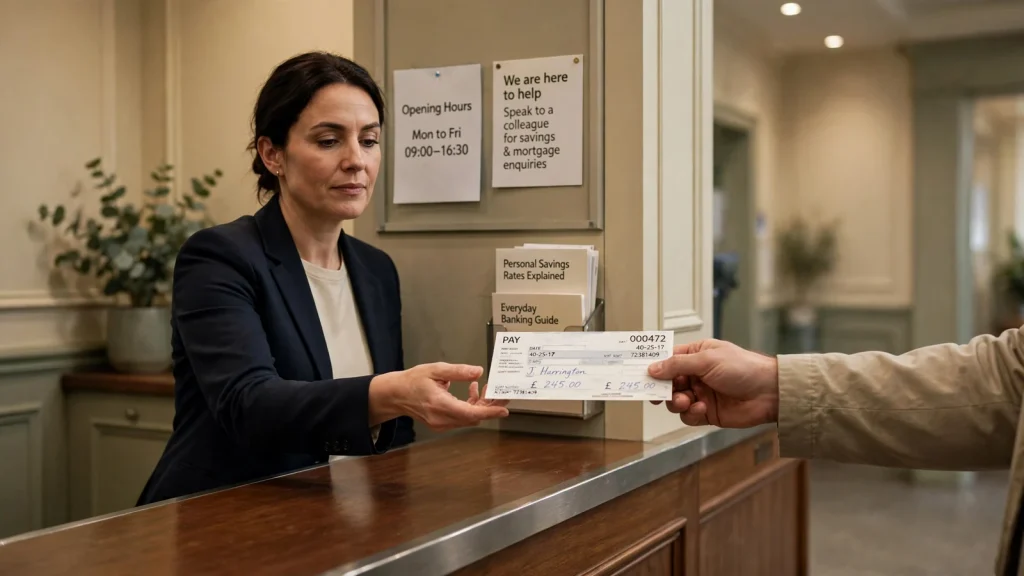
An eCheque label alone does not confirm availability; the cashier’s terms and the deposit or withdrawal direction determine what the method can do.
What “eCheque” Means at a UK Casino Cashier
“eCheque” is not a self-explanatory promise at a casino cashier. The label may describe a particular payment rail, a bank-based transfer process, or a cashier category used by one operator. Its appearance beside familiar methods does not, by itself, establish what the account can do with it.
That distinction matters for anyone looking for casinos accepting eCheque in the UK. A payment name can be displayed as part of a general cashier template while remaining unavailable to a particular customer, currency, country, account status or transaction direction. The only meaningful question is not whether the word appears somewhere on a payments page, but whether the logged-in cashier offers the method for the intended transaction and states the relevant conditions clearly.
I have seen this distinction cause confusion in payment reviews. A method is described as “available”, yet the qualification sits elsewhere: deposits only, selected accounts, a different currency, or manual approval. “Available” is therefore an incomplete description.
A label is not the same as an available route
Casino payment information often groups methods together in broad marketing language. Visa and Mastercard may be listed, for instance, while the actual cashier still determines which card products are eligible at that moment. A specialist review can report those card brands without proving that every card, account or customer will receive the same options.
The same practical rule applies to eCheque. A casino site that mentions the term has not necessarily confirmed all of the following:
- that eCheque can be selected after signing in;
- that it is offered to UK accounts;
- that it is available in the account’s currency;
- that the selected eCheque route is open for deposits;
- that the same route can receive withdrawals;
- that the method is available without an additional account check.
Those are separate cashier decisions. Treating them as one claim produces the familiar but unreliable phrase “eCheque casino”.
The useful evidence is the transaction screen itself. A general payment page can explain what a remote gambling licensee supports in principle, but the personal cashier shows what is enabled for the account. Even then, the displayed method should be read alongside its deposit and withdrawal wording rather than treated as a blanket approval.
Deposit access and payout access are different
A payment method can be visible under Deposit without being available under Withdraw. That is especially important when a search is framed around eCheque deposits. The word “accepts” can refer only to money coming into the gambling account, while the later payout is handled through another route.
The reverse situation can also occur: a cashier may provide a withdrawal option after an account review even though the initial deposit was made by another method. That does not make the route interchangeable. Casino payment controls are built around ownership, transaction records and anti-fraud checks, so the route used for a payout may be restricted or subject to further evidence.
Casinos That Accept EntroPay in the UK: What to Check · Casinos That Accept Interac in the UK: What to Know
Returning funds to the original payment source is a common anti-fraud and anti-money-laundering control. Where that route cannot receive the money, an alternative may involve additional verification. In operational terms, the payment direction must be checked separately. Deposit visibility is not withdrawal eligibility.
Two directions, two checks.
What “acceptance” should mean
For a UK casino cashier, meaningful acceptance has a narrow practical meaning: the method is shown for the relevant account, the transaction type is identified, and the terms explain any restriction before money is sent. A logo or a passing reference on a promotional page is weaker evidence.
The wording around eCheque also matters. “Bank payment”, “electronic cheque” and a branded provider may not describe the same process. A cashier may use a familiar label for a route that has different settlement, ownership or payout rules. No assumption should be made that a method with a similar name operates in the same way across casino sites.
The same caution applies to card references. Visa and Mastercard are named by some casino payment pages, but current UK availability and card-product eligibility still have to be established in the cashier. A listed brand is a starting point, not a guarantee that the intended card will be accepted. ECheque should be treated with the same discipline.
Understanding acceptance
A method appearing on a payment page is not a guarantee of availability or direction in your personal cashier.
This is why a reliable description of an eCheque casino cannot rest on a static badge. The account must show the method, the cashier must identify its direction, and the accompanying terms must explain what happens when funds are withdrawn. Without those three elements, “accepts eCheque” is too broad to describe the actual payment experience.
In practical terms, the label should be read as an invitation to inspect the cashier, not as proof of a complete deposit-and-payout facility. That approach avoids confusing a payment reference with a usable account route and keeps the wording aligned with what the casino actually makes available.
Top online casinos in the UK
- Revery PlayBonus: 100% up to€1,000+ 100 FS · Payout speed: 1-3 business days
- ChanzeBonus: Slots Welcome Bonus #1 200% up to €500 · Payout speed: 1-3 business days
- SlotoSportBonus: 500% up to £ 10 200+ 777 FS · Payout speed: 1-3 business days
- AmunbetBonus: Join now and get 450% up to 2,700 GBP + 450 FS · Payout speed: 1-3 business days
- NightLuckBonus: Welcome Pack + 805% Up To 6400€ + 280 FS · Payout speed: 1-3 business days
- BritsinoBonus: Welcome Package – Get your £2,200 + 2,000 FS · Payout speed: 1-3 business days
How Casino Deposits and Withdrawals Actually Fit Together
A casino cashier has two separate jobs: accepting funds and sending approved withdrawals. The same payment brand may appear in both areas, but its presence under deposits does not establish that it can receive a payout. This distinction matters when assessing an eCheque-based payment route, because a deposit label alone says nothing about the full transaction path.
The practical starting point is the cashier’s payment flow. A deposit begins when a customer selects an available method, enters the requested amount and completes the provider’s authentication. The casino then records the funding source against the account. A withdrawal follows a different process: the request is reviewed, ownership and KYC checks may be applied, and the casino determines which destination is permitted under its payment and anti-money-laundering controls.
That is why “accepted” can be an incomplete description. It may mean that a method can fund an account, not that it can receive winnings. A payment option can be deposit-only, or it may be usable for withdrawals only after the casino has established a qualifying deposit history. The cashier and the payment terms determine the actual position.
Casinos Accepting Bank Cheques in the UK
The payment routes visible in UK cashiers
Debit cards remain a common funding route at UK casinos, including Visa and Mastercard products. A card transaction can put money into the gambling account without implying that the card will be the destination for every later withdrawal. The casino may return funds to the relevant card where that route is permitted, then use another approved method for any remaining balance or for a situation in which the card cannot receive the payment.
Open banking and bank transfers occupy a different place in the flow. A specialist review has described these routes as capable of providing instant deposits and fast withdrawals at many sites, but that description is not a fixed rule for every cashier or account. The bank connection, casino approval, account status and payment instructions still control the transaction. A transfer route that appears available for funding must therefore be checked separately for withdrawals.
Some UKGC-licensed casinos also display Apple Pay as a deposit option. That establishes a possible funding route, not automatic payout support. The same principle applies to any unfamiliar label, including an eCheque reference: the important question is not merely whether the name appears, but what the cashier permits in each direction.
The payment method can also affect the amount that may be deposited. A specialist review has placed the starting point for minimum deposits in the £10–£20 range, depending on the selected route. That is an indication of how the cashier may set method-specific entry points, not a universal amount for every casino. Maximum deposits can likewise be set per transaction, day or month, and may change with both the selected method and the account’s status.
Deposit vs Withdrawal
A payment method can be available for deposits but not for withdrawals.
Why the withdrawal route is not automatic
UK anti-money-laundering controls commonly direct a casino to return funds to the original payment source. This is often described as a return-to-source or closed-loop arrangement. Its purpose is to connect the withdrawal with the funding activity already recorded, rather than allowing money to move freely to an unrelated destination.
In practical terms, a card deposit may create a requirement to send an eligible portion back to that card. A bank-funded account may be directed towards the corresponding bank route. An e-wallet or other payment service may be subject to its own eligibility rules. The exact treatment depends on the casino’s terms, the provider’s capabilities and the transaction history.
This is where a search for an online casino that accepts eCheque can produce a misleading result if the word “accepts” is left undefined. It could refer to a method shown in the deposit menu, a method supported by a payment processor, or a route that the casino allows for both funding and withdrawals. Those are different propositions. A cashier must show the direction of travel, not just the payment name.
Alternative payout routes can also require additional checks. The casino may ask for evidence that the destination belongs to the same customer, or it may reject a request where the account details do not match the gambling account. The original source remains the central reference point.
Approval sits between request and delivery
A withdrawal is not completed at the moment the request is submitted. The casino first reviews the request, and processing times include that internal approval stage. The first withdrawal can take longer while verification is completed, particularly where the account has not yet passed all required KYC checks. A payment provider or bank only handles delivery after the casino releases the transaction.
Casinos That Accept MuchBetter in the UK
This explains why a cashier may show a method as available while a withdrawal remains pending. Availability concerns whether the route can be selected; approval concerns whether the particular transaction can be released. They are connected, but they are not the same control.
My working rule is simple: treat every payment label as directional until the cashier confirms otherwise. Record whether it is offered for deposits, withdrawals or both; note the applicable limits and currency; then check the original-source requirement before funds are committed. That is the transaction flow behind a credible assessment of eCheque availability in the UK—not a brand name alone.
Comparing Payment Options Without Treating “Fast” as a Guarantee
“Fast withdrawal” is a useful label only when its limits are understood. It can describe the payment rail after approval, not the complete journey from a withdrawal request to cleared funds. A casino may receive the request immediately, review it internally, and release it only after account checks. The receiving bank or payment service then adds its own part of the process.
A specialist review identifies PayPal, open banking services and debit cards connected to rapid payout systems among the quicker withdrawal routes. That is a comparison of payment arrangements, not a promise attached to every casino, account or transaction. The cashier’s available route and the operator’s processing rules still decide what happens in practice.
Cards: instant funding does not mean instant payout
Debit cards are familiar because a deposit can appear immediately in the casino balance. The reverse transaction follows a different path. A card deposit may be instant while the corresponding payout takes several business days. The two directions are therefore not mirror images.
Instant Funding
Attention A card deposit may be instant while the corresponding payout takes several business days.
The delay is not necessarily a defect in the card itself. A withdrawal can wait for the casino’s approval, pass through checks linked to the account, and then be handled by the card network or issuer. A payment page that displays a card logo says little about the time required for a completed payout.
I have seen “instant” used to describe the deposit stage when the important question was the withdrawal stage. That wording is commercially convenient, but operationally incomplete. Deposit speed first.
Debit cards linked to a fast payout system can compare favourably with other routes, according to a specialist review. The qualification matters: the relevant card arrangement must support that process, and the casino must offer it for the account in question. A standard card transfer and a card withdrawal through a quicker system should not be treated as identical.
PayPal: a quick route still passes through approval
PayPal is also included among the faster withdrawal options in specialist payment comparisons. Its practical advantage is usually considered after the casino has approved the request. Before that point, the operator may still review the account, the transaction history and any required verification.
That makes “fast” conditional rather than absolute. A fully verified account with no pending internal review can move through the process differently from a first withdrawal that triggers additional checks. Even where PayPal is available, the casino’s cashier may apply its own rules to the direction and timing of the transaction.
Promotions can add another distinction. A specialist review has reported that PayPal may be excluded from bonus eligibility. That does not determine withdrawal speed, but it affects the real value of choosing the route. Payment convenience and promotional treatment are separate terms and should be read separately.
Casinos That Accept Ethereum in the UK: Payment Guide
Open banking and bank transfers: quick systems, visible timing variables
Open banking services are often placed alongside the quicker withdrawal methods by specialist reviews. Bank transfers can also be efficient, but delivery is affected by cut-off times, weekends and currency conversion. The transfer therefore has more timing variables than the word “fast” suggests.
The operator’s approval remains the first stage. Once released, the transfer may be affected by when it was submitted, whether the banking day has closed, and whether the payment must be converted. A request made near a cut-off point can follow a different schedule from one handled within the bank’s operating window.
Open banking and a conventional bank transfer should not be casually merged. Both involve banking infrastructure, but the service presented in the cashier determines the route actually used. The displayed method, the account setup and the payment currency all matter.
GBP is identified as a supported currency in casino payment information, but the account’s operating currency still needs confirmation before a transaction. If the account and the receiving arrangement do not use the same currency, conversion becomes part of the timing and value calculation. A transfer can arrive without delivering the amount expected after exchange.
Approval and verification set the real starting point
Withdrawal timing should be measured from the point at which the casino releases the payment, not automatically from the moment the request is entered. A specialist review notes that speed depends on the operator’s internal approval process and whether the account is fully verified. That is why a payment route advertised as rapid can still produce a delayed result.
Verification impact
Processing times for withdrawals are affected by internal approval and KYC checks.
First withdrawals can receive closer attention while verification is completed. Documents, ownership details or transaction checks may have to be resolved before the payment is released. Later withdrawals may follow a different internal path, but no payment method removes the operator’s approval stage.
The useful comparison is therefore two-part: how quickly the payment service can deliver funds after release, and how much processing stands between the request and that release. PayPal, open banking and certain debit-card systems may perform well on the first part. None can guarantee the second.
In operational terms, the quickest-looking badge is only one input. The cashier’s current terms, account verification status, approval workflow and currency handling determine the result. That is the difference between a fast method and a fast payout.
Availability Depends on the Cashier, Account and Payment Direction
A payment method is not a permanent feature of every UK casino account. The cashier decides what appears for a particular customer, and that display can depend on the site, account status, account currency, payment provider and transaction direction. A method visible on a deposit screen is therefore only evidence that the casino is prepared to consider incoming funds through that route. It is not proof that the same route can receive a withdrawal.
That distinction matters when assessing claims about eCheque casino sites in the UK. A brand may describe a method in general payment information while showing a different selection after login. The cashier is the operational record: it shows what the account can use at that moment, rather than what may have been available when a page was written.
Casinos That Accept Tether in the UK: Payment Guide
The cashier is account-specific
Payment pages are often presented as if every customer sees the same menu. In practice, availability can be filtered by the account profile and by the payment product linked to it. The same casino may display Visa or Mastercard for one customer while a particular card product, issuer or transaction route is not eligible for another. Current UK availability and card-product eligibility must be checked in the logged-in cashier, not inferred from a general payment list.
The same principle applies to less familiar methods. A specialist review may describe Jeton as remaining available at a handful of UK online casinos in 2026, but that kind of statement does not establish that Jeton will appear for every account, or that it will be enabled for both directions. Availability is a live cashier question.
There is a practical reason for this variation. Payment providers apply their own acceptance rules, while remote gambling licensees must also apply account checks and transaction controls. A cashier can consequently show a route for deposits while withholding it for withdrawals, or request further information before allowing a transaction to proceed.
Deposit presence does not establish payout support
“Available for deposits” is a narrow description. It means funds can be sent towards the gambling account through the displayed route. Withdrawal eligibility is a separate decision, affected by the casino’s anti-fraud controls, the provider’s capabilities and the ownership information attached to the account.
Directional Limitation
Being available for deposits is a narrow description that does not establish withdrawal eligibility.
Returning funds to the original payment source is a common anti-fraud and anti-money-laundering control. If a deposit was made through a named account belonging to the customer, the casino may direct the payout back through that same source where the route supports withdrawals. An alternative can involve additional verification, particularly when the ownership trail is less direct.
This is why an eCheque deposit casino should not be described as an eCheque withdrawal casino without checking the withdrawal screen and the relevant terms. The wording “deposit option” says nothing about payout capability. The direction of money is part of the method’s specification.
Ownership details can affect what happens next
The cleanest transaction record is created when the casino account information and the payment route belong to the same customer. Matching names and account details reduce the chance that basic ownership questions interrupt a deposit or withdrawal. A mismatch does not automatically determine the outcome, but it can create avoidable friction and lead to a request for supporting evidence.
In operational terms, the important checks are straightforward:
- the payment method is visible after logging in;
- the account holder’s details match the payment account;
- the cashier identifies whether the route is for deposits, withdrawals or both;
- the withdrawal terms explain what happens if the original source cannot receive funds;
- any currency shown in the cashier matches the account’s working currency.
A “top” or “best” payment route cannot be identified merely by its name. The useful distinction is whether the method is currently compatible with the particular account and payment direction. The cashier decides.
The Cost Is More Than a Listed Transaction Fee
A cashier may display a neat transaction charge beside a payment method, but that figure is only one part of the cost. A payment can involve a fee from the casino, a charge from the payment provider, an issuer or bank charge, a currency-conversion spread, and sometimes a network fee. These layers do not always appear together on the casino’s payment screen.
This matters when comparing an eCheque-style route with other ways to fund a UK casino account. A method advertised as “low-cost” may still produce an unfavourable result if the account is held in one currency and the payment service processes funds in another. The visible casino fee is then not the complete price of moving the money.
Where the charge can arise
The casino may apply a processing fee, although the terms need to be checked for the particular cashier and transaction direction. The payment provider can add its own charge, while the bank or card issuer may treat the transaction differently from an ordinary domestic payment. A network fee can also arise where the payment route relies on an underlying payments network.
Hidden Costs
Total transaction costs include casino fees, provider charges, bank fees, and currency conversion spreads.
Currency is the less obvious part. The amount shown at the casino and the amount deducted by the provider may differ because of the exchange rate used. The gap between the market rate and the rate applied to the transaction is the conversion spread. A specialist review has noted that this spread can cost more than a flat fee shown prominently beside the payment option. That is why a method with “no fee” in the cashier is not automatically the cheapest choice.
The same issue applies to withdrawals. A casino may show no separate payout charge while the receiving provider or bank applies its own terms. The final amount depends on the route, the currencies involved and the actual transaction value.
Comparing the real cost
There is no single payment method that can be labelled the lowest-cost choice for every account and amount. The comparison needs to include:
- any casino charge;
- the payment provider’s fee;
- issuer or bank charges;
- the exchange-rate spread;
- network costs.
The relevant figure is the amount that leaves the account or arrives after conversion, not merely the label beside the button. A specialist review has also stressed that the calculation should be made for the transaction being considered, because a fee structure and a currency spread do not affect every payment in the same way.
For an eCheque casino in the UK, the practical check is therefore broader than finding a listed fee. The cashier terms, provider schedule and account currency all belong in the same calculation. The cheapest-looking route may not be the cheapest route.
Why “Best” Cannot Be a Verified eCheque Casino List
A page promising the best eCheque casinos implies more than a payment logo. It suggests that named remote gambling licensees accept eCheque deposits, process withdrawals through a defined route, and apply terms that make the option suitable for British customers. Those are separate claims. A cashier label may establish that a method is displayed; it does not, by itself, establish that the method is available to every account or works in both payment directions.
That distinction matters when comparing casinos. A defensible comparison can examine the information visible in the cashier: whether the payment method appears after the account is logged in, whether it is marked for deposits or withdrawals, which currencies are supported, and whether the transaction screen shows a fee or processing condition. It can also record whether the payment route is subject to account-specific eligibility. That is evidence about the current payment setup, not a guarantee that a brand accepts eCheque across its entire customer base.
Casinos That Accept Neteller in the UK: Payments
A named “best” site requires stronger proof. The casino would need to identify eCheque clearly as an available method, show its permitted transaction direction, and provide terms consistent with the cashier. Without that alignment, a list can turn an old payment reference, a third-party description or a generic banking label into a claim about present acceptance. That is how a neat ranking becomes misleading.
The same caution applies to familiar card names. A specialist review may mention Visa or Mastercard, but current UK availability and the eligible card product still belong to the logged-in cashier. A card logo is not a substitute for checking the actual account. The method is visible; the decision is not yet complete.
Currency creates another possible mismatch. A specialist review may state that GBP is supported, while the account itself can still require confirmation of its operating currency before the first transaction. Currency selection affects whether conversion is involved and whether the displayed amount represents the amount that will be processed.
So a useful comparison can describe observable cashier terms, account currency and payment direction. It should not attach a “best” label to a casino merely because a page associates that brand with eCheque. For the same reason, a supposed UK eCheque casino list should not be treated as verified simply because it contains recognisable names.
A label is not acceptance.
Reliable verification
- A method’s availability is account-specific and determined by the cashier.
- Verify both deposit and withdrawal directionality.
- Check for currency conversion costs beyond the listed fee.
- Ensure ownership details match your registration.
Payment Security Starts With Matching Account Details
Payment security at a UK casino begins with a simple ownership check: the gambling account, payment account and personal details should point to the same customer. When names, addresses or account information do not align, the transaction can look unusual even where the funds are legitimate. That mismatch creates avoidable friction while the remote gambling licensee establishes who controls the money.
This is not merely an administrative preference. Matching details help the operator distinguish an ordinary customer transaction from attempted third-party funding, account takeover or movement of funds between unrelated people. A payment route associated with the account holder gives the cashier a clearer record of where a deposit came from and where an authorised return should go.
The same principle applies when an eCheque-style route is being considered. The label shown in a cashier does not remove the need for ownership checks. The payment account still needs to belong to the person registered with the casino, and the details supplied during KYC should be consistent with that payment profile. A different name can turn a routine transaction into a request for supporting evidence.
Casinos That Accept Boku in the UK: Deposits Explained
The cleanest arrangement is often one named account used consistently for both deposits and withdrawals. It leaves fewer gaps in the transaction history and makes the relationship between the gambling account and funding source easier to establish. I have seen payment issues begin with details that looked minor at registration but became important when money had to be returned.
Returns to the original source are therefore common: they provide a straightforward anti-fraud control and support the required checks around the movement of funds. An alternative destination may be possible in some circumstances, but it can bring additional verification rather than bypassing it.
Consistency is the quiet safeguard.
Checking Whether a Deposit Route Also Works for Withdrawals
A payment method displayed in the deposit cashier is not automatically available for withdrawals. This distinction matters when assessing casinos that accept eCheque deposits in the UK: the label may describe only the funding route, while payouts follow separate eligibility rules.
The practical check is whether the cashier shows the same method in the withdrawal area after the account has been verified. A route can be deposit-only, or the casino may require winnings to be sent through another approved channel. The presence of an eCheque symbol, where shown, does not establish that funds can be returned through eCheque.
Verification Requirement
UK anti-money laundering controls often require returns to the original payment source.
UK anti-money laundering controls commonly point payouts back to the payment source used for the deposit. This creates a closed-loop expectation: the casino first attempts to return funds through the original route, subject to its own terms and the payment provider’s capabilities. A payment option that accepts money going in may not support the reverse transaction.
When the original route cannot receive a withdrawal, an alternative may be offered. That change is not merely administrative. The casino may request extra verification of account ownership, payment details or the relationship between the deposit and the replacement payout account. Processing can remain pending until those checks are complete.
The relevant evidence is therefore directional, not just visual. The cashier should be checked for:
- availability under withdrawals, not only deposits;
- any instruction to withdraw through the original payment source;
- conditions applying when the selected method is deposit-only;
- additional KYC requirements for an alternative payout route.
A casino’s payment page can mention several methods without confirming every transaction direction. The reliable position is narrower: an eCheque deposit option proves only that the method is presented for funding. Withdrawal eligibility must be shown separately in the account cashier and supported by the operator’s current payment terms. Otherwise, the route is unconfirmed.
How to Assess Casino Payment Claims Without a Brand List
A payment claim is only as useful as the cashier behind it. A casino page may display familiar logos, but the account-level cashier determines whether a method is currently available, which transaction direction it supports and whether the customer’s particular card or account qualifies. I have seen “available” used as shorthand for “mentioned somewhere on the site”. Those are not the same thing.
Start with the live cashier
The cashier should show the payment methods enabled for the specific account. Visa and Mastercard may appear in a casino’s payment information, yet current UK availability and eligibility can depend on the card product and the account setup. A specialist review can describe a method accurately at publication and still become outdated after a processor, policy or market change.
The useful check is therefore concrete:
- Is the method visible after signing in?
- Is it offered for the intended transaction?
- Are the minimum and maximum values displayed for that method?
- Does the cashier identify any restrictions on the card or account?
- Are the terms consistent with the payment screen?
The minimum deposit can start at £10–£20 depending on the selected method, while maximum deposit limits can vary by method and account status. Those figures belong to the live cashier, not to a generic payment logo.
Confirm the currency before paying
Currency conversion can alter the amount credited or returned, even where the payment method itself appears suitable. The account profile, cashier and payment confirmation should show the same currency.
That evidence standard is more defensible than naming a “best” casino that accepts eCheque. A brand recommendation requires a current, account-specific confirmation that the claimed route is present and usable. Without that, the honest comparison is between visible terms, current cashier information and clearly stated currency conditions—not an unsupported promise attached to a casino name.
What UK Players Should Know Before Using a Payment Method
The payment route is not separate from the rules governing a British gambling account. A cashier may display several brands, but that does not make every funding route lawful or suitable for gambling.
The clearest restriction concerns credit cards. The regulator prohibited credit-card gambling on 14 April 2020, and that position has not been relaxed. UK-licensed casinos therefore cannot accept credit-card payments for gambling. The restriction also covers credit-card funding routed through a money service business. A card carrying the Visa or Mastercard name is not automatically a credit card: eligibility depends on the actual card product and the cashier’s treatment of it. A debit card is a different category, although its status still needs to be confirmed before a transaction.
Casinos That Accept USDC in the UK: What to Check
The same principle applies to wallets. A wallet cannot be used where it permits credit-card funds to be used for gambling. Payment branding alone is not the safeguard; the funding source behind the payment matters.
There is also a financial-control step before the first deposit. Remote gambling licensees must prompt a new customer to set a financial limit before accepting that initial deposit. The account must then provide accessible controls for managing those limits. This is not a promotional setting or an optional preference buried in the cashier. It is part of the account framework surrounding real-money play.
That distinction matters when assessing eCheque casinos for UK players. A method can appear in a payment discussion without proving that it is available to a particular account, lawful for the intended transaction, or supported in both directions. The relevant checks remain practical: identify whether the route is a debit, wallet or other permitted funding source; review the account’s limit controls; and confirm the cashier’s current terms before money is sent.
The label is secondary. The account rules decide.
What is the fastest withdrawal method for UK casinos?
PayPal, open banking services and debit cards linked to fast payout systems are generally among the quickest options. The casino’s approval process and your verification status also affect how quickly you receive funds.
Why can a fast payout casino still delay my withdrawal?
A casino must process and approve a withdrawal before the payment provider sends it, and first withdrawals may take longer while verification is completed. Bank transfers can also be affected by cut-off times, weekends and currency conversion.
Are fast casino withdrawals guaranteed?
No. Withdrawal speed depends on the casino’s internal approval process, whether your account is fully verified, and the payment route’s processing conditions.
Do UK casino withdrawals require verification?
Verification may be needed, particularly for a first withdrawal. Completing account checks can help avoid delays while the casino reviews the payout.
What are the deposit limits at HunnyPlay Casino?
Deposit limits vary by payment method and account status. Minimum deposits usually start at £10–£20, while maximum limits may apply per transaction, per day or per month.
Payments
Created by the "Casino Not on Gamstop" editorial team.