
Foreign Casinos for UK Players: Licensing Explained
 Available in GB
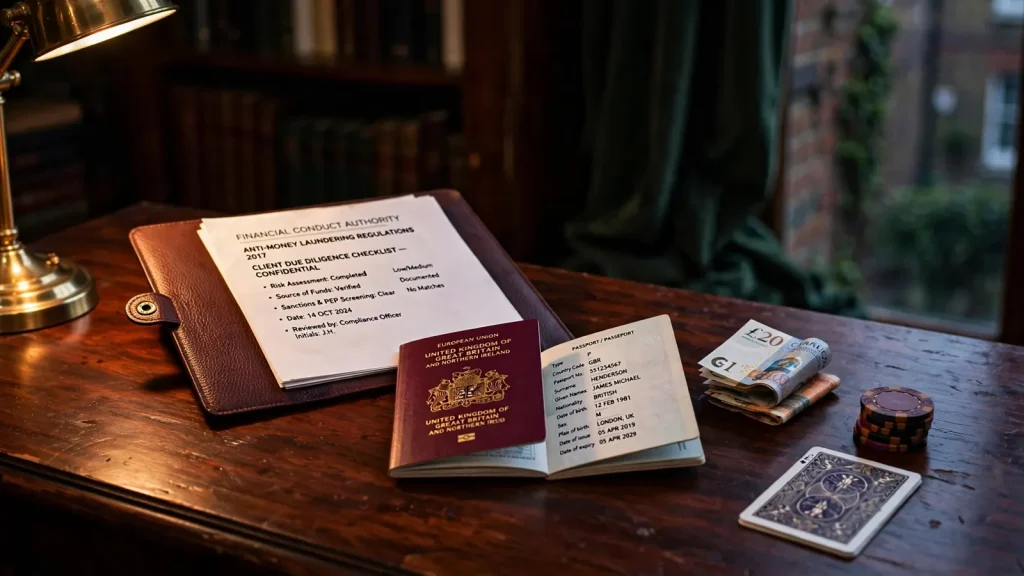
A foreign site may accept British customers without UK Gambling Commission authorisation, affecting the protections and safeguards available.
What “Foreign Casino” Means in the UK Market
In the British market, “foreign casino” describes a licensing position, not a particular style of website, game, or payment method. The term refers to an online gambling operator based outside the UK, or operating under an overseas framework, that accepts customers in Britain without holding an operating licence from the UK Gambling Commission.
That definition is narrower than the way the phrase is often used in advertising. A site may call itself international, non-UK, or offshore because its company, licence, servers, or payment arrangements are located elsewhere. Those labels do not by themselves establish what the operator is permitted to do in Britain. The relevant distinction is whether the operator has UK Gambling Commission authorisation while serving British customers.
That is the first separation worth making. A foreign casino can be available to someone in Britain without becoming a UK-licensed casino. Its location does not transfer it into the British regulatory system, and an overseas licence does not become a Gambling Commission licence simply because the website accepts pounds or displays British payment options.
The operator and the player are different legal questions
The licensing question concerns the business providing the gambling service. The player’s position is separate. British law does not prohibit an individual from placing a bet with an overseas operator merely because that operator is licensed outside the UK. Playing at a foreign casino is not, by itself, a criminal offence for a UK resident, and there is no criminal penalty imposed on the player simply for making that bet.
Casino Sites: A Guide to UK Casino Options
That point is easy to blur because the same transaction contains two participants with different responsibilities. The operator supplies the gambling facility and is assessed according to the rules governing remote gambling in the British market. The customer places the wager. The fact that the operator may lack UK authorisation does not turn the individual customer into an unlicensed gambling business.
From my experience of how these terms are used commercially, the word “illegal” is often applied too broadly. “Illegal casino” suggests that the customer has committed an offence by opening an account or staking money. That is not the position described here. The absence of a UK Gambling Commission licence is a matter concerning the operator’s authority, not a criminal status automatically attached to every British player who uses the site.
Different issue.
What the definition does not say
Calling a site a foreign casino does not mean that every overseas operator has the same licensing status. Some may hold an offshore licence; others may rely on a different regulatory arrangement. The definition used for the British market is functional: the operator accepts British customers while lacking a UK Gambling Commission licence.
Nor does the term mean that the site is physically located in one particular country. “Foreign” describes its relationship with the UK market. An operator can be foreign for British customers even when its brand is familiar, its website is written in English, or its games are supplied by companies active in licensed British casinos.
The phrase also says nothing about the quality of the casino. It does not establish that the games are fair, that withdrawals will be handled reliably, or that the business provides protections equivalent to those attached to a UK Gambling Commission licence. Those are separate matters. Licensing status is the starting classification, not a quality mark.
While an offshore casino’s appearance may resemble a British-licensed platform, visual design and promotional language do not grant the operator legal standing in the UK.
This is why searches for foreign online casinos in the UK can produce sites that look remarkably similar to domestic gambling brands. The visual design, casino games, account screens, and promotional language may resemble what is found on a British-licensed platform. Similar appearance does not create identical legal standing. The dividing line remains the operator’s permission to provide remote gambling in Britain.
“Foreign” is not the same as “outside the law”
The absence of a UK licence should not be confused with a blanket statement that the player is breaking the law. The UK framework places the central licensing obligation on the operator. A business offering gambling facilities to British customers must be considered separately from the person who decides to place a bet with that business.
In practical language, this means two statements can both be true:
- the casino is not licensed by the UK Gambling Commission;
- the British customer has not committed a criminal offence merely by placing a bet there.
That distinction matters when descriptions such as “top foreign casinos UK” or “best foreign online casinos” are used. Such wording ranks or labels websites from a customer’s perspective, but it must not be read as confirmation that those operators are authorised in Britain. A foreign casino remains foreign in the regulatory sense even when it is easy for British customers to find and use.
The same applies to online slots. A slot hosted by an overseas operator does not become a UK-licensed gambling product because it is available in English or because the stake is shown in pounds. The status of the game is connected to the operator providing it and the permission under which that service is offered.
Why the distinction matters
The legal position of the player explains why foreign online casinos can attract British customers without the customer automatically facing prosecution. The operator’s position explains why the same website may fall outside the UK Gambling Commission’s authority. Keeping those ideas apart prevents a common mistake: treating access as proof of permission, or treating an operator’s lack of local licensing as proof that every customer has committed an offence.
In my view, the cleanest working definition is therefore straightforward: a foreign casino is an online gambling business serving British customers without a UK Gambling Commission licence. Its foreign status belongs to the operator. The fact that a British resident may place a bet there without criminal liability belongs to the player. Neither statement cancels the other.
Non-UK Registered Casinos: Licensing and Legal Position
Top online casinos in the UK
- Revery PlayBonus: 100% up to€1,000+ 100 FS · Payout speed: 1-3 business days
- ChanzeBonus: Slots Welcome Bonus #1 200% up to €500 · Payout speed: 1-3 business days
- SlotoSportBonus: 500% up to £ 10 200+ 777 FS · Payout speed: 1-3 business days
- AmunbetBonus: Join now and get 450% up to 2,700 GBP + 450 FS · Payout speed: 1-3 business days
- NightLuckBonus: Welcome Pack + 805% Up To 6400€ + 280 FS · Payout speed: 1-3 business days
- BritsinoBonus: Welcome Package – Get your £2,200 + 2,000 FS · Payout speed: 1-3 business days
When Access Is Available, It Does Not Mean the Site Is Permitted to Operate
A website loading from a British internet connection proves only that the connection was accepted. It does not prove that the operator is authorised to provide gambling facilities in Britain. That distinction matters because the legal test concerns the operator’s activity, not the ease with which a page, registration form or game lobby can be opened.
For online gambling offered in England, Scotland and Wales, the operator must hold the relevant licence from the UK Gambling Commission. Without it, the site is not permitted to offer its services there. A foreign domain, an overseas company or a licence issued by another jurisdiction does not change that position.
That is where the wording on many foreign casino sites becomes carefully selective. “Available to UK players” may describe a technical fact: the registration page accepts a British address and the payment screen does not immediately reject the account. It is not a statement that the operator has permission to serve the British market. From the inside, those are separate fields in the same risk assessment.
The access test is not the licensing test
An offshore casino may appear in a British search, accept a connection and allow an account to be created. None of those steps supplies a UKGC licence. The same applies when a site presents its games in English, displays sterling, or promotes payment methods familiar to British customers. These are signs of commercial targeting, not evidence of British authorisation.
Some non-UK-licensed casinos are expected to prevent access from Britain. A report by gambling.com said that some operators do not enforce those restrictions effectively and that a basic VPN can allow a visitor to bypass an access block. That report describes a weakness in technical controls; it does not turn the resulting access into lawful permission for the operator.
Attention A VPN changes the apparent location of a connection but does not change the operator’s licence or the customer’s real location.
A VPN changes the apparent location of the connection. It does not change the operator’s licence, the customer’s real location or the rules governing the supply of gambling facilities. It can also create a breach of the casino’s own terms if the account is opened or used by disguising the connection. The practical result is an unstable arrangement: the site may accept the account at registration and later question it when a withdrawal is requested.
I have seen how easily the front end can create a false sense of approval. A green registration button looks like a decision. In reality, it may be nothing more than a configuration choice.
Advertising creates a separate problem
The operator’s conduct is not limited to the gambling account itself. Advertising an unlicensed casino’s services in the UK is also illegal. A banner aimed at British visitors, a promotion written for British customers or an affiliate page directing traffic from the UK can therefore raise a different issue from whether the website happens to be reachable.
This is why phrases such as “serves the UK” and “welcomes British players” should not be read as regulatory descriptions. They are promotional language. An operator without a UKGC licence cannot rely on the fact that customers can find the site, nor can it treat an overseas licence as permission to advertise or operate in Britain.
The distinction is important for review pages as well. A list of foreign casino sites may describe what can be accessed, but access is not the same as approval. Describing a casino as “top” or “best” can also obscure the central question: whether the business is authorised to provide gambling facilities to people in Great Britain. A polished interface does not answer it.
Non-GamStop European Casinos: UK Rules Explained
What happens when the arrangement goes wrong
The immediate commercial risk falls on the customer when an offshore operator disputes an account, voids a balance or delays a withdrawal. A report by gambling.com noted cases in which unlicensed sites refused to pay winnings, leaving customers without a legal route to recover the money. That is not a claim that every offshore operator behaves this way. It is a reminder that technical access does not create the enforcement framework attached to a UKGC-licensed business.
If the operator has no UKGC licence, the UK Gambling Commission cannot treat it as a licensed British operator subject to the Commission’s enforcement system. An offshore licence may give the business obligations in the jurisdiction that issued it, but it does not provide UK permission or make a British dispute equivalent to a dispute with a locally licensed casino.
The same point applies to foreign slots and other games displayed for British visitors. The game may run, the balance may update and the account may show a successful deposit. Those functions demonstrate software operation, not lawful market access. A site can be technically open while the operator is still acting outside the permission required for Great Britain.
The sensible reading of an accessible foreign casino is therefore narrow: the site has not blocked the connection, or its controls have not stopped it. Nothing more follows automatically. Reachability is a technical condition. Permission is a regulatory one. Confusing the two is how a visible website starts to look like an authorised British service.
The Main Distinction
- Reachability is a technical condition, not a regulatory permission.
- An accessible website does not prove an operator is authorised to serve Great Britain.
The UK Player’s Position—and the Limits of That Protection
For a British player, the legal position is narrower than casino advertising often suggests. Placing a bet with an overseas operator is not, by itself, a criminal offence. UK law does not prohibit an individual from gambling with a casino licensed outside the country. That remains true even where the site is not licensed by the UK Gambling Commission.
That point needs to be kept separate from the operator’s position. A player’s bet may not be illegal, while the business accepting it may still be operating outside the permission required for the British market. Offshore casinos are licensed in another jurisdiction and sit outside the UKGC’s regulatory system. The absence of criminal liability for the customer does not turn the site into a UK-licensed casino.
This is where descriptions such as “legal for British players” become slippery. They can refer only to the player not being prosecuted for placing a bet, while leaving out the operator’s lack of UK permission. From inside the industry, that distinction matters: the same transaction can be low-risk in criminal-law terms for the individual and still carry substantial commercial risk because the counterparty is beyond the UK regulator’s reach.
What the player is not getting
A UKGC licence is not merely a badge displayed in a footer. It places the operator within a British supervisory framework. An offshore casino does not provide that framework simply because it accepts sterling, displays British wording or allows registration from Britain.
The practical limits become clearest when something goes wrong. A report by gambling.com describes cases in which unlicensed sites refused to release winnings, leaving customers without an effective legal route to recover the money. That is not a statement that every offshore operator will behave this way. It is a reminder that the normal appearance of an online casino does not establish the strength of the player’s remedy.
A UK player therefore has to distinguish between two separate questions:
- Is the individual prohibited from placing the bet? No; there is no UK law imposing a criminal penalty on a person solely for betting with an overseas operator.
- Does the operator provide the protections attached to a UK Gambling Commission licence? No; an offshore casino is outside the UKGC system.
The first answer describes the player’s legal exposure. The second describes the weakness of the relationship with the site. Confusing them is how “not illegal for the player” becomes mistaken for “protected by UK regulation”.
No UKGC safety net
The limits are not confined to a dispute over winnings. A foreign casino operating outside the UKGC’s remit is not subject to UKGC enforcement. It does not have to provide the same regulatory relationship that exists between a British customer and a licensed operator. Complaints, account restrictions and payment disputes may therefore depend on the offshore licence, the operator’s terms and the laws of the jurisdiction where the business is licensed.
That can leave a gap between formal access and practical accountability. The account may function normally while deposits are being made and games are being played; the difficulty appears later, when a decision has to be challenged or funds have to be recovered. A licence issued offshore may offer some oversight, but it is not a substitute for a UKGC licence and should not be described as one.
The Player’s Protection
Placing a bet with an overseas operator is not, by itself, a criminal offence for a UK resident, but it does not provide the protections attached to a UK Gambling Commission licence.
This is also why the phrase “best foreign casinos for UK players” needs careful handling. There is no UKGC protection attached merely because a site accepts British customers. The relevant question is not only whether the account can be opened, but what legal and regulatory support remains if the operator declines to pay or applies its terms in a disputed way.
No criminal offence for the player. Limited recourse against the site.
Accepting British Customers Is Not the Same as Being UK-Licensed
A website can display prices in pounds, accept registrations from Britain and describe its services as available to UK players without possessing permission to operate in Great Britain. Those are commercial signals, not evidence of a UK licence.
The legal test sits with the operator. Remote gambling businesses selling into England, Scotland or Wales must hold the relevant licence from the UK Gambling Commission. Without that licence, an online gambling site cannot lawfully offer its services in those parts of the country. The location of the company, its website domain or the nationality of its owners does not alter that requirement.
This is where descriptions such as “foreign online casinos accepting UK players” become misleading if read as a licensing statement. “Accepting” describes what the registration system permits. It does not mean that the operator has received approval to provide gambling facilities in Britain.
Offshore licensing answers a different question
An offshore casino may hold a licence issued by an authority outside the UK. That licence can establish the operator’s position in the jurisdiction that issued it, but it does not turn the business into a UK-licensed casino. Offshore operators sit outside the UK Gambling Commission’s regulatory system and are not regulated by the Commission.
British Casinos Not on GamStop: Access and Risks
The distinction matters because licences are territorial permissions, not universal passports. A company may be authorised to run gambling services under one regulator’s rules while lacking the authorisation required for British customers. A foreign licence therefore cannot be presented as a substitute for a Gambling Commission licence when the service is directed at Great Britain.
I have seen this confusion arise when a casino places an offshore licence number in its footer and treats the detail as a general assurance. The number may be genuine and still answer only the narrow question of who licensed the operator abroad. It does not establish permission to operate in the UK.
That is the point often hidden by the word “licensed”.
A British customer does not change the operator’s status
The presence of British accounts is not proof that an operator has crossed into the UK’s licensed market. It may simply show that the business has chosen to accept customers despite lacking local authorisation. The regulatory classification remains the same: offshore, outside the UKGC framework.
This also explains why labels such as “best non-UK casinos accepting UK players” need careful reading. They can compare features of sites that take British registrations, but they cannot convert those sites into lawful UK operators. A list based on acceptance alone leaves out the central question of whether the business is permitted to serve Great Britain.
UK-licensed
Authorised by the UK Gambling Commission to serve the British market.
Offshore-licensed
Licensed outside the UK and not regulated by the UK Gambling Commission.
Accepting British customers
A description of technical access or registration, not proof of local authorisation.
Santeda illustrates the problem clearly. Its Curaçao licence does not authorise it to operate in the UK or the United States. The licence identifies an offshore regulatory base; it does not provide British or American operating permission. That conclusion would not change merely because a British customer could create an account.
The same reasoning applies to overseas casinos accepting UK players generally. A site’s ability to process a registration is a fact about its business practice. Its entitlement to offer gambling facilities in England, Scotland and Wales is a separate legal question. Confusing the two makes an offshore licence sound broader than it is.
For assessment purposes, the wording should therefore remain precise:
- UK-licensed: authorised by the UK Gambling Commission to serve the British market.
- Offshore-licensed: licensed outside the UK and not regulated by the UK Gambling Commission.
- Accepting British customers: a description of access or registration, not proof of local authorisation.
In operational terms, those categories should never be merged. A foreign casino may be visible to British customers and may hold a foreign licence, yet still lack the permission required to operate in Great Britain. Availability is not accreditation.
Why “Bigger Bonuses” Can Cost More Than They Look
The larger welcome package advertised by a foreign casino is not necessarily a larger benefit. It is a different commercial proposition, built around the conditions attached to the promotional balance. A specialist review has attributed the size of these offers to the fact that offshore operators are not bound by the UK Gambling Commission’s restrictions on bonus wording, wagering requirements and promotional terms. That creates more room for a headline offer to look generous.
“Bigger” is the advertising layer. The wagering clause is the accounting layer.
A deposit match illustrates the difference. A 100% match bonus of £100 may appear to add another £100 to the playing balance. With a 35x wagering requirement, however, £3,500 in qualifying bets must be placed before the bonus funds can convert into withdrawable cash. The requirement concerns turnover, not simply the amount deposited or the amount sitting in the account.
Best Casino App UK: Apps, Browser Access and Checks
That distinction is where many comparisons go wrong. A player may see the bonus balance immediately, but the promotional funds remain restricted until the stated turnover has been completed. The casino’s terms may also define which games contribute to qualifying bets, whether wagers made with bonus funds count in full, and when the promotion expires. Those details determine the practical value more than the banner figure does.
The same calculation applies to a smaller-looking offer. A £20 bonus carrying a 35x wagering condition creates £700 of qualifying bets before cash-out becomes available. The arithmetic is straightforward; the risk lies in overlooking it when comparing packages advertised by foreign casinos accepting UK customers.
A match bonus can therefore increase the amount that must be wagered without increasing the amount that can safely be withdrawn. If the qualifying bets reduce the deposited funds before the requirement is completed, the advertised bonus has not functioned as free money. It has encouraged additional turnover under promotional rules.
Other structures require the same reading. Free spins may apply only to a named game, while cashback can be capped, delayed or calculated only on eligible losses. A no-deposit offer may have a separate maximum withdrawal condition. These are not interchangeable benefits, even when they appear together in a single welcome package.
Bonus Calculation
Step 1: Identify the match
A 100% match bonus of £100 adds £100 to the playing balance.
Step 2: Apply wagering
With a 35x wagering requirement, £3,500 in qualifying bets must be placed.
Step 3: Evaluate outcome
The funds only convert to withdrawable cash after the full turnover is completed.
In my own assessment of casino promotions, I start with the qualifying-bet formula rather than the headline percentage. The important questions are how the requirement is calculated, which games count, whether the deposit itself is locked, and what happens when the promotion ends. A large figure with restrictive terms can be less useful than a modest offer with a clearer route to withdrawal.
The phrase “best foreign casinos accepting UK players” says nothing about that calculation. A meaningful comparison has to separate promotional size from the work required to unlock it. Otherwise, the package is being judged by its most visible number—the one designed to attract the first deposit.
The Checks and Safeguards an Offshore Site May Not Provide
The practical difference between UKGC-licensed operators and offshore casinos is clearest when a player needs a safeguard rather than a promotion. A UKGC-licensed operator must verify identity before processing a withdrawal. That requirement makes verification part of the regulated process, not merely an internal preference applied when an account becomes inconvenient.
Offshore sites accepting British customers operate outside the UK Gambling Commission’s remit. They are not required to provide the same UKGC-mandated affordability checks, and their approach to identity checks can therefore differ. Some may ask for documents during registration, before a deposit, or when a withdrawal is requested; others may leave the check until a later stage. The important point is that an offshore licence does not import British regulatory duties into the account.
That distinction is easy to miss because the account-opening process can look familiar. Registration forms, payment screens and document requests may resemble those used by a British-licensed casino. Similar screens do not mean similar obligations. In my experience, the wording around “verification” is where the commercial presentation often becomes less precise: a routine compliance check can be presented as a sign of strong protection, although the actual scope depends on the operator and its regulator.
GamStop creates another sharp dividing line. The scheme covers UKGC-licensed operators, so a person who activates GamStop is excluded from every casino licensed in that system. Non-GamStop casinos sit outside it. They do not receive the exclusion instruction and cannot provide the same network-wide block.
A specialist affiliate review has reported that someone self-excluded through GamStop may still open an account with a foreign casino and deposit without the safeguards attached to UK-licensed sites. That should not be confused with a safe or recommended route around self-exclusion. It describes a gap between regulatory systems, not a protection.
The same gap affects affordability controls. A UKGC-regulated account is assessed within a framework that includes mandatory affordability checks; an offshore account does not carry that UKGC requirement. Other controls may exist, but their presence, trigger and effectiveness are operator-specific.
The short version: access can be easy, protection is not portable.
Payments, Withdrawal Times and the Risk of a Delayed Payout
The payment method shown beside a withdrawal offer tells only part of the story. In foreign casinos serving British customers, the advertised processing time may cover the operator’s internal approval, not the complete journey into a bank or wallet. I learned to separate those stages before treating a “fast payout” label as useful information.
E-wallets (Skrill/Neteller) Often cleared within 12–24 hours.
Bank Transfers Slowest route, taking five to seven business days.
Crypto Can clear in under an hour.
E-wallet withdrawals
Skrill and Neteller are generally the quickest fiat options mentioned in specialist reviews of foreign casinos. Most operators covered in those reviews clear transactions within 24 hours, while many report processing in under 12 hours. That does not remove the possibility of a pending period or a document request. The casino may approve the withdrawal quickly and still pause it while checking identity, payment ownership or account activity.
The distinction matters because the clock can start at different points. One operator may count from the withdrawal request; another may count only after its payments team has completed a review. The published cashier terms, rather than a banner on the home page, show which interpretation applies.
Bank transfers
Bank transfers are the slowest route identified in a specialist review of foreign casinos. The banking stage can take five to seven business days, and some operators add their own processing delay before the transfer is released. A withdrawal that appears accepted in the account history may therefore still be waiting for internal approval.
This method can also expose the difference between a casino’s stated limit and the amount that can actually be withdrawn in one transaction. Daily, weekly or monthly caps are operator-specific, as are pending periods. A large balance may need several separate transfers, extending the overall wait.
Crypto withdrawals
Crypto can clear in under an hour according to a specialist review of foreign casinos, making it faster than fiat methods in that account. Speed is not the same as price certainty: the value of the cryptocurrency can change while the transaction is being arranged or converted. The amount received in pounds may therefore differ from the value expected when the withdrawal was requested.
Crypto also does not bypass verification. A foreign casino can still require identity documents, proof of address or evidence that the payment account belongs to the player. An offshore operator is not regulated by the UK Gambling Commission, so its withdrawal rules and complaint route do not carry the same UKGC framework as a licensed British operator.
I would check four details before depositing: the available withdrawal methods, the operator’s transaction limits, the length of any pending period and the documents required for approval. The payment logo is the easy part. The conditions are where the delay usually hides.
A Fast Withdrawal Is Not a Guaranteed Withdrawal
A quoted processing speed describes one stage of a payout, not the arrival of money in the account. An overseas casino may advertise rapid handling while applying a separate withdrawal cap, a pending period, or a document check before releasing the funds. Those conditions determine the practical timetable.
The key distinction is between processing and completion. Processing is the operator’s internal action: reviewing the request and sending it through the selected payment channel. Completion depends on what happens before and after that step. A request can remain pending under the casino’s rules, be divided into multiple payments because of a withdrawal limit, or be paused while identity information is reviewed.
The exact arrangement differs between non-UK casino sites accepting British customers. Withdrawal limits, waiting periods and verification procedures vary considerably by operator. A short headline time therefore cannot be treated as a promise that the full balance will be available by that point. The terms attached to the cashier matter more than the advertising label.
Withdrawal Checklist
- Check available withdrawal methods
- Verify operator transaction limits
- Review the length of any pending periods
- Confirm required identity documents for approval
Verification is particularly important. A casino may request identity or payment documents when a withdrawal is made, even if the account was opened without difficulty. If the submitted information does not meet the operator’s requirements, the payout can remain unresolved while the review continues. That is a separate issue from the speed of the payment method itself.
There is also a more serious risk outside the UK Gambling Commission system. Gambling.com has reported cases in which unlicensed sites refused to pay winnings, leaving customers without an effective legal remedy. That does not mean every offshore operator will refuse a valid withdrawal, but it does show why a fast stated timeframe cannot substitute for enforceable protection.
My working rule is simple: treat a withdrawal claim as a description of handling time, then examine the operator’s limits, pending rules and verification wording. The number in the banner is the attractive part. The conditions decide the outcome.
Fast is not final.
Who Benefits When a Casino Brand Has Industry Partners?
A casino brand is not always economically independent. Behind the consumer-facing name there may be a platform provider, marketing business, investment partner or commercial agreement that determines how revenue is shared. That relationship matters because the interests of the parties are not necessarily identical to those of the player.
The Santeda example makes the point unusually clearly. Under its contract, SIS received a percentage of revenue generated by losing bets placed through Santeda’s brands. That does not, by itself, establish how any individual game was operated or settle the legal status of the casino. It does show why the ownership and partnership structure deserves attention: a party with a financial interest in losses is not a neutral observer of the gambling business.
This is where the language of “best foreign casino UK” lists can become too shallow. A brand may look separate, while its commercial arrangements connect it to businesses with their own incentives, obligations and exposure. The visible casino name is only one part of the assessment.
I have always treated partner disclosures as more useful than polished claims about reputation. They can reveal who supplies the technology, who markets the site and who benefits when customers lose. That information does not turn an offshore operator into a UKGC-licensed casino, nor does it create UK enforcement or dispute protections. It simply gives a clearer view of the business standing behind the logo.
Follow the money.
The Licensing Detail That Can Change the Whole Assessment
A licence mentioned in a casino’s footer is not automatically permission to serve customers everywhere. That distinction is easy to miss because “licensed” sounds complete. It is not. The relevant question is always: licensed by whom, for which activity, and in which territory?
Santeda illustrates the point clearly. Its licence is issued in Curaçao, but that licence does not authorise Santeda to operate in either the United Kingdom or the United States. The label therefore describes an offshore regulatory connection, not approval from the UK Gambling Commission or permission to provide gambling facilities in the British market.
USA Casinos for UK Players: Access and Regulation
That matters when assessing any foreign casino for UK players. An offshore licence may impose requirements under the issuing jurisdiction’s rules, but it does not transfer the operator into the UK regulatory framework. It does not create a UKGC licence by implication, and it does not replace the authorisation required for remote gambling operators serving Great Britain.
The wording on a site can conceal this difference. “Regulated” may refer only to the jurisdiction named beside the licence number. “International” may describe the brand’s reach, not its legal authority in a particular country. The licence has to be read territorially.
My own rule when reviewing these arrangements is straightforward: treat the issuing jurisdiction and the permitted market as separate entries, never as one credential. For Santeda, the Curaçao licence does not cover the UK or US. That single detail changes the assessment. A licence is not a passport.
Are bonuses at foreign casinos actually better than at UKGC-licensed sites?
Often, yes: foreign casinos routinely offer larger welcome packages because they are not bound by UKGC restrictions on bonus terms and promotions. Check the wagering requirement carefully; a £100 bonus with a 35x requirement needs £3,500 in qualifying bets before it can be withdrawn.
Is it legal for UK residents to use casino sites that operate outside the UK’s licensing framework?
Yes, playing at an overseas casino is not illegal for a British resident, and there is no criminal penalty for the player. However, an operator without a UKGC licence cannot legally offer gambling facilities to UK customers.
What happens if I have a dispute with a foreign casino?
You may have little or no legal recourse: unlicensed casinos have sometimes refused to pay winnings without customers being able to recover them through legal channels.
What is the fastest way to withdraw from an online casino in the UK?
Crypto withdrawals at foreign casinos often clear in under an hour, although their value can fluctuate. E-wallets such as Skrill and Neteller are also fast, with many foreign casinos processing them within 12 hours and most within 24 hours.
Is playing at an international casino legal for UK residents?
Yes, a UK resident does not commit an offence simply by betting with an overseas operator. The operator, however, must hold a UKGC licence to legally provide gambling facilities to customers in the UK.
Casino Sites
Created by the "Casino Not on Gamstop" editorial team.