
USA Casinos for UK Players: Access and Regulation
 Available in GB
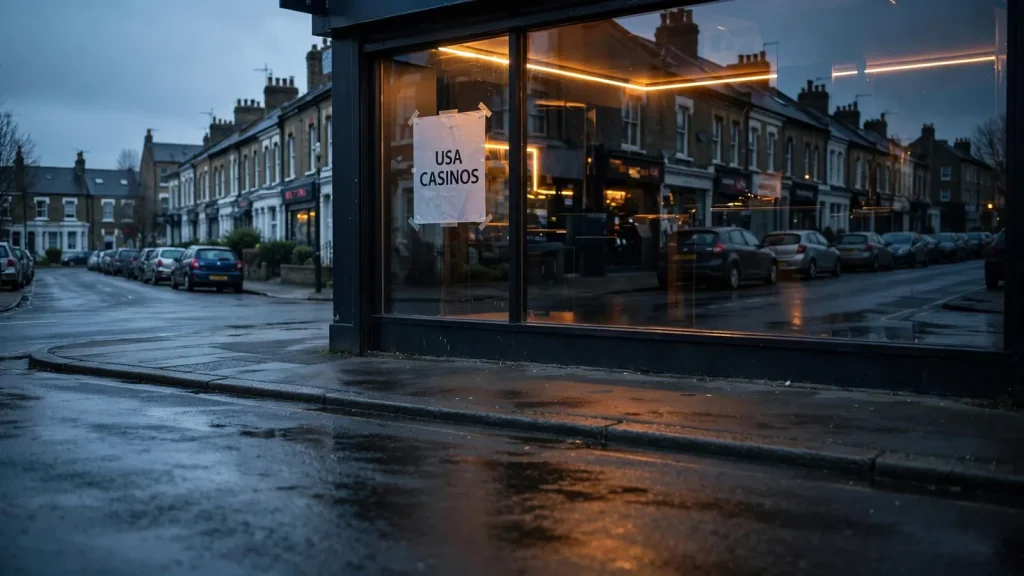
Explore how branding, access and UK regulatory authorisation differ, and why payment options alone do not establish a casino’s status in Britain.
What “USA Casinos” Means for Players in Britain
“USA casinos for UK players” sounds more precise than it is. The label may describe a website’s branding, its intended audience, its payment options, or simply the way an affiliate page categorises an overseas operator. It does not, by itself, show that the casino is licensed in the United States. Nor does it prove that the operator is authorised to provide gambling facilities in Britain.
That distinction matters because gambling regulation follows the operator’s activities and the market it serves, not the wording used in a headline. A site may present itself as American-facing while being licensed offshore. Equally, a casino might accept a British registration without holding permission from the UK Gambling Commission. The phrase “USA-friendly” is therefore a description of access or marketing, not a regulatory category.
I have seen this confusion arise at the first decision point: a player sees an American flag, dollar balances or references to US games and assumes that the site has some recognised status in Britain. None of those details settles the question. The relevant issue is whether the operator has the British licence required for remote gambling offered to customers in England, Scotland or Wales.
Casino Sites: A Guide to UK Casino Options
The label is not the licence
For the UK market, a foreign casino is an online gambling business that takes British customers without a UK Gambling Commission licence. That remains true whether the business describes itself as American, international, offshore or something else. A licence issued outside Britain does not turn into a UKGC licence because the website is available in pounds or accepts a British address.
“Licensed offshore” is another phrase that can sound reassuring while leaving out the important part. Offshore operators are outside the UK Gambling Commission’s regulatory system. Their external licence may govern their business in the jurisdiction that issued it, but it does not give them authority to serve Great Britain under British gambling law.
The position is especially clear for operators offering services in England, Scotland and Wales. An online gambling site needs a Gambling Commission licence to offer those services lawfully. The same requirement applies to an operator based abroad: location does not remove the obligation when the business is providing gambling facilities to customers in the British market.
So the wording on a page should be separated into three questions:
- What country does the operator claim to be associated with?
- Where is the business actually licensed?
- Does it hold the UKGC licence required for serving customers in Great Britain?
Those questions often produce different answers.
The player and the operator are not treated identically
This is the point most promotional explanations flatten. British gambling law places obligations on the operator, while the individual player’s position is different. Playing at a casino licensed outside the UK is not, by itself, a criminal offence for a British resident. The United Kingdom does not impose a general prohibition on an individual placing a bet with an overseas operator, and the Gambling Act does not create a criminal penalty simply because that person uses a foreign casino.
That does not make the operator’s conduct lawful in Britain. The prohibition concerns the unlicensed business offering gambling facilities to British customers or advertising those services in the UK. In practical terms, the operator may be acting unlawfully even though the customer is not committing an offence by placing a bet.
This difference is easy to miss in phrases such as “accepting UK players”. Acceptance describes what the website allows to happen. It does not establish that the operator has permission to do so. A registration form that accepts a British address is evidence of the site’s technical or commercial policy, not proof of UK authorisation.
The same applies to the expression “USA casino for UK players”. It may mean that a foreign website has not excluded British visitors. It says nothing conclusive about the legal basis on which the operator is offering gambling, the regulator overseeing the account, or the remedies available if the business refuses to honour a withdrawal.
Why the distinction changes the practical picture
A player’s lack of criminal liability should not be mistaken for a promise of protection. The fact that British law does not punish the individual for using an overseas casino does not place that casino under UKGC supervision. Nor does it give the customer the same regulatory relationship that exists with a licensed British operator.
That is why the country named in the brand is a poor shortcut. “US casinos”, “American online casinos” and “USA-friendly casinos” can all refer to businesses operating from outside both the United States and the United Kingdom. The useful classification is not the promotional label but the operator’s licensing position and whether it is authorised for the British market.
Regulatory Status
Accessibility to a site does not equal legal authorisation to serve the British market.
In short, the phrase identifies a market concept, not a legal status. It can point towards an overseas casino that is accessible from Britain, but accessibility is separate from authorisation, and the player’s legal position is separate from the operator’s obligations. That separation is the part advertising tends to leave unsaid.
Different questions entirely.
Top online casinos in the UK
- Revery PlayBonus: 100% up to€1,000+ 100 FS · Payout speed: 1-3 business days
- ChanzeBonus: Slots Welcome Bonus #1 200% up to €500 · Payout speed: 1-3 business days
- SlotoSportBonus: 500% up to £ 10 200+ 777 FS · Payout speed: 1-3 business days
- AmunbetBonus: Join now and get 450% up to 2,700 GBP + 450 FS · Payout speed: 1-3 business days
- NightLuckBonus: Welcome Pack + 805% Up To 6400€ + 280 FS · Payout speed: 1-3 business days
- BritsinoBonus: Welcome Package – Get your £2,200 + 2,000 FS · Payout speed: 1-3 business days
Can UK Players Use These Sites—and What the Law Actually Says
A British player is not committing a criminal offence merely by placing a bet with a casino licensed outside the UK. UK law does not prohibit an individual from using an overseas gambling operator. That answers the narrow question of whether a player can use such a site: the act of betting itself is not illegal for the customer.
That position is separate from the operator’s position.
Under the Gambling Act framework, an overseas licence does not give a casino permission to sell gambling to customers in Great Britain. A remote operator offering gambling facilities to people in England, Scotland or Wales must hold the relevant licence from the UK Gambling Commission. Without that licence, providing gambling to British customers is unlawful for the business, even if the company is authorised in another jurisdiction.
VPN-Friendly Casinos in the UK: What the Label Means
The same distinction applies to advertising. An operator without a UK Gambling Commission licence cannot lawfully advertise its gambling services in Britain. A foreign licence may regulate the company under the rules of the issuing jurisdiction, but it does not replace the permission required for the British market.
This is where the phrase “USA casino” can mislead. The label may describe branding, ownership, software, or the intended market. It does not decide whether the business has authority to serve a customer in Britain. A player’s lack of criminal liability should not be confused with the operator having a legal right to offer the account.
In practical terms, the law places the regulatory burden on the business rather than creating a gambling offence for the individual customer. That does not turn an offshore casino into a UK-licensed operator, nor does it give the player the protections attached to Britain’s regulated market.
The distinction is easy to state and often blurred in promotional copy:
- A British customer may place bets with an overseas operator without breaking a UK law that prohibits the act.
- An operator targeting British customers must hold a UK Gambling Commission licence.
- An unlicensed operator cannot lawfully provide gambling facilities to UK customers or advertise those services in Britain.
- An overseas licence is not a UK operating licence.
So “can” has two meanings here. A player may be able to access and use the account without facing criminal liability. The operator may still be acting outside the permission required to offer gambling in Great Britain. Different questions, different legal consequences.
How to Read Claims About Sites Accepting UK Players
The phrase “accepting UK players” sounds more definite than it is. In practice, it can describe several different things: a registration form that allows a British address, a website that loads from a British internet connection, a payment page that does not reject a UK-issued account, or an operator actively targeting customers in Britain. Those are not interchangeable signals.
This is particularly important when looking at USA casino sites accepting UK players. The label may refer to a site with an offshore licence that has not configured its access controls correctly. It does not establish that the operator holds permission from the UK Gambling Commission, that its advertising is lawful in Britain, or that a British customer receives the protections attached to a UK-licensed account.
Technical vs Regulatory
Technical access (like a registration form accepting a UK address) is a commercial policy, not proof of UKGC authorisation.
What an acceptance claim actually tells us
An acceptance claim is best treated as a statement about apparent availability. It may mean that the operator has not excluded British residents at the account-opening stage. The claim might be based on a visible country menu, a successful registration attempt, or the presence of payment options that appear usable from Britain.
That evidence has a narrow value. It can indicate that the site is technically open to a British visitor at that moment. It cannot prove the operator’s regulatory status in the UK.
A site can display a British address in its registration form while being licensed offshore and outside UK Gambling Commission supervision. That distinction remains even if the account is approved, the deposit page opens and games can be played. Technical access concerns the behaviour of the website. Authorisation concerns the legal basis on which the operator offers gambling to people in Britain.
The wording “USA online casinos real money for UK players” also tends to hide this gap. “Real money” describes the account’s ability to accept deposits and record winnings. It says nothing about whether the operator is entitled to provide that facility to British customers.
Foreign Casinos for UK Players: Licensing Explained
I have seen this confusion develop from a very ordinary operational decision. A casino may maintain one international website, list many countries in a drop-down menu and rely on a general restricted-country clause in its terms. The front end then appears open even when the operator’s licence does not cover Britain. The customer sees acceptance; the business sees an imperfect filter.
A country selector is not a licence.
Why a blocked country may still appear accessible
Access controls are not all built or maintained to the same standard. Some non-UK-licensed casinos are expected to block British visitors under their own regulatory or commercial arrangements. Yet a block can be missing, incorrectly configured or applied only at one stage of the customer journey.
A report by gambling.com says that many such sites do not effectively enforce the intended restriction, and that a basic VPN can also allow a visitor to bypass an access block. That report describes a changing situation, not a permanent feature of every offshore site. It should therefore be read as an explanation of how an apparent opening can occur, not as proof that a particular operator welcomes British customers lawfully.
There are several points where a restriction may operate:
- the landing page may be unavailable from a British connection;
- the registration form may reject a British address;
- the account may be placed under review after identity checks;
- deposits may be disabled after the country is detected;
- withdrawals may trigger a later location or documentation review.
An open homepage proves very little. Even an account that survives registration does not prove that withdrawals will be accepted. Operators can apply territorial controls late, and the consequences of that delay fall on the account holder rather than on the appearance of the website.
VPN access makes the position even less clear. Changing the apparent connection location may affect what the site displays, but it does not change the customer’s residence, the operator’s licence or the terms governing the account. It can also create a conflict with the casino’s rules if the operator prohibits masking or misrepresenting location. Access is not authorisation.
Registration success is not regulatory approval
A list of USA online casinos accepting UK players often treats a successful sign-up as the main test. That is a weak test because registration is only one transaction in a much longer relationship.
A registration page may collect an email address, password and country before the operator has completed meaningful checks. The account can therefore look active while the business has not established whether the customer is within its permitted territory. The same applies to a deposit button: a payment route being displayed does not mean that the operator has UK permission.
The more reliable reading is to separate four questions:
- Can the website be reached from Britain?
- Can a British resident complete the account form?
- Can the account accept funds and wagers?
- Is the operator authorised to serve the British market?
The first three are observations about system behaviour. The fourth is a regulatory question. None of the first three answers automatically supplies the fourth.
This is why searches for which USA casinos accept UK players can produce misleadingly confident lists. A list may record what happened during a test visit, while the reader interprets it as a statement of legal status and continuing availability. Country restrictions, payment arrangements and operator policies can change. A result that worked during one visit may later fail at registration, deposit or withdrawal.
The term “USA” creates another layer of ambiguity. It may describe branding, a target audience, a company connection or the style of the website. It does not, by itself, identify the jurisdiction that issued the gambling licence. A casino with an American-sounding name may be licensed offshore, and offshore licensing does not amount to UK Gambling Commission regulation.
What should be checked behind the wording
The useful question is not simply whether a site accepts a British address. The useful question is what the operator’s licence covers and how the operator treats British customers in its terms.
Verification Checklist
- Identify the licensing authority and operating entity
- Check terms for specific territorial restrictions
- Review withdrawal rules regarding disputed eligibility
- Confirm if the licence is issued by the UK Gambling Commission
The licence information should identify the licensing authority and the entity operating the account. “Licensed” without that context is incomplete. An offshore licence places the operator outside the UK Gambling Commission’s regulatory system. It does not become a UK-authorised service because the registration page includes Britain in a country list.
The terms should also be read for territorial restrictions. A casino may state that certain countries are excluded even while its technical systems allow those customers to register. That contradiction is a warning about operational reliability. It means the account holder may be treated as eligible at one stage and ineligible at another.
The withdrawal rules deserve particular attention, not because they establish UK authorisation, but because they show how the operator handles disputed eligibility. If the operator can close an account or refuse a payout when it later decides that the customer came from a restricted territory, an initial successful deposit offers little comfort.
gambling.com has reported cases in which unlicensed sites refused to pay winnings, leaving customers without meaningful legal recourse. That is a reported risk, not a claim that every offshore operator will behave in that way. It shows why an open account should not be treated as evidence that the operator will recognise a claim when money is due.
A promotional page can be just as misleading. A headline may mention British customers, sterling, or familiar payment branding because those features help conversion. None confirms that the underlying gambling service is authorised in Britain. Marketing language describes the intended sale; the licence determines the operator’s regulatory position.
A practical reading of availability language
The safest interpretation of “accepting UK players” is limited: the site appears not to be preventing British access at the point being tested. That wording avoids turning a technical observation into a legal conclusion.
Do
- Treat acceptance claims as statements of apparent availability
- Distinguish between technical accessibility and legal authorisation
Don’t
- Assume a site is UK-regulated because it accepts British addresses
- Confuse a successful registration with regulatory approval
The following distinctions keep the assessment precise:
| Claim seen on a casino page | What it may show | What it does not show |
|---|---|---|
| “UK players welcome” | The operator is presenting the service as available to British customers | UK Gambling Commission authorisation |
| Britain appears in the country menu | The registration system allows that selection | That the licence covers Britain |
| The site opens without a block | The website is reachable from the current connection | That the operator is permitted to provide gambling facilities in Britain |
| A deposit method is displayed | The payment interface is configured to show that route | That deposits or winnings will remain available after checks |
| An account was approved | The operator accepted the registration at that stage | A promise that withdrawals cannot later be challenged |
That is the difference between availability and acceptance in the meaningful commercial sense. A site may technically take a British customer’s registration while failing to offer the stability, oversight and enforceable route to complaint associated with a UK-licensed operator.
The label can therefore be useful only as a starting description of access. It should never be read as proof that a USA casino is legal for UK players, that it is regulated locally, or that a British customer has the same position as someone using a UK Gambling Commission-licensed site.
Access happened. That is all.
New Sites, Welcome Offers and the Cost Behind the Headline
A new casino brand often puts its welcome promotion at the centre of the launch. The headline may promise a deposit match, free spins, cashback or even funds without an initial deposit. For UK players comparing USA casino sites accepting UK players, that headline is only the opening line of the commercial arrangement. The useful question is not how large the advertised bonus looks, but what has to happen before any bonus balance can be withdrawn.
From inside the business, the reason is straightforward. A promotion is designed to attract a first deposit and generate continued play. The operator can display a large figure while attaching conditions that determine how much qualifying activity is needed, which games count, how long the offer remains valid and whether winnings from bonus funds can be withdrawn at all. The offer is therefore two things at once: a marketing message and a set of contractual rules.
International Casinos for UK Players: What to Know
Why new sites make the headline prominent
Non-GamStop casinos operating outside the UK Gambling Commission’s system can structure promotions without being bound by the UKGC’s restrictions on bonus wording, wagering conditions and promotional presentation. A specialist review source reports that this freedom is one reason foreign casinos can advertise larger welcome packages than UK-licensed operators.
That does not make the larger figure better value. It means the comparison has to move from the banner to the terms. A £100 offer can be less useful than a smaller one if the qualifying rules are harder to complete, eligible games contribute less, or a maximum cash-out condition applies. “Bigger welcome bonus” describes the acquisition message, not the amount that will necessarily become available for withdrawal.
The same applies to newly launched American online casinos presented to British customers. “New” may describe a recently opened brand, a fresh promotional campaign or a new site using an existing operating platform. It says nothing by itself about the clarity of the bonus terms, the treatment of restricted games or the operator’s handling of a withdrawal dispute.
The main forms of promotion
A specialist review source identifies four recurring categories in offers from foreign casinos serving UK players: deposit matches, free spins packages, no-deposit bonuses and cashback. Each changes the calculation in a different way.
Deposit Matches
Funds added in proportion to the qualifying deposit, often subject to wagering requirements.
Free Spins
Spins attached to specific slots, where winnings may have separate expiry or withdrawal rules.
No-Deposit Bonuses
Offers requiring no initial payment, though they may still require identity verification or account steps.
Cashback
Returning part of eligible losses, which may be credited as cash or restricted bonus funds.
Deposit matches add bonus funds in proportion to the qualifying deposit. A promotion might describe a percentage match and a maximum bonus amount. That maximum is not the same as cash credited without conditions. The deposit may be immediately usable, while the matched amount remains restricted until the wagering requirement has been completed.
Free spins packages attach a set of spins to a particular slot or group of games. The resulting winnings can have their own wagering condition, expiry rule or withdrawal limit. The key distinction is between receiving spins and receiving unrestricted cash. A spin is a chance to create a balance under the promotion’s rules, not a cash equivalent.
No-deposit bonuses appear attractive because they do not require an initial payment. They may still require account verification, a qualifying registration step or a deposit before winnings can be withdrawn. The wording also needs careful attention: the bonus may be available to play, while the resulting winnings remain locked until the stated conditions have been met.
Cashback offers return part of eligible losses or activity according to the operator’s formula. Cashback may be credited as withdrawable money, as bonus funds or as a balance subject to further wagering. The label alone does not settle that point. The definition of eligible play matters more than the word “cashback”.
These categories can be combined. A welcome package may include a deposit match, free spins and a cashback element, with separate rules for each. That makes the headline easy to remember and the actual value harder to calculate.
British Casinos Not on GamStop: Access and Risks
Wagering is the conversion mechanism
A wagering requirement is a condition requiring qualifying bets before bonus funds, or winnings generated from them, can be released for withdrawal. The multiplier is applied to the amount specified in the terms. That amount may be the bonus alone, the deposit and bonus together, or another defined figure. Confusing those bases is one of the quickest ways to overestimate an offer.
A concrete illustration used in an affiliate review shows the arithmetic: a £20 bonus with a 35x wagering requirement creates £700 in qualifying bets before cash-out becomes available. The calculation is:
£20 × 35 = £700
That is turnover, not a required loss. Bets placed during the qualifying period may win or lose, but the operator counts eligible stake according to its rules. The player still carries the risk of losing the balance before the requirement is completed. “Withdrawable after wagering” therefore does not mean “the stated bonus will survive until withdrawal”.
A second illustration makes the impact of a percentage match clearer. A 100% match on a £100 deposit produces a £100 bonus. With a 35x requirement applied to that bonus, the qualifying betting total reaches £3,500 before the bonus funds convert into withdrawable cash. The figure is large because the multiplier applies to the bonus amount, not merely to the initial deposit.
The arithmetic is simple. The definitions are not.
Wagering Calculation
Step 1: Identify the bonus
A player receives a £20 bonus.
Step 2: Apply the multiplier
With a 35x wagering requirement, the calculation is £20 × 35.
Step 3: Determine total turnover
The player must place £700 in qualifying bets before the funds convert to withdrawable cash.
What counts as qualifying play
Terms commonly distinguish between games, and sometimes between individual bets or features within a game. A slot spin may count fully while table games, live games or selected promotions contribute differently. A game that appears in the casino lobby may therefore be excluded from the bonus calculation or contribute only part of the stake.
The wording may also specify a maximum stake while the bonus is active. Exceeding that amount can lead to the removal of the bonus and associated winnings. A player who reads only the headline and not the stake rule can complete a large amount of play and still lose eligibility through one prohibited bet.
Other clauses can be equally decisive:
- whether the deposit itself must be wagered;
- whether bonus funds are used before cash funds;
- whether a player may withdraw the deposit while the promotion is active;
- whether free-spin winnings have a separate multiplier;
- whether the offer expires;
- whether only one promotion may be used at a time;
- whether a maximum withdrawal applies to bonus winnings.
These are not decorative legal phrases. They define the route from promotional credit to cash balance.
Why “no deposit” does not mean no conditions
No-deposit offers are often used to attract registrations because they remove the first payment from the sales pitch. The operator still has a commercial reason to attach conditions. The bonus may be available only after identity details have been supplied, and the withdrawal may be blocked until the account passes the operator’s checks.
The important separation is between three balances:
- Cash deposited by the player, which may be subject to separate withdrawal rules.
- Promotional credit, which normally cannot be withdrawn directly.
- Winnings generated while using the promotion, which may remain restricted until the stated wagering and verification conditions are met.
A no-deposit offer can therefore produce a playable balance without producing immediately withdrawable money. The phrase is accurate about the entry requirement and incomplete about the exit requirement.
How to compare offers without being misled
I have found that the most reliable comparison starts with the terms in this order:
- Identify the qualifying base. Is the multiplier applied to the bonus, the deposit, or both?
- Check the eligible games. A high headline is less meaningful if the preferred games do not count fully.
- Read the maximum-stake rule. A single oversized bet may invalidate the promotion.
- Separate bonus expiry from account access. The offer can expire even if the account remains open.
- Look for a cash-out ceiling. Some promotions restrict the amount that can be withdrawn from bonus play.
- Check whether a withdrawal cancels the offer. A player may lose the remaining promotional balance by requesting funds too early.
- Read the verification wording. Promotional winnings may remain unavailable until the operator confirms the account.
The amount shown in the advertisement belongs at the end of this process, not the beginning. A £100 match with a 35x condition is not simply “£200 to play with”; it is a deposit plus restricted bonus credit connected to £3,500 of qualifying turnover. The distinction is the entire commercial model.
The price of a larger package
The appeal of USA casino welcome bonuses for UK players is often the apparent scale. A foreign operator can present a larger package because its promotional framework is not constrained by the UKGC rules that apply to licensed British operators. That broader freedom can produce more generous-looking offers, but it also leaves more work in the small print.
The cost is not always a direct fee. It may be the amount of wagering needed, the games excluded, the time pressure created by an expiry clause, or the risk that a technical breach removes the bonus and its winnings. A promotion can be mathematically fair under its own terms and still be unsuitable for a player who wants a small, quick deposit followed by a straightforward withdrawal.
The same test applies to searches for top US casino sites for UK players, new sites, or no-deposit promotions. “Top”, “new” and “no deposit” describe different marketing angles; none replaces the calculation. The offer becomes intelligible only when the promotional balance, the multiplier, the qualifying games and the withdrawal conditions are read together.
Marketing vs Reality
Attention A large welcome bonus does not guarantee regulatory protection or easier withdrawals.
One final distinction matters. A large bonus does not change the regulatory status of the operator. Non-GamStop casinos serving British customers are offshore casinos, not UKGC-licensed operators. The promotion may be structured outside the UKGC framework, but that does not give it the protections attached to a British licence. Attractive arithmetic is still only arithmetic.
Read the condition, then the headline.
Fast Payouts: The Method Is Only Half the Timeline
A withdrawal has two separate stages: the casino’s internal approval and the payment network’s delivery. Marketing tends to compress both into a single phrase such as “instant withdrawals”, although the operator may still need to review the request before the chosen method receives anything.
That distinction matters particularly at non-GamStop casinos serving British customers. The payment method can be quick once released, while the account remains in a pending or verification queue. Withdrawal limits, pending periods and identity checks differ considerably between operators, so a fast method cannot turn an unknown approval process into a guaranteed same-day payout.
E-wallets: the most predictable fiat route
Skrill and Neteller are the clearest candidates for fast fiat withdrawals. A specialist review of foreign casinos reports that most operators complete these transactions within 24 hours, with many handling them in under 12 hours. That describes the casino’s processing time, not an unconditional promise that money will appear immediately after the withdrawal button is pressed.
The practical advantage is the separation from ordinary bank settlement. Once the casino releases the funds, the e-wallet is designed for near-immediate account-to-account movement. That makes it easier to distinguish an operator delay from a payment-network delay.
Casinos Outside GamStop: Rules and Risks Explained
The wording in the cashier still deserves attention. “Processed within 24 hours” may refer to the point at which the casino approves the request, rather than the full period from submission to usable balance. A pending status can therefore matter more than the advertised method. The terms may also state that a withdrawal is held until account checks are complete.
Fast, not instant.
Bank transfers: a longer chain
Bank transfer withdrawals sit at the slower end of the comparison. A specialist review places the banking timeline at five to seven business days, and some foreign casinos add their own processing delay before the transfer is sent. The total period can therefore extend beyond the banking estimate shown in promotional material.
The delay comes from several linked steps: the casino reviews the request, releases it to its payment provider, and the banking system then completes settlement. A weekend or bank holiday can make the calendar experience longer even where the stated estimate is expressed in business days.
Bank transfer is nevertheless a familiar route for larger withdrawals, provided the operator supports it and the account details match. The important point is that the method does not remove the casino’s control over approval. “Fast payouts” describes neither the operator’s queue nor the bank’s timetable unless both are stated separately.
Crypto: speed with a different risk
A specialist review reports that crypto withdrawals at foreign casinos often clear in under an hour, making them faster than fiat methods in that comparison. The transfer can move quickly once the casino approves it and the network confirms it.
Speed comes with volatility in value. The amount received in pounds can change while the cryptocurrency is being transferred or converted. The nominal balance shown at the casino is therefore not necessarily the final sterling value available after the transaction is completed.
Crypto Payout Risks
While crypto transfers can be technically fast on the blockchain, the actual time from withdrawal request to approved funds depends on the casino’s internal review processes.
Crypto also changes the nature of the timing question. A rapid blockchain transfer does not mean the casino has approved the withdrawal rapidly. Internal review, pending rules and account verification remain separate stages. A transaction can be technically quick after release while the request itself waits in the operator’s system.
Quick movement, uncertain value.
What “same-day” can conceal
Claims about same-day withdrawals need careful wording. They may describe the best-performing payment route, exclude the casino’s approval period, or apply only after identity checks have been completed. They may also be subject to a withdrawal limit or a pending period that is set out elsewhere in the terms.
A foreign operator’s cashier should be read for four details:
- how long the casino may take to approve a withdrawal;
- whether a pending period allows the request to be cancelled;
- what withdrawal limits apply;
- when identity verification is required.
These conditions vary considerably from one operator to another. A payment method that is capable of moving funds quickly cannot override an operator’s own rules. The headline speed is therefore only one part of the transaction.
Checking the full route
The strongest comparison separates the stages rather than treating every withdrawal as a single event. E-wallets offer the clearest stated fiat timetable, with Skrill and Neteller transactions reported as being completed within 24 hours by most foreign casinos and in under 12 hours by many. Bank transfers carry the longest stated route, at five to seven business days in the specialist review, before any operator delay is added. Crypto can clear in under an hour according to that review, but its value can fluctuate against sterling.
The payment method is only half the timeline. The operator’s processing rules determine when the clock starts.
The Safeguards That Do Not Travel With an Offshore Account
An offshore account does not carry the protections attached to a UK Gambling Commission licence. This is the important distinction behind claims about a USA casino accepting UK players: registration may be technically possible, but the account sits outside the British regulatory system.
Self-exclusion stops at the UKGC boundary
GamStop applies across all UKGC-licensed operators. Once a player registers with GamStop, the exclusion blocks access to every operator covered by that scheme. A foreign casino operating outside the Commission’s remit is not connected to GamStop, so the exclusion does not automatically follow the player there.
A specialist affiliate review reports that someone already excluded through GamStop may open an account with a foreign casino and deposit without the same safeguards. That is not a minor technical gap. Self-exclusion is intended to create distance between a person and gambling accounts; an offshore account can remove that barrier.
Non-GamStop European Casinos: UK Rules Explained
From the operator’s side, the practical protection is therefore different. The UK scheme is system-wide among licensed operators. It is not system-wide across the international market.
Affordability checks are not equivalent
UKGC-licensed operators operate within British requirements for player protection, including affordability checks. Offshore operators are not subject to UKGC enforcement and do not provide UKGC-mandated affordability checks. Any assessment they perform is based on their own rules, licence conditions and risk systems, rather than the British framework.
That difference matters because identity checks, payment checks and affordability checks serve separate purposes. A request for a passport may establish who controls an account. It does not, by itself, show that the operator has assessed whether continued gambling is affordable.
The same applies to deposit controls. A limit or cooling-off tool offered by an offshore site may be useful, but it is not the UKGC system and should not be treated as an equivalent substitute.
Identity checks and unpaid winnings
UKGC-licensed operators must verify a player’s identity before processing a withdrawal. Offshore sites may also request identification, particularly when a withdrawal is made, but the procedure is governed by the operator’s own terms and its offshore licence rather than by UKGC requirements.
That changes the position when an account is restricted or a payment is disputed. A UK-licensed operator remains within the Commission’s supervisory framework and the complaint routes associated with that framework. An offshore operator does not offer the same recourse.
Gambling.com reports cases in which unlicensed sites refused to pay winnings, leaving customers without a legal remedy. The point is not that every offshore account will end this way. It is that the leverage available after a failed payment is materially weaker when the operator is outside British oversight.
The trade-off is simple: access may cross borders; protection does not.
Non-UK Regulated Casinos: Licences and Limits
Are foreign casinos safe for UK players to use?
Not necessarily. An overseas licence does not provide UK Gambling Commission oversight, and some unlicensed casinos have refused to pay winnings, leaving customers with little legal recourse.
Is it legal for UK residents to use casino sites that operate outside the UK’s licensing framework?
Yes, a UK resident does not commit a criminal offence simply by betting at an overseas casino. However, an unlicensed operator may be acting unlawfully by offering gambling services to customers in England, Scotland or Wales.
How do I know if an online casino is safe?
Check whether it holds a UK Gambling Commission licence; an overseas licence is not a substitute. A site accepting a British address does not prove it is authorised to serve the UK.
How long do withdrawals take at the listed operators?
Times vary by payment method and operator. E-wallet withdrawals are often processed within 24 hours, bank transfers can take five to seven business days, and crypto withdrawals often clear in under an hour.
Are gambling winnings subject to income tax in the United Kingdom?
No. Gambling winnings are not subject to UK income tax, whether the casino is UKGC-licensed or not.
Can I use cryptocurrency at foreign casinos from the UK?
Yes, some foreign casinos accept cryptocurrency. Crypto withdrawals often clear in under an hour, but the value can fluctuate.
Casino Sites
Created by the "Casino Not on Gamstop" editorial team.