
French Roulette Online Casinos in the UK: Rules
 Available in GB
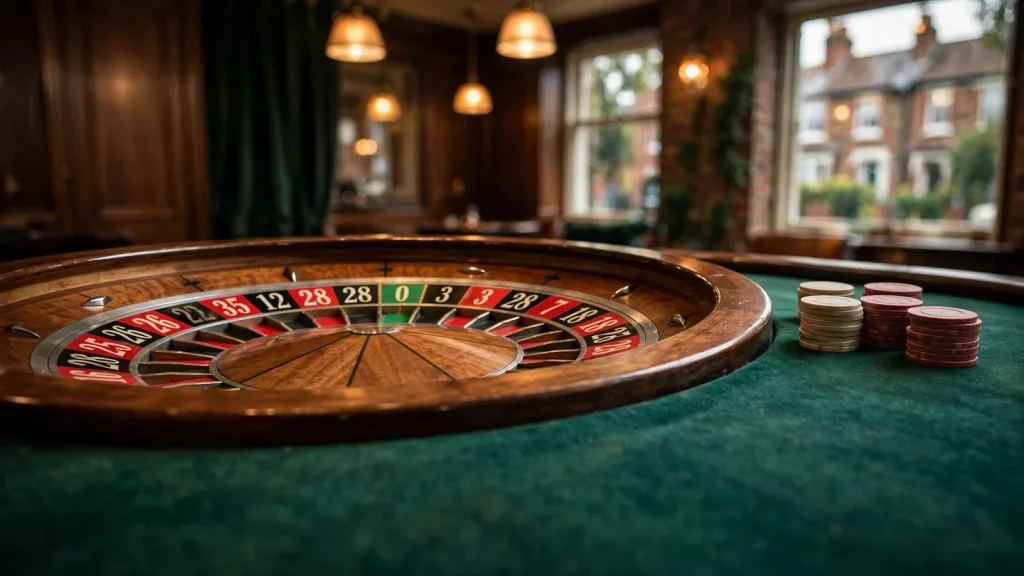
See how French roulette’s single zero, table limits, game formats and bonus wagering shape the choice of an online casino.
French Roulette: The Zero Rule That Changes the Odds
French roulette is built around a single green zero. That detail is more important than the language on the table or the style of the layout, because it determines how often the wheel can produce a result that loses most even-money bets.
The wheel has 37 pockets: numbers 1 to 36 and one zero. The numbered pockets are divided between red and black, while zero is neither colour. It is not an ordinary losing number in the mathematical sense; it is the extra outcome that gives the casino its advantage over bets such as red or black, odd or even, and high or low.
A standard single-zero wheel is therefore different from American roulette, which has both zero and double zero. French roulette uses the European wheel rather than the American one. That gives the base game a smaller house edge, even before the special French rules are applied.
Online Casino American Roulette in the UK: Wheel Guide
Why the zero matters
An even-money bet appears simple: red against black, odd against even, or low numbers against high numbers. Yet the wheel does not contain an equal number of winning and losing pockets for those bets. There are 18 red and 18 black numbers, but the zero belongs to neither group. The same interruption applies to the other even-money options.
When the ball lands on zero, an even-money wager would ordinarily lose in full. That single pocket is the reason the casino has an advantage on these bets. The edge is not created by a hidden adjustment to the winning colours; it comes from the additional green result sitting outside them.
French roulette changes the treatment of that result through La Partage. If the ball lands on zero and an even-money bet has been placed, half of the stake is returned. The other half is lost. In practical terms, the zero is no longer a complete loss for that class of wager.
That rule reduces the house edge on even-money bets to 1.35%. It does not apply automatically to every wager on the layout. A bet on a single number, a group of numbers, or another option with different odds does not become a 1.35% proposition merely because the wheel is described as French roulette. The wording on the table matters.
This is where promotional descriptions can be misleading. “French” is not enough on its own. The meaningful question is whether the table actually applies La Partage to the eligible even-money bets.
Casino Games: Slots, Table Games and Live Play
La Partage and En Prison
French roulette is also associated with En Prison. Under this rule, an even-money bet affected by zero is held rather than settled as an immediate full loss. The eventual treatment depends on the next spin and the table’s stated terms. If the required condition is met, the original stake can be released; if not, it is lost.
La Partage is easier to understand because the financial result is immediate: half the stake comes back when zero appears. En Prison changes the timing and status of the wager instead. Both rules address the same structural problem — the zero interrupts an otherwise balanced-looking even-money bet — but they do so differently.
The distinction matters in an online casino because the interface may show a bet as being retained, transferred, or awaiting the next result rather than simply displaying a win or loss. The table rules should explain exactly what happens. A French layout without a clear description leaves too much room for assumptions.
The lowest standard house edge
French roulette has the lowest house edge among standard roulette variants because the single-zero wheel is combined with La Partage and En Prison. The advantage is not a claim that the player can overcome chance. It is a statement about the mathematical deduction built into the game over a large number of spins.
French roulette has the lowest house edge among standard roulette variants because the single-zero wheel is combined with La Partage and En Prison.
A lower house edge means that the rules take less from eligible wagers in the long run than comparable rules on other standard variants. It does not make an individual spin more predictable, and it does not turn a losing session into a controlled outcome. Zero can still appear at any time, and a sequence of results remains uncertain.
I have seen the word “French” used as if it described a complete guarantee of favourable treatment. It does not. The rule attached to zero is the point. A table needs to show whether La Partage and En Prison apply, which bets qualify, and how a zero result is recorded.
What to identify on an online table
For online French roulette, the essential features are visible in the rules panel or help screen:
- a wheel with numbers 1 to 36 and one zero;
- La Partage applied to eligible even-money bets;
- En Prison terms stated clearly where the rule is offered;
- the settlement shown after zero appears.
The layout may look familiar, but appearance is not proof. Some tables use French terminology while presenting rules that need closer inspection. Others display the zero treatment beside the betting area, where it can be checked before a stake is placed.
The defining advantage is narrow but significant. French roulette does not remove the casino edge, and it does not alter the random nature of the wheel. It changes the financial consequence of zero for specific even-money bets. That is why the single green pocket, rather than the table’s visual style, is the right place to begin when assessing online French roulette.
Top online casinos in the UK
- Revery PlayBonus: 100% up to€1,000+ 100 FS · Payout speed: 1-3 business days
- ChanzeBonus: Slots Welcome Bonus #1 200% up to €500 · Payout speed: 1-3 business days
- SlotoSportBonus: 500% up to £ 10 200+ 777 FS · Payout speed: 1-3 business days
- AmunbetBonus: Join now and get 450% up to 2,700 GBP + 450 FS · Payout speed: 1-3 business days
- NightLuckBonus: Welcome Pack + 805% Up To 6400€ + 280 FS · Payout speed: 1-3 business days
- BritsinoBonus: Welcome Package – Get your £2,200 + 2,000 FS · Payout speed: 1-3 business days
How to Assess a Casino Offering French Roulette
A casino catalogue can make French roulette look like a simple filter: find the table, open the game and place a bet. That approach misses the conditions that determine what is actually being offered. When I checked casino products from the operator side, the name of a game was never enough. The wheel type, rules, presentation and account terms all needed to line up.
The first check is whether the listed game is genuinely French roulette rather than European roulette given a French-sounding label. The wheel should have a single zero, and the table rules should identify La Partage and En Prison where they apply. Those details matter because the French version is defined by how even-money bets are treated when the ball lands on zero. A title alone proves little.
Read the game information, not just the lobby tile
The operator’s game page should explain the principal rules before play begins. Useful information includes:
- the number of pockets on the wheel;
- the treatment of even-money bets when zero appears;
- the available bet types and their stated payouts;
- whether the game is live dealer, automated or generated by software;
- the return-to-player information or house-edge disclosure;
- the provider responsible for the table.
A well-presented catalogue separates these details instead of hiding them behind a graphic. If the rules appear only after registration, or if the page describes the game as “French” without showing how zero is handled, the description is incomplete. That is not a minor copy issue. It prevents a proper comparison between tables carrying similar names.
I treat RTP information as a basic transparency test. Roulette is not normally presented through one slot-style RTP figure in the same way across every product, so the operator should still make the relevant return information and rules understandable. The important point is that the mathematical conditions must be visible before money is committed. A page that provides a decorative name but no meaningful explanation leaves the player to reconstruct the terms from the table interface.
Check who supplies the table
The casino may operate the account while another company supplies the game. That distinction matters when comparing online casinos with French roulette because the provider controls much of the table’s technical presentation, rules display and studio or software format. The operator remains responsible for making the product catalogue clear, but provider information helps explain why two apparently similar tables behave differently on screen.
Best Keno Online Casinos in the UK: How to Choose
For live French roulette, the listing should make clear that the table is streamed from a studio with a physical wheel and a dealer. For software roulette, the page should identify the game as RNG-based rather than creating the impression of a live table. Those are different products, not merely two skins for the same interface. Their pace, interaction and visual format belong in the comparison.
A provider name is useful, but it is not a substitute for the game rules. Familiar branding can make a listing look established while leaving the central question unanswered: what happens to an even-money bet when zero is drawn?
Separate casino conditions from game conditions
The operator’s reputation and the roulette mathematics answer different questions. A casino may have a broad catalogue, several French roulette tables and attractive promotional language, yet still present the rules poorly. Conversely, a plainly designed site may disclose the game conditions clearly. I keep those assessments separate.
Live Baccarat Online Casino UK: Tables and Play
The casino-level checks include:
- whether the operator clearly identifies its regulatory status;
- whether the catalogue names the provider and game format;
- whether the rules and return information are accessible without ambiguity;
- whether the table remains available under the stated conditions;
- whether the terms attached to any bonus funds treat roulette differently from other games.
The last point belongs to the promotion terms rather than the wheel itself. Bonus accounting can change the practical value of an offer, but it does not change the house edge of French roulette. Mixing those two subjects is how “better value” claims are often produced from unrelated conditions.
Look for stable information across the site
The game lobby, help pages and terms should describe the same product. If one page calls a table French roulette while another identifies it as European roulette, that inconsistency needs resolving before the casino can be compared fairly. The same applies when the game title promises one format but the rules screen shows another.
I also check whether important information remains available after opening the table. A rules button that disappears once the game loads, or an RTP reference that can be found only through a separate help page, makes verification unnecessarily difficult. Clear disclosure is part of the offering, not an optional extra.
Search results and promotional banners are poor substitutes for the operator’s own rules page. They compress the product into sales language. The useful evidence sits in the game information, terms and regulatory details.
Assess the operator before comparing the catalogue
For UK-facing operators, the relevant regulatory body is the UK Gambling Commission, which regulates online casino activity in Great Britain. That status belongs in the initial assessment of a casino offering real-money roulette, alongside the product information and account terms. A polished French roulette page does not by itself establish that the operator is suitable for the British market.
Hi-Lo Casino UK: Understanding Live and Online Play
My working order is straightforward: identify the operator, open the full game description, confirm the wheel and zero rules, locate the return information, identify the provider and compare the wording across the site. Only then does it make sense to compare one French roulette table with another.
The label is the beginning. Not the evidence.
What “Best” Means When the Casino List Is Empty
A page about the best French roulette casino in the UK normally suggests a comparison table: operator names, ratings, welcome offers and a final winner. That format looks useful, but it becomes misleading when the underlying conditions cannot be checked consistently. A ranked list is only as sound as the evidence behind each entry. Without that, “best” becomes a label applied to advertising copy.
I have seen this from the other side of the counter. A casino can present a polished French roulette lobby while leaving the important distinctions in small print: whether the table is live or automated, which rules apply, how the game is identified, and whether the displayed information belongs to the current version. The brand may be easy to recognise. The comparison is not.
A name is not a game condition
Searching for the best online French roulette casino can produce a long list of familiar operator names. That does not establish that each one offers the same game. French roulette is defined by specific rules, and a title containing the word “French” is not enough to prove that those rules are active at the table.
What to check in a casino
Searching for the best online French roulette casino can produce a long list of familiar operator names. That does not establish that each one offers the same game.
The useful unit of comparison is therefore not the casino name alone. It is the actual game entry and its published terms. A serious assessment asks whether the table identifies its rules clearly, whether the relevant payout information is visible, and whether the presentation matches the game being advertised. If those details cannot be confirmed, a ranking would give a false impression of precision.
This is why an empty casino list can be more informative than a crowded one. It avoids turning an unchecked catalogue into a recommendation.
Why rankings can mislead
“Best” often hides several different judgements. One list may mean the widest game choice; another may mean the easiest registration process; a third may reward a large bonus. None of those automatically identifies the strongest place for French roulette.
The word also encourages a comparison between unlike products. A streamed table with a dealer, an automated wheel and an RNG game may all appear under a roulette heading, yet the playing experience and pace differ. Combining them in one ranking without explaining the distinction produces a neat result with weak meaning.
The same problem appears when a page gives every operator a score but does not show how the score was calculated. A star rating cannot replace the rule information that determines whether the product suits the intended style of play. In my experience, the missing detail matters more than the extra decimal point in a review score.
A number without a method is decoration.
What can be compared honestly
A defensible comparison starts with conditions that can be observed and checked:
- whether the game is clearly labelled as French roulette;
- whether its rules and payouts are displayed before play;
- whether the game is provided in a way that is accurately described;
- whether the operator presents current information rather than a generic roulette page;
- whether the table’s conditions are separated from promotional wording.
That approach does not produce a theatrical winner. It does produce a more useful answer for someone deciding between available tables. The question changes from “Which casino is best?” to “Which French roulette offering has conditions that can actually be understood and verified?”
That is a narrower claim, but a stronger one.
The role of chance
Even a perfectly described table does not create a predictable outcome. Roulette odds are governed by chance, and no betting system can identify the final result in advance. A casino comparison can clarify the product; it cannot convert an uncertain game into a controlled one.
This distinction is important because “best” may be read as “most likely to win”. That is not what a responsible comparison can promise. A clear ruleset may make the choice easier to understand, but it does not alter the random result of an individual spin or provide a reliable forecasting method.
Attention A sequence of results remains uncertain, and a lower house edge does not make an individual spin more predictable.
I have made the mistake of treating a well-presented table as if it offered more control than it did. Presentation affects confidence, not probability.
A better meaning of “best”
For French roulette in Britain, the most credible use of “best” is conditional. It can describe an offering whose game identity, rules, payouts and operating details are plainly stated and capable of being checked at the time of comparison. It should not imply that a named casino guarantees better results or that a ranking has discovered a winning venue.
That standard also leaves room for the list to remain empty. If the available information cannot support a like-for-like judgement, withholding a league table is not a failure to compare. It is a refusal to manufacture certainty.
The practical conclusion is modest: assess the table that is actually presented, not the reputation attached to its logo. A verified condition beats a confident ranking.
Low, Standard and VIP Table Limits
Table limits determine how much money is committed before the wheel has even turned. They do not alter the wheel’s mathematics, the payout attached to a winning bet or the treatment of zero. They set the size of the decision. That distinction matters when comparing low-stakes French roulette with standard and high-limit rooms.
A low table is primarily an access point. It allows smaller individual bets and makes it possible to observe the game without exposing a large part of a bankroll to a single spin. In a UK online casino, live roulette minimums can start at 10p. A specialist review has also reported 5p starting points on some auto-roulette and speed formats, but that figure should be treated as a table-specific observation rather than a fixed market standard.
Fast Payout Online Casinos in the UK: What to Check
That difference between formats is important. A low-limit French roulette table with a human dealer may not share the same minimum as an automated wheel elsewhere in the lobby. The label “low stakes” describes the entry requirement, not necessarily the presentation, pace or game software. A table can be inexpensive to enter while still being a live stream, and another can use an automated wheel with a different betting interface.
What a standard limit changes
Standard tables sit between entry-level access and premium play. Their minimums are higher than the cheapest available tables, but they are not presented as an exclusive room for large-stake players. In practical terms, the table limit influences how long a fixed bankroll remains available and how much each losing spin removes from it.
I have seen players treat a standard limit as a quality marker, which is a mistake. The table minimum is a commercial setting, not evidence that the game has better odds. French roulette remains defined by its rules, not by the amount required to join a table. A higher minimum does not improve the return on a red bet or make a number more likely to appear.
The limit also affects flexibility. When the minimum is close to the intended stake, there is little room to reduce exposure after a losing run or to vary the size of outside and inside bets. At a lower table, the same bankroll can be divided into smaller decisions. That does not create an advantage, but it can make the financial effect of each spin less abrupt.
Table limits determine how much money is committed before the wheel has even turned. They do not alter the wheel’s mathematics, the payout attached to a winning bet or the treatment of zero.
Small decisions, smaller exposure.
VIP and high-limit access
VIP tables are built around a higher stake category. They may be placed in a separate lobby or described with terms such as “premium” or “exclusive”. Behind those words is usually a stricter entry condition: the minimum bet is designed for players comfortable committing more on each round.
A VIP limit therefore says something about the expected size of play, not about the quality of the wheel. It does not turn an unfavourable result into a favourable one, and it does not change the chance attached to any particular number. The same applies to a high-limit French roulette table: its defining feature is the permitted stake range.
The practical risk is concentration. With a high minimum, a modest sequence of losing spins can affect a bankroll more quickly because each decision carries greater weight. A player who wants the atmosphere or interface of a premium room but not its financial exposure may find that the table is simply unsuitable. The word “VIP” is not a strategy.
Comparing limits without confusing formats
A useful comparison separates three questions:
- What is the minimum permitted stake?
- Is the table live, automated or another roulette format?
- Does the limit fit the intended bankroll without forcing larger bets than planned?
The first question concerns access. The second concerns delivery and presentation. The third concerns financial control. Combining them produces misleading comparisons, especially when the lowest advertised figure belongs to auto-roulette or speed roulette rather than a streamed French table.
Table limits can also differ within the same casino catalogue. A low-limit option may sit beside a standard table, while a VIP room carries a much higher minimum. None of those labels establishes better odds. They only define who can enter at a particular stake level and how much each spin can represent.
For that reason, the sensible comparison is not “Which limit wins?” It is whether the minimum leaves enough room for deliberate staking. A low-limit table offers more granularity; a standard table assumes larger decisions; a VIP table places the greatest emphasis on available bankroll. The wheel itself does not reward the larger entry ticket.
Live Dealers, RNG Tables and Faster Roulette
The phrase “live French roulette” describes how the game is delivered, not a separate set of odds. A live dealer table uses a real wheel in a studio, a physical ball and a human dealer. The camera carries the spin to the screen, while betting closes before the ball completes its run. The appeal is the visible process: the wheel turns, the ball drops and the result comes from an observable physical event.
Live Casino Lightning Roulette in the UK: How It Works
That format also creates pauses. The dealer must settle the previous result, announce the next round and allow time for bets before starting the wheel again. A standard live table therefore moves at a measured pace. One stated comparison puts live dealer roulette at roughly 50 to 60 spins per hour, although the exact rhythm depends on the studio and game presentation.
The word “live” is sometimes used loosely in casino menus. A genuine live casino French roulette table should show the studio feed, the wheel and the dealer rather than merely imitate them with animation. That distinction matters when the attraction is the physical ceremony rather than the number of rounds completed.
RNG roulette
RNG roulette replaces the physical wheel with a random number generator. Software selects the result, then presents the corresponding wheel or number on screen. There is no dealer, studio stream or physical ball drop. The game can move directly from one result to the next, so waiting time is much shorter.
RNG roulette
There is no dealer, studio stream or physical ball drop. The game can move directly from one result to the next, so waiting time is much shorter.
The difference is especially clear in American roulette. RNG American roulette is described as running at 150 to 200 or more spins per hour, against 50 to 60 spins per hour for live dealer play. More rounds in the same period do not improve the underlying chance of winning. They simply expose the bankroll to results more frequently.
That is the commercial meaning of “faster” here. The software removes the pauses that belong to a human-led table. It does not make a number more likely to appear, and it does not turn a random outcome into a predictable sequence.
Speed roulette
Speed roulette sits between the visual language of a roulette table and the rapid cycle of automated play. It may retain a wheel-based presentation while compressing the time between rounds. A specialist review gives speed roulette a rate of more than 150 spins per hour, compared with 80–100 spins per hour for a standard table. That figure should be treated as a description of the reviewed format, not as a permanent specification for every game carrying the label.
The practical choice is therefore about tempo and atmosphere:
- Live dealer roulette: a streamed studio, human dealer and physical ball drop, with a slower table rhythm.
- RNG roulette: software-generated results and a rapid sequence of rounds.
- Speed roulette: a compressed format designed to reduce the interval between spins.
An online live French roulette casino suits the player who values the dealer and the visible wheel. An automated table suits someone who places more weight on uninterrupted play. “Auto” changes the delivery mechanism, not the mathematics. The wheel may be represented on screen, but no physical studio event is taking place.
From inside the industry, presentation often does more persuasive work than the rules. A live table feels social; an RNG table feels efficient; speed roulette feels urgent. None of those impressions changes the result-generation process beyond the distinction between a physical wheel and software. Faster play means faster exposure to chance.
That is the part advertisements leave quiet. Pace is a playing condition.
Roulette Bets, Payouts and the Martingale Trap
A French roulette casino game uses the same basic betting grid as other single-zero roulette variants. The important distinction is not that every wager pays differently, but how much of the wheel a bet covers and how much it returns when it wins.
A straight-up bet selects one number. It pays 35:1, in both European and American roulette. The return is attractive because the chance of selecting the winning pocket is narrow. A win does not change the underlying odds of the next spin.
A split bet covers two adjacent numbers and pays 17:1. It gives the stake a wider reach than a straight-up wager, with a correspondingly lower payout. The layout position matters: the numbers must share a border on the betting table.
Outside bets cover broader groups. Red or black, even or odd, and high or low all pay 1:1. A winning wager of this type returns the original stake plus an equal profit. Zero is the awkward pocket: it is neither red nor black, neither even nor odd, and neither high nor low. That single result is why these bets are not true fifty-fifty propositions.
Straight-up Bet
Example: 35:1 × 1 = 35:1 profit.
The payout table can make an online French roulette casino look easier to read than it really is. The return is fixed, but the chance of landing the required result remains governed by the wheel. A larger payout compensates for a narrower event; it does not create a favourable prediction.
Why the Martingale fails
The Martingale system tells a player to double the stake after every loss, hoping that one eventual win will recover the previous losses and produce the original unit profit. The arithmetic appears tidy on paper. The exposure is not.
A losing streak can push the next required stake sharply higher, while the bankroll absorbs each earlier loss. Table limits can stop the sequence before a recovery win arrives, and a finite balance can do the same. Even where neither restriction intervenes, the next spin remains random. No betting pattern can predict its colour, number or parity.
I have seen the system described as “automatic recovery”. That wording hides the real trade: small target profits are exchanged for rapidly increasing risk. A win ends the sequence; it does not prove that the method worked as a prediction.
Chance remains chance.
Bonus Wagering on French Roulette
Bonus funds attached to a French roulette offer do not necessarily receive the same game weighting as cash stakes. The operator’s bonus terms decide how much each roulette wager contributes towards the required playthrough, and the percentage can differ between an RNG table and a live-dealer table.
Across UK operators, roulette wagers are commonly assigned a contribution of 10% to 20% of the wagering requirement. That does not mean a £1 stake clears £1 of the requirement: only the stated fraction is credited. An operator may also separate French roulette from other roulette products, so the game’s name in the lobby is not enough. The bonus rules need to identify the eligible title and its weighting.
Live Blackjack Online Casino UK: How Tables Work
A specialist review has reported a sharper split in some offers: live roulette may receive 10% or 20% game weighting, whereas RNG roulette may receive 100%. That comparison is not a standing rule for every online casino with French roulette; it is an example of why the individual terms matter. Live play can look more attractive while contributing less to bonus completion.
The maximum wagering requirement also changed for UK-licensed operators in January 2026. A bonus cannot be tied to more than ten times wagering under the applicable cap. The limit does not make every promotion equally useful: game weighting, excluded bets, maximum qualifying stakes and expiry conditions still determine how much play is required.
My practical reading is simple: treat the headline bonus as incomplete until the French roulette weighting is visible in the terms. “Qualifying play” may mean very little when roulette carries a reduced rate. Read the small print.
Premium Tables and What Their Limits Mean
A premium French roulette table is defined by its stake range, not by a different mathematical chance of winning. The wheel, pocket distribution and applicable rules determine the odds. Raising the minimum does not make a number more likely to appear, and a higher-limit room cannot turn a losing bet into a favourable one.
The practical distinction is access. Entry-level tables allow smaller wagers and make it possible to test the interface, pace and rules without committing to a large stake. Premium tables are built for players who prefer larger bets and a more restricted betting environment. The label describes the category of play, not superior value.
A premium French roulette table is defined by its stake range, not by a different mathematical chance of winning.
A specialist review identified UK live roulette minimums starting at 10p, while auto-roulette and speed roulette formats sometimes begin at 5p. Those figures show why the table type matters when comparing entry points: the lowest available stake may depend more on delivery format than on whether the game is called premium. A premium room may sit at a substantially higher threshold, but the exact limit belongs to the individual table.
Higher limits also change the financial effect of ordinary variance. The same sequence of winning and losing spins produces larger swings when each wager is larger. That is a bankroll issue, not an odds improvement. No strategy can forecast the final roulette result; every spin remains governed by chance.
I have seen “premium” used as a quality signal in casino menus. In operational terms, it is often just a filter for stake level and table access.
Different label. Same wheel.
Playing Online: Set Limits Before the First Deposit
A French roulette account should be set up around control settings, not around the table’s promotional wording. UK-licensed operators must prompt new customers to choose a financial limit before the first deposit and provide account-level tools for changing or reviewing those limits. Deposit limits restrict how much money can be added; loss limits address the amount that can be lost over the relevant period. They are different controls, and one does not replace the other.
Best Fast Payout Online Casinos in the UK
The same account framework should include session-time reminders and reality checks. These interrupt a long online session with information about elapsed time or activity, which matters because live roulette can make repeated decisions feel routine. Cool-off periods provide a deliberate pause when gambling needs to stop temporarily. I have always treated these settings as part of the product, not as an optional warning attached to it.
UK-licensed live casino operators must also provide access to GamStop self-exclusion. GamStop blocks participation across participating online gambling accounts for the selected exclusion period, rather than relying on a single casino’s internal restriction. A local account closure is therefore not the same control.
Other safeguards sit around the account. Age must be verified before funds can be deposited, and UK-licensed casinos cannot accept credit cards for gambling. The UK Gambling Commission regulates online casino activity in Great Britain, so these requirements belong to the operating framework rather than to an individual roulette table.
Before playing French roulette online, the sensible order is:
- set a deposit limit;
- set a loss limit;
- activate reminders or reality checks;
- note the cool-off option;
- keep GamStop available if self-exclusion becomes necessary.
Set first. Spin later.
French Roulette in Britain: Check the Licence First
For anyone comparing casino French roulette in Britain, the licence is the legal starting point, not a badge added after the game description. Online casino activity in Great Britain is regulated by the UK Gambling Commission (UKGC), which is the country’s sole regulator for this market.
A platform offering real-money live roulette to British residents must hold a valid UKGC operating licence. An operator based elsewhere may display another jurisdiction’s authorisation, but that does not replace the British requirement. Without a current UKGC licence, it cannot legally offer real-money live roulette to customers in Britain.
That distinction matters because a roulette table can look identical across websites while the legal position behind it is completely different. The wheel, dealer feed and betting interface do not establish whether the operator is permitted to serve the market. The licence does.
I have always treated the public UKGC register as the useful checkpoint. The operator’s legal name should match the register entry, and the licence should be current before any deposit is considered. Marketing pages, logos and claims of “regulated play” are not substitutes for that verification.
The same boundary applies whether the table is branded as French roulette, live roulette or another casino variant. The name of the game does not create an exception. British residents may play online for real money only where the operator is authorised for the British market.
There is also a practical reason to avoid treating licensing as paperwork. UKGC licensees operate within Britain’s gambling-control framework, while an offshore operator without that licence sits outside it. The visible table may be familiar; the accountability is not.
Check the licence first. Then compare the roulette.
What does online casino roulette for real money mean?
It means playing roulette online with money staked on the outcome. Roulette results are determined by chance, and the casino has an edge.
Does UK online casinos offer American roulette on mobile?
UK online casinos may offer American roulette, but availability on mobile depends on the casino’s game catalogue.
What is the difference between European and American roulette wheels?
European roulette has 37 pockets: numbers 1–36 and one zero. American roulette has 38 pockets, adding a double zero.
What is the house edge on European roulette compared to American roulette?
The house edge is 2.70% on European roulette and 5.26% on American roulette. The American roulette basket bet has a higher edge of 7.89%.
What makes XXXtreme Lightning Roulette different from regular roulette?
Lightning Roulette can add multipliers to selected numbers, while a straight-up number bet without a lightning multiplier pays 29:1 rather than the standard 35:1. Outside bets pay standard roulette odds.
Casino Games
Published by the Casino Not on Gamstop team.