
Online European Roulette in the UK: Rules and Play
 Available in GB
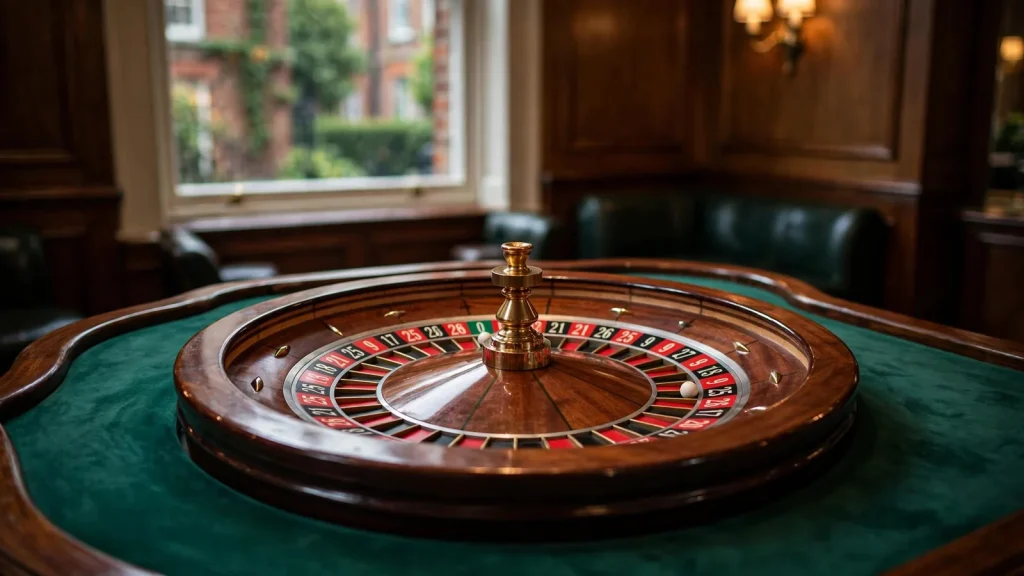
Explore the single-zero wheel, bet types, online formats and bonus contribution rules, with comparisons to French and American roulette.
What Makes European Roulette a Single-Zero Game
European roulette is built around a wheel containing 37 pockets: the numbers 1 to 36 and one green pocket marked zero. That single extra pocket is the feature that gives the European format its name and its mathematical identity. It is not a decorative variation. It changes the relationship between the number of winning pockets and the number of losing outcomes on every spin.
The wheel itself is divided into numbered compartments. A ball is sent around the rim and eventually drops into one pocket. Each spin is an independent event: the position of the ball on the previous spin does not determine where it will land next. The layout may look orderly, but the outcome is not produced by a sequence that can be read or extended.
Why the zero matters
The numbers from 1 to 36 are split between red and black pockets, while zero is green. That green pocket is neither red nor black, neither odd nor even, and neither low nor high. It therefore sits outside the usual two-way categories used for broad roulette bets.
This is where the house advantage comes from. A red bet, for instance, covers 18 numbered pockets, but the wheel has 37 possible results rather than 36. The zero is an additional result on which that bet loses. The same principle applies to black, odd, even, low and high selections.
For European roulette, the mathematical house edge is 2.70%. That figure describes the long-term advantage built into the wheel, not the result of an individual spin. A player can win or lose a particular round regardless of the percentage. Over a sufficiently large number of wagers, however, the extra green pocket prevents the probabilities from being perfectly even.
That distinction is often blurred in casino advertising. “Even-money” describes the payout offered on certain bets, not an equal chance of winning and losing. The zero is the small-looking detail that keeps the two sides from being equal.
How the wheel differs from other formats
The clearest mechanical comparison is with American roulette. An American wheel has 38 pockets: numbers 1 to 36, one zero and a double zero. The second green pocket adds another losing outcome for many common bets. In practical terms, European roulette removes that additional double-zero pocket; it does not remove the zero altogether.
Live Casino Lightning Roulette in the UK: How It Works
That is the important difference between European and American roulette. Both formats use the same numbered range from 1 to 36, and both include a green zero. American roulette adds 00, creating a larger set of possible results. The wheel is therefore not simply a European wheel with a different felt design. Its pocket count is different, and so is the built-in mathematical disadvantage.
French roulette uses the same single-zero wheel structure as European roulette, but some tables apply additional rules to certain even-money bets. Those rules belong to the betting conditions rather than to the physical count of pockets. The wheel remains a 37-pocket wheel with one zero.
What “single-zero” signals online
On an online casino page, “single-zero roulette” is a useful description because it identifies the wheel structure before any discussion of graphics, dealers or promotional features. It indicates that the game uses 37 possible pockets, not the 38-pocket American arrangement.
That wording still needs checking against the actual game information. A title can be brief, while the rules or paytable contain the meaningful details. For a European roulette casino UK players are considering, the decisive mechanical point is whether the wheel shows numbers 1 to 36 and one zero, with no double zero.
Digital presentation does not alter this structure. Whether the wheel is displayed through software or represented by a physical wheel in a streamed game, the European format remains defined by its single green zero and 37 pockets. The visual style may change; the underlying set of possible results does not.
I have seen many players focus on the colour scheme or the speed of the animation first. That is backwards. Count the pockets first. Everything else follows from that count.
The practical meaning of the format
A European roulette online casino is offering a single-zero game when its wheel contains 37 outcomes. The format does not promise a winning pattern, and it does not make individual spins predictable. Its significance is narrower and more useful: compared with the American wheel, it contains one fewer green pocket and therefore carries a lower house edge.
European roulette features a single green zero, resulting in a 37-pocket wheel and a house edge of 2.70%.
For anyone comparing an online European roulette casino with another roulette product, the wheel count is the first specification worth confirming. “European” should mean the single-zero arrangement, not merely a label attached to a similar-looking table. Once that structure is clear, the numbered wheel and the betting surface can be considered as parts of the same game.
Reading the Wheel and Table Layout
The wheel and the table are two views of the same game. The wheel shows the physical order in which the pockets sit around the rim; the table translates those pocket numbers into positions where wagers can be placed. They are not arranged in the same sequence, and that difference is the first thing that causes confusion when moving between a streamed wheel and an online casino layout.
On a European wheel, the pockets are numbered from 1 to 36, with the green zero included as the separate pocket. The numbered sections alternate between red and black, while zero is green. Colour helps identify the result after the ball settles, but it does not turn neighbouring numbers into a betting pattern. A number next to another number on the wheel is not necessarily next to it on the table.
How the European roulette wheel is read
A physical European roulette wheel has 37 pockets. The croupier announces the winning number, and the display normally highlights that number together with its colour and whether it belongs to an even-money category. In a live stream, the wheel itself may be visible before the result is confirmed; in an automated or digital interface, the result is commonly shown on a graphic representation.
The useful distinction is between physical adjacency and table adjacency:
- Wheel adjacency means pockets sit beside one another around the circular rim.
- Table adjacency means numbers share an edge or corner on the betting grid.
- Category grouping means numbers are collected by colour, parity or range.
These groupings overlap only partly. A number can be physically close to another pocket while appearing several spaces away on the rectangular table. That is normal, not a sign that the layout is incorrect.
The green zero is usually placed at the far end of the main numbered grid, either above it or below it depending on the interface. It remains visually distinct from the red and black columns. A European roulette casino wheel with a green zero therefore corresponds to a table that has one separate zero position rather than a second green pocket.
The casino table layout
The central part of a European roulette table contains three vertical columns of twelve numbers. The numbers run across the rows in groups of three, while the columns gather the same position in each group. Beside or beneath this numbered field sit the broader betting areas: red and black, odd and even, and the low and high ranges. The zero has its own marked box outside the numbered field.
This arrangement allows the same result to be identified in several ways. A winning number may belong to a particular row, column, colour, parity group and range. Those labels are table coordinates, not predictions. They describe where the number appears and which marked areas include it after the result is known.
The layout also uses shared borders to show combination positions. A chip placed inside one numbered box refers to that number alone. A chip on a line between two boxes refers to both. A chip at a corner where several boxes meet covers the numbers surrounding that corner. The visual rule is simple: the chip position matters as much as the number printed underneath it.
On an online European roulette table, the cursor or selected-chip marker normally snaps to these recognised areas. That is useful, but it can also conceal what has been selected if the interface is crowded. The wager summary should be checked before the spin, particularly when several chips have been placed close together.
Reading columns, rows and outer areas
The three columns extend alongside the numbered grid and are generally marked as column bets. The horizontal groups of three are the street areas. Their labels may be shown at the end of each row, while the column labels usually appear beneath or beside the vertical groups.
Online Casino Tournaments UK: Rules and Entry
The outside section is visually wider because it contains categories rather than individual-number boxes. Red and black divide the colours; odd and even divide parity; low and high divide the numbered range. The zero sits outside those pairs. It is not red or black, odd or even, and it does not belong to either numbered range.
That last point matters when reading the table quickly. A colour or parity area can appear to run close to zero, but the green box is not included merely because it touches the area visually. The same applies to the broad range sections. The printed markings and the chip position determine coverage, not proximity.
Published return information
UKGC-licensed operators should make the game’s return information accessible in the game details, rules panel or help section. For standard European roulette, the published house edge is 2.70%, which corresponds to a theoretical return to players of 97.30% over a sufficiently large number of spins. This is a long-run mathematical measure, not a promise about an individual session.
The return figure applies to the standard single-zero game. It does not change because a result appears in a particular part of the grid, and a favourable run in one colour does not alter the underlying calculation. A table may present the same layout in a different visual style while retaining the same mathematical structure, but the game information should still identify the applicable rules and return.
I have seen players spend more time interpreting the shape of the interface than checking the published game information. That reverses the order of importance. The layout explains where a wager is placed; the return information explains the built-in mathematical disadvantage.
Using the layout without inventing a pattern
A European roulette strategy often begins with visual groupings: neighbouring numbers, columns, colours or sections of the wheel. Those groupings may organise a staking plan, but they do not create a predictive link between one spin and the next. The wheel display and the table display are records of the same random result, not two separate sources of evidence.
A practical reading sequence is therefore:
- Identify the number announced or highlighted.
- Locate its matching numbered box on the grid.
- Check its colour and any relevant table category.
- Confirm which marked areas contain that box.
- Read the operator’s game information for the applicable return.
That process keeps the physical wheel, the betting grid and the published mathematics in their proper places. The wheel shows the pocket; the table shows the available positions; neither changes what chance determines.
Single-Zero Bets: Inside and Outside
On a European roulette table, the betting grid is divided into numbered spaces from 1 to 36, plus the single zero. The position of a chip determines the type of wager: placed inside a number square or on a line shared by numbers, it becomes an inside bet; placed in the wider areas around the numbered grid, it becomes an outside bet.
That distinction matters because coverage and payout move in opposite directions. Inside bets select fewer numbers and offer larger returns. Outside bets cover broader groups but pay less when they win.
European roulette inside bets
A straight-up bet sits directly on one number. On the single-zero layout, it covers one possible result and pays 35:1. The same payout applies to a straight-up bet on European and American roulette; the different number of pockets changes the underlying chance, not the listed return.
Inside Bet
Example: 35:1 × £1 = £35 winnings.
A split bet is placed across the boundary between two adjacent numbers. One chip then covers both spaces and pays 17:1. The numbers must share an edge on the grid, so the placement of the chip is part of the wager itself.
A street bet covers a horizontal row of three numbers. It is normally placed at the outside edge of that row, where the relevant line meets the table’s betting area. A winning street bet pays 11:1.
These positions are easy to confuse when the table is busy, particularly where the grid is displayed beside a live wheel feed. I have seen more mistakes caused by chip placement than by misunderstanding the payout table. The line matters.
Inside bets can also cover larger clusters, but their defining feature remains the same: the chip is attached to specific numbered spaces or their shared boundaries. The fewer numbers covered, the higher the listed payout.
European roulette outside bets
Outside bets are placed away from the individual number squares. They group results by colour, parity or numerical range rather than selecting particular numbers.
The main even-money options are:
- Red or black — covers one of the two colours.
- Even or odd — covers one parity group.
- High or low — covers either the higher or lower range used on the table.
Each of these pays 1:1. A one-unit winning wager returns the original stake plus one unit in winnings, while a losing wager is lost. The zero is separate from these classifications: it is neither red nor black, neither even nor odd, and neither high nor low. That is why an outside bet can lose when the selected broad category appears to cover much of the numbered grid.
Other outside positions can group numbers into columns or dozens. They remain wider-coverage wagers because the chip is placed in the designated areas beyond the individual numbered cells. The payout shown beside each position governs settlement, so the table layout should be checked rather than inferred from the appearance of the grid.
The single-zero structure gives every standard wager the same mathematical disadvantage associated with European roulette: a 2.70% house edge. Choosing an outside bet changes the pattern of wins and losses, not that underlying edge. A broader wager may produce more frequent winning results, but it does not turn the layout into a favourable game.
Playing Online: Stakes, Payouts and the Limits of Strategy
Playing European roulette online follows a simple cycle: select the game, choose a stake, place chips on the virtual layout, confirm the bets, and wait for the spin. The result is generated by the game’s roulette mechanism, then the winning bets are settled automatically. Any remaining balance can be used for another round or withdrawn according to the operator’s procedures.
The practical distinction is between playing with bonus funds and playing for real money. A cash stake is deducted from the gambling balance when the bet is accepted; a winning return is then credited according to the winning bet and its published odds. A demo table uses no cash balance, so it is useful for learning the interface and seeing how bets are entered, but it does not reproduce the financial consequences of real-money play.
European roulette payouts
The payout is separate from the original stake. A winning straight-up bet on one number pays 35:1, meaning the winning return is based on that ratio while the original stake is also returned. The same principle applies to the other standard bet types:
- A split on two adjacent numbers pays 17:1.
- A street covering a horizontal row of three numbers pays 11:1.
- Red or black, even or odd, and high or low each pay 1:1.
A wider bet covers more numbers but pays less when it wins. A narrow number bet offers the opposite balance: a larger quoted return, but fewer numbers covered. The mathematics does not change because the table is online or because the stake is small.
European roulette also has a single zero, which matters for even-money bets. Under La Partage, when the ball lands on zero, half of an even-money stake is returned rather than the whole bet being lost. This reduces the house edge on those bets to 1.35%. La Partage is a rule attached to the table, not a betting system that can be applied after the spin.
Stakes and the role of chance
The amount selected for each round should be treated as money at risk, not as a lever that improves the probability of a result. Previous spins do not make a colour, number or parity outcome “due”. Roulette odds are determined solely by chance, so no strategy can predict the final pocket.
The Martingale system illustrates the problem. It doubles the stake after every loss, attempting to recover earlier losses with the next win. A losing streak can damage a bankroll rapidly, and increasing the stake does not alter the odds of the next spin. In practice, the system changes exposure rather than creating an advantage.
Online Casino Without ID UK: How Checks Work
That distinction is easy to miss in an online interface, where another wager can be placed immediately. A slower, fixed-stake approach does not beat the game either; it simply limits how quickly losses can accumulate. The result remains random.
For anyone comparing real-money European roulette with a free session, the useful check is therefore mechanical: confirm the selected bet, read the stated payout, and treat the displayed balance as a record of exposure rather than evidence of a developing pattern. Strategy has limits. Chance does not negotiate.
Top online casinos in the UK
- Revery PlayBonus: 100% up to€1,000+ 100 FS · Payout speed: 1-3 business days
- ChanzeBonus: Slots Welcome Bonus #1 200% up to €500 · Payout speed: 1-3 business days
- SlotoSportBonus: 500% up to £ 10 200+ 777 FS · Payout speed: 1-3 business days
- AmunbetBonus: Join now and get 450% up to 2,700 GBP + 450 FS · Payout speed: 1-3 business days
- NightLuckBonus: Welcome Pack + 805% Up To 6400€ + 280 FS · Payout speed: 1-3 business days
- BritsinoBonus: Welcome Package – Get your £2,200 + 2,000 FS · Payout speed: 1-3 business days
European, French and American Roulette: What Changes
The main difference between roulette variants is the number of pockets sharing the bets. European roulette uses numbers 1 to 36 and one zero, giving the wheel 37 pockets. That single-zero arrangement produces a house edge of 2.70% on standard bets. It is the format normally meant when an online European roulette casino game is described as single-zero roulette.
American roulette adds a second green pocket, marked 00. Its wheel therefore has 38 pockets: 1 to 36, 0 and 00. The extra losing pocket changes the mathematics rather than merely the appearance. The standard house edge rises to 5.26%, which is why the comparison of European roulette and American roulette matters even when the betting layout looks familiar.
European Roulette
37 pockets (1-36 and single zero). House edge: 2.70%.
American Roulette
38 pockets (1-36, 0, and 00). House edge: 5.26%.
French Roulette
37 pockets (single zero). Can include La Partage or En Prison rules.
The American format also includes the basket bet, covering 0, 00, 1, 2 and 3. That particular combination carries a house edge of 7.89%, higher than the ordinary American game. A specialist review has also reported tables with a third green pocket marked 000 and a 7.69% house edge; that is a reported format, not a market-wide feature to assume from the table name.
French roulette uses the same single-zero wheel as European roulette but can apply La Partage and En Prison to even-money bets. La Partage returns half of an even-money stake when the ball lands on zero, reducing the edge on those bets to 1.35%. En Prison retains the bet for the next spin instead of settling it immediately after zero. Together, these rules give French roulette the lowest house edge among the standard variants.
The practical distinction is therefore mathematical: pocket count first, special zero rules second. The layout may feel nearly identical, but the zero treatment determines how much of the wager remains exposed to the casino edge. The label is not the whole game.
RNG, Demo and Branded Roulette Formats
RNG roulette is software-based play. A random number generator selects the result of each simulated spin, so there is no physical wheel, dealer or streamed studio feed behind the outcome. The practical difference is pace: spins can be produced more quickly, and minimum stakes may be lower, sometimes starting at 10p.
Live roulette works differently. Its result comes from a real wheel and ball drop shown through a live stream, with a dealer managing the table. That distinction concerns the delivery format, not a different method of calculating the underlying roulette result. The physical presentation adds atmosphere and a visible sequence of events; RNG play removes the wait between spins.
Online Bingo UK: Rooms, Tickets and Slot Games
I treat a demo game as a test of the interface, not as evidence of a winning method. A session can show how the betting screen is arranged, where the stake controls sit, how bets are confirmed and how the result is displayed. It also gives a clearer feel for the speed of an RNG table before bonus funds or deposited money are involved. The buttons matter more than the graphics.
A demo version may use the same basic layout as a real-money game, but the surrounding conditions can differ. Account requirements, available stakes, table limits and promotional eligibility belong to the operator’s real-money terms, not to the appearance of the demo screen. A polished presentation says little about those conditions.
Searches for an online European roulette demo may also lead to products described as a 3D European roulette slot, European Roulette Gold or European Roulette Platinum. Those labels should be read as product names or presentation styles unless the operator clearly identifies the game’s rules and format. They do not, by themselves, establish that the product is a standard single-zero roulette table, a slot, or a live game.
The same applies to an “European roulette slot demo” label: the word “slot” can indicate a roulette-themed casino product rather than a conventional roulette game. Checking the information panel separates a simulated wheel interface from a slot-style product. I have seen attractive branding conceal that distinction.
A demo answers one narrow question: how the game behaves on screen. It does not turn chance into a forecast.
Online Casino Games for Real Cash in the UK
Live Roulette: The Wheel, Dealer and Table Pace
A live European roulette table replaces the software animation with a studio broadcast. A human dealer stands beside a physical single-zero wheel, accepts bets through the online interface, spins the wheel and releases the ball. Cameras show the drop, the winning pocket and the settlement of the bets. The dealer’s presence changes the presentation and pace, not the underlying chance of the result.
That distinction matters when comparing a live European roulette online casino table with an RNG game. RNG roulette creates each result through a random number generator, so there is no wheel, ball or dealer to observe. Live play provides a recorded physical event instead. The studio feed can make the table feel closer to a traditional casino, while the digital betting panel still handles stake placement and winnings.
Pace and table choice
A standard live table is slower because the dealer must complete the spin, wait for bets to close, announce the result and clear the layout. A specialist review puts the pace of speed roulette at more than 150 spins an hour, whereas a standard table is described at 80–100 spins an hour. That is a substantial difference in how quickly balance can be exposed to new rounds. I have always treated speed as a money-management issue, not merely a convenience feature.
RNG tables can move faster still. RNG American roulette is commonly presented at 150 to 200 or more spins per hour, while live-dealer play is placed at 50 to 60 spins per hour in the same comparison. The exact display depends on the operator and table format, but the mechanical contrast remains: software removes the physical stages between results.
Live Dream Catcher Casino UK: How the Game Works
Minimum stakes also depend on the format. UK live roulette tables can begin at 10p. A specialist review identifies 5p starting points for some auto-roulette and speed formats. Those lower entry points do not alter the odds; they only change the amount exposed on each round.
Live table labels can therefore hide practical differences. “Live casino European roulette” may mean a conventional dealer-led table, an automated wheel shown through a stream, or a faster presentation. The wheel, the dealer arrangement, the minimum stake and the stated pace are the useful details. Everything else is packaging.
Roulette Bonuses: Contribution Rules Before the Headline Offer
A roulette promotion is not defined by its headline. The useful part is the small print explaining which bets qualify, how much each game contributes to the wagering requirement, and whether the restriction applies to bonus funds, cash funds, or both. I have seen attractive offers become much less useful once the game-weighting table was read properly.
Live and RNG roulette do not always count equally
The same European roulette label can sit beside very different bonus treatment. In operator terms, the relevant distinction is often between a streamed live table and an RNG game.
RNG roulette may receive full game weighting, meaning that roulette wagers can count at 100% of the applicable wagering requirement. Live roulette may receive only 10% or 20%, depending on the operator and the specific promotion. A live bet with 20% game weighting therefore contributes more towards clearing the condition than the same bet at 10%, even though the stake and game are unchanged.
Across UK operators, roulette commonly receives a contribution between 10% and 20%. That range is not a universal rule. It is a reminder that the promotional banner cannot establish the real value of the offer.
Live roulette often has lower game weighting (10-20%) compared to RNG versions, meaning it contributes less towards wagering requirements.
A specialist review has reported a separate treatment for no-deposit promotions: live roulette may be excluded entirely, while an included live game can receive a contribution rate from 0% to 10%. That is precisely the kind of condition that changes the practical meaning of “free” play. A bonus can be visible in the account and still provide little or no progress when live roulette is used.
Small print matters.
What the wagering table actually changes
Suppose a promotion lists European roulette among the eligible games. That wording alone does not show whether the live table and the RNG version are treated alike. The terms may identify them separately, attach different game-weighting rates, or exclude one format from the promotion altogether.
The key checks are:
- whether the game is eligible at all;
- whether live and RNG roulette have different weighting;
- whether the rule applies to bonus funds, cash funds, or both;
- whether individual bets, maximum stakes, or selected tables are restricted;
- when the wagering period begins and when unused bonus funds expire;
- whether a withdrawal cancels the remaining bonus and associated winnings.
The last point is often overlooked. A promotion can appear to have generous game access while still limiting the balance that can be withdrawn or voiding progress after a rule breach. The label says “offer”. The terms determine the transaction.
For people comparing a UK online casino for European roulette, this is more useful than a list of claimed “best” sites. The better comparison is between the actual contribution table and the intended format of play. A player interested in a live dealer may value clear live-game terms more than a larger promotional headline. Someone using an RNG table may find the stated weighting more relevant than the brand of roulette.
The wagering cap and the real cost of a bonus
From January 2026, licensed operators in the UK are subject to a maximum wagering requirement of 10x. That cap does not make every offer equally attractive. Game weighting still determines how quickly roulette play counts towards the requirement, while exclusions and withdrawal conditions can affect whether the bonus is usable at all.
A simple reading method helps. First, identify the bonus amount and the exact funds to which the requirement applies. Next, find the roulette entry in the game-weighting table. Then separate the stated contribution from the headline multiplier. A 10x condition attached to roulette at 10% weighting is not experienced in the same way as 10x attached to RNG roulette at 100% weighting.
I would also check whether “European roulette” means a particular table category rather than every game carrying that name. A branded product, a free-play version, or a demo table may not qualify for real-money bonus wagering. Free roulette can demonstrate the interface, but it does not automatically establish eligibility under a promotion.
Best Online Slots Payout Percentage: What RTP Means
The practical conclusion is narrow: bonus funds are a contract with game-specific accounting. The strongest-looking offer may suit an RNG player and suit a live-table player poorly. Read the contribution rule first. The headline can wait.
Choosing a UK Casino for European Roulette
The first check is not the game lobby. It is the operator’s legal status. The UK Gambling Commission (UKGC) is the sole regulator of online casino activity in Great Britain, and a casino offering real-money play to British residents must hold a current UKGC operating licence. A site without a valid UKGC licence cannot legally offer real-money live roulette to people in Britain, even if its pages display European roulette.
I have seen casino menus make the game look available before the account checks are complete. That is presentation, not proof. The licence details should be checked against the UKGC public register before any deposit is made. The operator name, trading name and licence status need to correspond; a familiar brand name alone is not enough.
Confirm the operator before the table
A sensible review of European roulette casinos UK players can use starts with the account, not with a “best” badge or a VIP label. The following checks separate a usable UKGC-licensed operator from a page that merely advertises casino games:
- the operator appears on the UKGC public register with a current licence;
- the terms identify the licensed business responsible for the account;
- the site explains its internal complaints process;
- an approved Alternative Dispute Resolution (ADR) service is available if the complaint is not resolved internally;
- the account area contains responsible-gambling controls rather than hiding them in general terms.
That last point matters because the licence is not just a permission to display games. It brings operating duties with it. UKGC licensees must provide responsible-gambling tools, including self-exclusion, and contribute to the Research, Education and Treatment levy.
Offshore casinos may be accessible from Britain, but they operate outside the UKGC regulatory system. Accessibility does not make them suitable UK operators. The practical distinction is simple: a page can load, while the business still lacks the licence required to offer the gambling service legally in Great Britain.
Check age and identity controls
Operators must verify a customer’s age before allowing a deposit into a gambling account. A casino that permits funds to be deposited first and leaves age checks until later is not following the required sequence.
Identity verification can also affect access to the table, withdrawals and account management. The name on the account, payment details and identity documents may need to align. This is ordinary account control, not a sign that European roulette has unusual rules.
Payment restrictions are part of the same suitability check. UK-licensed casinos cannot accept credit cards for gambling. Remote operators also cannot accept credit-card funding routed through a money service business, and they cannot accept wallet payments where the wallet permits credit-card funds to be used for gambling. Apple Pay, debit methods and other displayed options still need to be checked against the operator’s own terms, because the important issue is how the payment is funded.
Look for controls that work at account level
A responsible operator should make limits visible before play becomes the focus. New customers must be prompted to set a financial limit before the first deposit, with accessible account-level controls available afterwards. UK-licensed live casino operators must also offer deposit limits, loss limits, session-time reminders, reality checks, cool-off periods and GamStop self-exclusion.
These tools are more useful when they can be found without contacting support. A limit buried in a help article is technically present but practically easy to overlook. I treat the account menu as part of the product: if the controls are clear, the operator is showing how it expects gambling to be managed.
GamStop is different from a short break or a session reminder. It is industry-wide self-exclusion, whereas a casino’s own cool-off control applies at account level. Both can matter, depending on the intended boundary. No promotional banner changes that distinction.
Assess the roulette listing itself
Once the operator passes the legal and account checks, the European roulette listing can be examined. The title should identify the format clearly, rather than relying on a graphic that could represent another roulette game. The rules, payout table and return information should be available before staking begins. This is where published RTP information becomes useful: it gives a measurable description of the game rather than leaving the decision to branding.
Terms such as “European VIP roulette” describe a presentation or table category, not a separate legal standard. Likewise, European roulette is a casino game, not a slot; a page grouping “roulette slots” with table games is using loose menu language. The label should not be allowed to obscure the actual rules or the operator’s licence.
A final practical check is the complaints route. The casino should state how a complaint is logged, how the operator responds and when an approved ADR service can become involved. If those details are absent or difficult to locate, that is relevant information about the operator even when the European roulette table itself looks well presented.
The order is deliberate: licence, age verification, payment controls, safer-gambling tools, then the game listing. The table is only one part of the decision.
Casino Games
Written by the editors at Casino Not on Gamstop.