
Chicken Road Game Casino UK: What the Label Means
 Available in GB
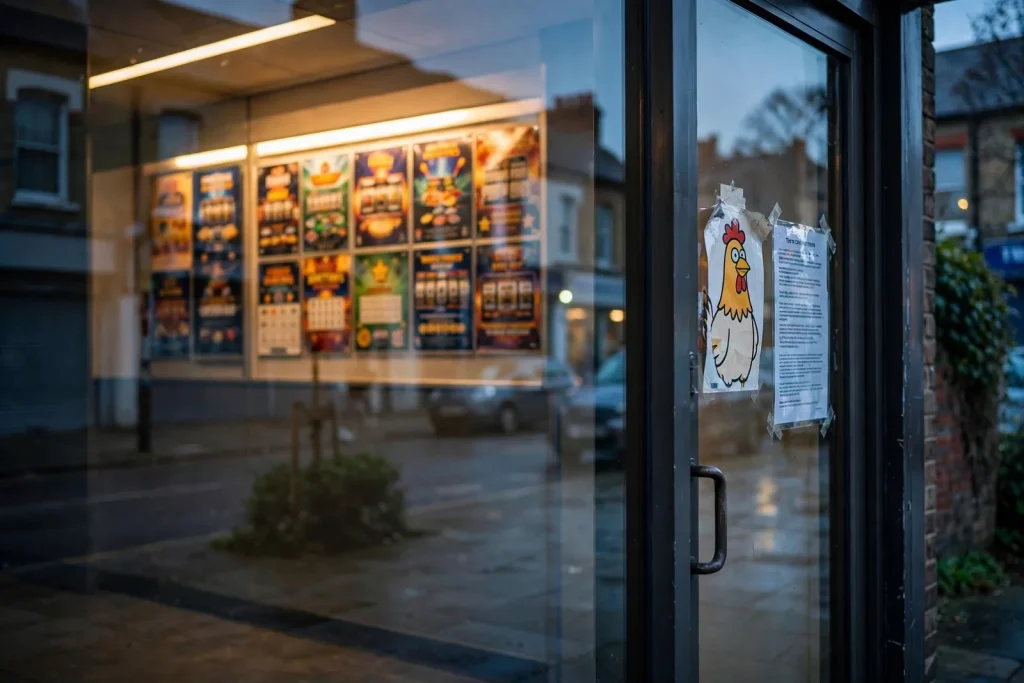
A practical guide to the claims around Chicken Road, including game format, UK casino licensing, demo play, payments and account rules.
Chicken Road as a Casino Slot: What the Label Does—and Doesn’t—Tell Us
The wording around Chicken Road often treats it as a slot: a casino slot, a slot machine, or a slot game. That language is understandable, but it carries less information than it appears to. It signals how the title is being framed, not necessarily how the game works, who developed it, where it is distributed, or which casino category it formally belongs to.
A casino game involves staking cash or chips on a possible random outcome, or on a combination of outcomes. That broad definition covers far more than reels with symbols. The word “slot” narrows the expectation towards an automated casino experience, generally associated with a machine rather than a dealer-led table. It still does not establish the underlying format of Chicken Road itself.
That distinction matters because labels are often used commercially before the technical details are made clear. “Slot” may describe the way a title is displayed in a casino lobby, the audience it is aimed at, or the type of play that people expect. It is not, by itself, proof of a particular reel layout, payline structure, bonus round, return figure, volatility level, or software provider.
I have seen this confusion from the operational side. A title can be placed beside slots because that is where customers look for quick, automated games, while the wording used in promotional material remains broader. The lobby label helps with navigation. It does not replace the game rules.
Casino Games: Slots, Table Games and Live Play
What a slot label normally suggests
The conventional slot-machine model is a self-contained casino game operated through software or gaming equipment. The player selects a stake, starts a round, and receives an outcome generated by the game system. No casino employee needs to conduct each round. That is the practical meaning behind much of the “machine” language attached to casino slots.
The word also suggests that the casino, rather than another player, is the relevant opposing interest. Casino games generally give the house a predictable long-term advantage, while individual rounds can still produce short-term gains. A slot label therefore says something about the expected commercial relationship: the game is offered by a gambling operator whose long-run mathematics are designed to favour the house.
It says nothing definite about the result of the next round. A machine-style label is not a prediction tool, and a sequence of wins or losses does not alter the basic status of a later outcome. The label identifies an entertainment and betting format; it does not turn randomness into a pattern that can be read reliably.
What the label cannot establish
Calling Chicken Road a slot does not verify that it has:
- reels, paylines, or conventional symbols;
- a particular random-number arrangement;
- a published return-to-player figure;
- a stated level of volatility;
- a named developer or software supplier;
- a specific bonus feature;
- a fixed staking method;
- a particular way of winning or losing.
Those details belong to the rules and technical information for the individual title. They should not be inferred from the presence of the words “slot”, “machine”, or “casino” in its description.
The same restraint applies to the singular and plural forms used around the name. “Chicken Road slots” can mean a collection, a category label, or simply a casual way of referring to one title. “Chicken Road slot machine game” may describe the expected experience rather than a verified machine classification. Repetition of the label does not add evidence.
The phrase “casino slot” is especially broad. It can refer to a game offered in an online casino, a physical gaming machine, or a general slot-style product. Without rules or an identifiable distribution record, the phrase should be read as a description of intended positioning, not as a complete specification.
Random outcomes remain the central point
Where a casino game uses selected random numbers produced by a computer or other gaming equipment, those numbers determine the relevant outcome. That principle is more useful than the visual theme when assessing what can responsibly be said. A road, chicken, journey, or other presentation may shape the interface, but imagery does not explain the mathematical operation of the game.
This is also why visual suggestions should not be mistaken for mechanics. A progress display might look like a sequence. A character moving across a screen might appear to offer a choice. Neither appearance proves that the game uses a particular betting model. Only the stated rules can do that.
I would separate three things whenever a title is described as a slot:
- The commercial label — how the casino presents the title.
- The player-facing format — what the interface appears to ask the player to do.
- The underlying game rules — how stakes and outcomes are actually determined.
The first can be visible in a catalogue. The second may be apparent during play. The third requires dependable rules or technical documentation. Mixing them is how a descriptive tag turns into an unsupported claim.
A sensible reading of the title
For now, “Chicken Road” can be discussed as a casino title that is being presented in slot-related language. That explains why terms such as casino slot, slot machine, and slot game surround it. It does not justify assigning precise mechanics or promising that every casino using the name offers the same product.
The economic background is familiar: casino games are built around possible random outcomes, and the operator’s long-term advantage is part of that structure. Short-term results may differ sharply from the long-run expectation. That is the boundary worth keeping in view before attaching more specific claims to the title.
The label starts the conversation. It does not settle it.
Market United Kingdom
Language English
Primary Topic Chicken Road casino title analysis
Top online casinos in the UK
- Revery PlayBonus: 100% up to€1,000+ 100 FS · Payout speed: 1-3 business days
- ChanzeBonus: Slots Welcome Bonus #1 200% up to €500 · Payout speed: 1-3 business days
- SlotoSportBonus: 500% up to £ 10 200+ 777 FS · Payout speed: 1-3 business days
- AmunbetBonus: Join now and get 450% up to 2,700 GBP + 450 FS · Payout speed: 1-3 business days
- NightLuckBonus: Welcome Pack + 805% Up To 6400€ + 280 FS · Payout speed: 1-3 business days
- BritsinoBonus: Welcome Package – Get your £2,200 + 2,000 FS · Payout speed: 1-3 business days
Casino Game Categories Behind the Search
A chicken-themed casino title can sit within very different parts of a casino lobby. The image or name does not establish how the game operates. That distinction matters because the playing conditions, equipment and role of the casino differ between the main categories.
Machine games
Gambling machines are generally designed for one player at a time. No croupier needs to deal cards, announce results or settle decisions during each round. The machine or software presents the game, records the stake and determines the outcome through its programmed system.
That is the practical meaning behind labels such as “slot” or “machine game”. It describes the operating format, not a particular theme, character or crossing mechanic. A chicken road title could be presented in this way only if its actual game format supports that classification.
Table games
Table games work differently. They involve a player competing against the casino, rather than competing against other players, and are commonly run by a dealer or croupier. The employee may deal cards, spin a wheel or manage the betting sequence, depending on the game.
Hi-Lo Casino UK: Understanding Live and Online Play
The table format therefore says something about how a round is conducted. It does not, by itself, identify the mathematical outcome or guarantee that a particular animal-themed title belongs in this category. A name suggesting a road crossing is not enough to make it a table game.
Random-number games
Some casino games use random numbers produced by a computer or other gaming equipment. This describes the mechanism used to select outcomes. It is separate from the visual presentation: a game may use a road, cards, symbols or another theme while relying on random-number generation underneath.
The categories can also overlap in ordinary casino descriptions. A machine may use random-number technology, while a table game may include a computer-controlled element. The useful question is not what the artwork suggests, but who conducts the game, whether a dealer is involved and how the outcome is generated.
Poker illustrates another commercial arrangement. Where players compete with one another instead of playing against the casino, the operator commonly earns a commission known as a rake. That is different from the house advantage built into many casino games.
Machine games
Designed for one player at a time where software determines the outcome without a dealer.
Table games
Involve players competing against the casino, often managed by a dealer or croupier.
Random-number games
Use computer-generated random numbers to select outcomes, regardless of the visual theme.
So a chicken crossing game in a casino should be classified from its documented format, not its title. The name alone settles very little.
Chicken Road Online: What Can Be Confirmed
The word “online” changes the practical question. It points away from the physical casino floor and towards a website or other remote gambling service where casino games can be accessed through an account. Casino games are available through online casinos where the law permits that form of gambling. That establishes the setting, not the identity, design or distribution of a particular title.
That distinction matters with Chicken Road. A page carrying the name may describe an online casino game, but the label alone does not establish that a recognised operator hosts it, that a particular software company supplies it, or that its rules match descriptions appearing elsewhere. I have seen how quickly a title moves from a vague name to a polished product description once affiliate copy begins to circulate. The presentation can look definite while the underlying detail remains unconfirmed.
What online availability actually means
An online casino is a remote platform. The game catalogue is displayed on a website, and access normally sits behind an account. The platform decides which games it makes available, under which terms, and in which jurisdictions. A title can therefore be discussed online without being available at every online casino, or even at every casino using similar wording in its menus.
This is where the phrase “Chicken Road online casino” becomes easy to overread. It can mean that someone is looking for a casino website associated with that name. It can also mean a request to play a game called Chicken Road through an online casino. Those are different propositions. The first concerns a platform or landing page; the second concerns actual game distribution. Neither is proved merely because the words appear together.
Casino Dice Games in the UK: How They Work
The same applies to “Chicken Road casino online” and other natural variations. They indicate an intended remote setting, but they do not identify a verified operator, a confirmed game lobby, or an established route to play. A responsible description keeps those layers separate.
Website presence is not game confirmation
A website can use a game name in a headline, promotional tile or login page without demonstrating what sits behind it. The useful checks are operational: whether the title appears in the casino’s live catalogue, whether the operator is permitted to serve the relevant market, and whether the displayed terms identify the product clearly. A search result, banner or sign-in screen is not the same as a confirmed game launch.
The phrase “Chicken Road casino login” also needs careful handling. A login form proves only that a website has an account-entry function. It does not prove that the site is a casino, that it carries Chicken Road, or that an account holder can access a particular game after signing in. Some pages place login prompts beside advertising content simply to move visitors towards registration.
That is the commercial mechanics behind the wording. “Play now” often means “start the registration path”. “Available online” may mean “presented on a page intended for remote visitors”. Neither phrase, by itself, answers the more important question: what product is actually supplied after account access?
The UK online setting
In 2026, the UK online casino market is described in a specialist review as having two parallel parts: the UKGC environment and offshore platforms operating outside that environment. The distinction affects how an online casino presents itself and what regulatory framework stands behind its service. It does not turn an unverified Chicken Road page into evidence that the game is carried by a particular platform.
UK Online Market
The UK online casino market consists of the regulated UKGC environment and offshore platforms operating outside of it.
For British residents, this is more than a branding issue. Remote operators selling into the British market must hold the relevant UKGC licence, while offshore casinos operate outside the UKGC regulatory system. The existence of an accessible website does not erase that divide. Access and regulatory status are separate questions.
That is why a page using “online casino Chicken Road” language should not be treated as a catalogue entry automatically. The sensible reading is narrower: there is an online-facing claim connected with the name. Confirmation requires the underlying operator and game listing to be identifiable, rather than inferred from a title, a login box or a promotional sentence.
What can be stated without overreach
Chicken Road may be discussed in an online-casino context because casino games can be offered remotely where permitted. The online wording indicates the intended channel: a website-based casino rather than a physical venue. It does not verify the game’s mechanics, supplier, availability, software version or presence at any named operator.
The same caution applies to references to a possible second version. “Chicken Road 2” describes a separate name, not automatic proof of a sequel hosted online. A page can mention both labels, but that does not establish that either is part of a live casino catalogue.
From the counter side, this is the line I would draw before making any product claim: confirm the operator, confirm the catalogue entry, then describe only what the platform itself supports. Everything before that is presentation. Presentation is not distribution.
Chicken Road Casino in the UK: The Licensing Divide
A search for a Chicken Road casino in Britain can point towards two very different operating environments. One is the UKGC market, where an operator taking bets from British residents is required to hold the appropriate licence. The other is the offshore market, where platforms may accept UK players while operating outside the UKGC system.
Mines Casino Game UK: How Online Play Works
That distinction matters more than the game name. A site may present itself as a casino with Chicken Road, but the wording on its front page does not establish its legal position in Great Britain. The relevant question is who accepts the wager, where that operator is regulated, and whether it is authorised to serve the market.
What the UKGC divide means
The Gambling (Licensing and Advertising) Act 2014 established a direct requirement for operators wanting to take bets from British residents: they must hold a licence. For real-money gambling offered to customers in England, Scotland and Wales, that licence comes from the UK Gambling Commission.
In practical terms, a UKGC-licensed casino operates within the British regulatory framework. Its permission is tied to the provision of gambling services to this market, rather than being merely a licence issued somewhere else. The licence is therefore not a decorative badge beside the casino logo. It is the legal basis on which the operator can offer real-money play to customers in Great Britain.
I have seen this distinction blurred in promotional copy. A platform may describe itself as licensed, regulated, or internationally established without holding a UKGC licence. Those statements can refer to another jurisdiction. They do not replace the authorisation required for British-facing gambling.
The wording needs precision.
Offshore casinos and UK players
Offshore casinos accept UK players but operate outside the UKGC space. That makes them different from licensed British-market casinos, even when the registration page is accessible from the United Kingdom and the site displays familiar casino products.
Licensing
An offshore casino may be accessible to UK residents, but this does not mean it is authorised by the UKGC.
The phrase “non GamStop sites” is often used in this context. It describes the type of platform being discussed, not a UKGC licence category. An offshore operator can be available to a UK resident without becoming part of the UKGC system. Accessibility and British licensing are separate issues.
That is where many comparisons become unreliable. A list of casinos said to offer Chicken Road may combine UKGC operators with offshore platforms as though they were interchangeable. They are not. The presence of a particular game, or the fact that a registration form accepts a British address, says nothing by itself about the operator’s licensing status.
The same applies to labels such as “UK casino”. That phrase can describe a site aimed at British players, a payment page designed for sterling users, or an operator actually licensed for the British market. Only the last meaning addresses the regulatory question.
The operator matters more than the game label
A casino game does not carry the operator’s legal permission. The casino does. Therefore, a claim that a platform is a Chicken Road casino should be read as a description of the site’s advertised catalogue, not as evidence that the site is authorised to serve UK customers.
This is particularly important where the title is used in several forms: Chicken Road game, Chicken Road casino game, or a casino with Chicken Road. Those phrases identify an alleged product connection. They do not answer the separate question of whether the operator may lawfully accept bets from British residents.
From the operating side, the order of checks is straightforward. First comes the operator’s status in the relevant market. Only then does it make sense to ask whether a named game is available, under what conditions, and through which version of the site. Reversing that order gives the game label too much importance.
Aviator Casino Game in the UK: Format and Rules
A specialist review may describe the UK online casino market in 2026 as split between the tightly regulated UKGC space and offshore platforms outside it. That is a useful description of the two environments, but it should not be mistaken for a licence held by every site mentioned in such a review. Status belongs to the operator, not to the article describing it.
Why the distinction changes the decision
The UKGC route and the offshore route are not simply two designs for the same service. They sit on different sides of the British licensing requirement. A platform outside the UKGC space may still be reachable by UK players, but that practical access does not convert it into a UKGC casino.
For a page discussing Chicken Road, the careful wording is therefore limited: a casino may advertise the game, and an offshore casino may accept UK players, but neither statement proves the other. Availability, market access and licensing must remain separate.
That separation also prevents a common category mistake. A title can be promoted as a casino game, while the operator carrying it falls into a different regulatory environment. The game name may attract the click; the licence determines the market context.
The licence comes first.
Chicken Road Crash Game Claims and Casino Rewards
The wording around Chicken Road often combines two ideas: a road-crossing theme and a crash-game format. That combination is easy to understand as a search intention, but it is not enough to establish how a particular title works. A name suggesting a chicken crossing a road may describe artwork, branding or a casual theme. “Crash game” is a separate description of game behaviour, normally associated with an outcome that changes until a stopping point is reached. The label alone does not turn the title into a confirmed crash game.
Do
- Verify the operator’s legal status
- Check the specific game rules and technical documentation
- Confirm the actual casino catalogue
Don’t
- Assume a title is a crash game based on the name
- Treat promotional labels as technical specifications
- Confuse a website presence with a confirmed game launch
That distinction matters because game mechanics determine what the wager means. A casino game gives the player a possible outcome while retaining a predictable long-term advantage for the operator. Short-term wins remain possible, but they do not remove the underlying mathematics. Promotional language can make the moment of a win sound more important than the structure producing it.
I have seen “crash” used as if it were a quality mark. It is not. It identifies a style of play, not a promise of favourable results.
What “crash” describes
In a genuine crash-style game, the central event is generally the point at which the visible result ends. A player’s outcome depends on whether a decision is made before that point. That is a description of a game format, not evidence that Chicken Road uses it.
The same caution applies to phrases such as “cross the road” or “chicken crossing”. They can suggest movement through stages, hazards or increasing tension, but none of those features can be inferred safely from the title. A road-themed casino game might be presented as a machine game, a random-number game or another format altogether. The name does not identify the underlying rules.
This is why a page describing Chicken Road as a confirmed crash game would be overstating the position. The responsible wording is narrower: crash-game language appears alongside the title, while the title itself should not be treated as proof of a particular mechanic.
JetX Casino Game in the UK: How It Works
Rewards are a separate issue
Searches for casino rewards add another layer. A reward is an incentive attached to an account or promotion; it does not verify the game being promoted. The most important distinction is between money received without an initial spend and money that can be withdrawn immediately. A no-deposit bonus means the bonus can be granted without spending money. Its practical value still depends on the conditions attached to it.
Those conditions control how the funds may be used, which games count, whether winnings are restricted and when cash-out becomes possible. A headline can show the reward while leaving the operational detail in smaller text. That is where the commercial purpose becomes clear: the offer is designed to create further play, not simply to hand over unrestricted cash.
A useful calculation is straightforward. A £20 bonus carrying 10x wagering requires £200 in total stakes before withdrawal conditions are met. The size of the starting credit is therefore only one part of the offer. The wagering requirement is the working cost.
Since 19 January 2026, gambling incentives cannot impose more than 10x wagering on bonus funds. This limit does not make every promotion attractive. Game contribution rules, expiry wording and restrictions on withdrawals still affect the result. A reward can comply with the cap and remain unsuitable for a particular style of play.
Calculating Wagering
Step one: Identify the bonus
Determine the amount of the initial credit, such as a £20 bonus.
Step two: Check the requirement
Locate the wagering multiplier, for example, 10x.
Step three: Calculate total stakes
Multiply the bonus by the requirement to find the total stakes needed, which would be £200.
Product boundaries in promotions
An incentive must not combine different gambling product types, such as casino play and betting, as one route to unlock the reward. That boundary is important when a promotion is advertised across a wider gambling brand. A casino offer should state the casino conditions rather than requiring activity in another product area.
The wording should also make clear whether the reward applies to a specific game, a group of games or the casino balance generally. A title mentioned in advertising may be a themed example rather than an eligible game. That is why the reward terms matter more than the promotional association between Chicken Road and a supposed crash format.
The practical reading order is simple:
- identify whether the offer is a no-deposit bonus or requires a payment;
- find the wagering requirement attached to bonus funds;
- check which gambling product and games qualify;
- look for withdrawal, expiry and winnings restrictions;
- separate the reward from any claim about Chicken Road’s mechanics.
A specialist review may describe certain casino rewards as generous or player-friendly, but those judgements are not fixed properties of the offer. Terms change, and the operative wording remains the part that determines the transaction. The same applies to crash-game claims: a familiar label can guide expectations, but it cannot substitute for verified rules.
Chicken Road Casino Demo and Free Play: What the Terms Mean
“Demo” is one of those casino words that looks clearer than it is. In operating terms, it normally describes a version of a game played without a cash stake. The balance shown on screen is not withdrawable, and the result does not create a payment obligation for the operator. That makes demo play useful for understanding buttons, bet settings and the sequence of a game, but it does not turn the session into real-money gambling.
The phrase “free play” is broader. It can refer to a genuine practice mode, free spins attached to a promotion, or bonus funds that appear in a casino account. Those arrangements are not interchangeable. A free game mode concerns access to gameplay. A promotion concerns the conditions under which winnings may become withdrawable.
Crazy Time Live Casino Game Show in the UK
That distinction matters when a title is described as a casino game in reviews or listings. A page may use “free” to attract interest while actually referring to a bonus, not unrestricted access to the game. The wording on the offer determines what is being supplied.
Demo access and real-money play
A demo session and a cash session can look almost identical. The visual interface may show the same symbols, buttons and outcome screens. The financial position is different.
With demo play, no deposit is being placed on the result. With real-money play, cash or casino funds are exposed to a possible random outcome. Any review using the language of “playing for free” therefore needs to identify whether it means practice play, promotional spins or a no-deposit incentive.
The phrase “real money” has a similarly precise meaning. It concerns stakes funded with money that can be lost, rather than a display balance supplied for testing or entertainment. A casino review that moves between those terms without explaining the difference leaves the important part unsaid.
I have seen this confusion create poor decisions at the point where a player moves from a harmless-looking demonstration to an account offer. The interface feels familiar, but the account conditions have changed. Familiar controls do not mean identical financial exposure.
Demo vs Free Play
Demo play refers to a version of a game played without a cash stake to understand mechanics. Free play is a broader term that can include practice modes, free spins, or bonus funds.
What a no-deposit bonus actually offers
A no-deposit bonus is a casino incentive granted without requiring the recipient to spend money first. That is the essential definition. It does not automatically mean that a particular game can be opened in demo mode, and it does not automatically mean that every resulting balance can be withdrawn.
The relevant terms may specify which games qualify, whether the bonus funds must be used before any withdrawal, and what happens to winnings produced by the offer. The word “no-deposit” describes the absence of an initial spend; it says nothing by itself about unrestricted play.
That is why a no-deposit offer should not be presented as proof of a free version of Chicken Road. The two propositions concern different things:
- demo access concerns how a game is played;
- a no-deposit bonus concerns how promotional funds are issued;
- real-money play concerns cash or casino funds placed at risk.
A bonus can exist without providing a practice version of a named game. Conversely, a practice mode can exist without awarding any bonus.
Free spins are not the same as a free game
Free spins are another source of loose wording. They are promotional turns attached to an eligible slot or offer, rather than a general licence to play every casino game without cost. The offer may restrict the title, the period of use and the treatment of winnings.
A specialist review source has reported that free-spin winnings are capped at many casinos. In practical terms, that means a winning result can exceed the amount that is ultimately permitted for withdrawal under the promotion. The displayed win and the payable amount are therefore not always the same thing.
That cap is a term of the offer, not a feature of the underlying game. It should be read separately from the game’s ordinary cash play. A page that describes free spins as “free money” without mentioning the applicable ceiling gives an incomplete account of the transaction.
The same applies to any claim that a free mode is “unlimited”. Such language may describe repeated practice rounds, but it may also be advertising shorthand for a promotional allocation. The account rules decide which interpretation is correct.
How to read a review of Chicken Road
A useful review separates four questions:
- Is the described session practice play, promotional play or cash play?
- Is a deposit required before the offer becomes available?
- Which game or games can use the supplied funds or spins?
- What restrictions apply to any resulting winnings?
This structure prevents a demo claim from being confused with a casino bonus. It also keeps a review from implying that a version labelled “Chicken Road 2” has the same access conditions as another title. A name on a promotional page is not, by itself, a description of the financial arrangement.
The most revealing wording is often the smallest print. “Free” may refer only to the absence of an initial deposit. “Demo” may mean that no cash can be withdrawn. “Free spins” may apply only to selected games and may carry a winnings cap. Each term needs its own explanation.
The practical dividing line
For anyone assessing a Chicken Road casino review, the safe dividing line is simple: practice access is about testing gameplay, while a bonus is about promotional money. Neither term should be used as a substitute for the other.
A real-money version belongs to a separate category again, because the outcome can affect an account balance. The presence of a free-looking button, a no-deposit phrase or a free-spin banner does not remove the need to identify the actual stake and the conditions attached to the funds.
Marketing likes one word. The account rules use several.
Summary
- Game labels like “slot” describe commercial positioning rather than technical mechanics.
- Licensing status applies to the operator, not the individual game.
- Promotional terms like “free” or “demo” have specific financial implications that differ from real-money play.
- Always verify the actual rules and wagering requirements before participating.
Playing Chicken Road: App, Payments and UK Account Rules
Searching for a way to play Chicken Road through an app raises two separate issues: whether a particular service offers the game, and whether the service operates under the rules that apply to British gambling accounts. An app is only an access method. Its presence in an app store, or a mobile-friendly casino website, does not by itself establish that the title is available there.
The same distinction applies to payment labels. A search for Chicken Road and PayPal may reflect an interest in funding an account through a familiar wallet, but payment availability belongs to the casino rather than to the game. UK-licensed operators cannot accept credit cards for gambling, including credit-card money routed through a payment service. They must also reject wallet payments where the wallet permits credit-card funds to be used for gambling.
For ordinary bank transfers, Open Banking and Faster Payments have made deposits and withdrawals less cumbersome than older manual processes. That describes the payment rails, not a promise that a particular casino accepts either method or that a Chicken Road title can be launched after payment. The account still has to pass the operator’s checks.
French Roulette Online Casinos in the UK: Rules
Age verification comes before depositing. A licensed operator must confirm that the customer is at least 18, and the account must be operated by someone eligible to use the service in the relevant part of Great Britain. Operators must also ask new customers to set a financial limit before the first deposit and provide account-level controls for changing those limits.
Spin limits matter if the game is treated as an online slot. The statutory ceiling is £5 per spin for customers aged 25 and above, while the ceiling is £2 for those aged 18 to 24. A specialist review may describe these limits differently, but the operative question is how the licensed account classifies the title. That classification should not be inferred from an app icon or a promotional name.
I have seen mobile access make a casino feel like a separate product. It is not. The licence, identity checks, payment restrictions, financial-limit prompts and responsible-gambling controls follow the account across the browser and the app. Convenience changes the doorway; it does not remove the rules.
Best Keno Online Casinos in the UK: How to Choose
Chicken Road 2: What the Search Term Establishes
“Chicken Road 2” should be treated as a separate title reference, not automatically as another name for the original Chicken Road. The added number suggests that people may be looking for a sequel, a later edition, or a differently distributed game. It does not, by itself, establish that such a release exists, that it belongs to the same provider, or that it is available through a casino serving the UK.
That distinction matters because casino-game names are not always used consistently across promotional pages, directories, and player discussions. A number in a title can indicate a genuine second version, but it can also reflect a branding change, an informal label, or an unrelated product using similar wording. The name alone cannot settle which explanation applies.
The phrase also does not establish the game’s format. Casino games involve staking cash or chips on random outcomes, or on combinations of outcomes, but that broad description does not identify whether Chicken Road 2 is a machine game, a table game, or another type of casino product. Nor does the wording establish its rules, visual design, payout structure, provider, or release status.
Live Casino Lightning Roulette in the UK: How It Works
I have seen this distinction get lost when a familiar title is treated as a product family. That creates a neat-looking description with no reliable foundation behind it. A page for the original Chicken Road should not quietly absorb Chicken Road 2, and a page using the sequel wording should not present the two as interchangeable.
The UK wording adds another layer without proving distribution. It indicates interest in whether a product carrying the Chicken Road 2 name is associated with a casino available to people in the UK. It does not confirm that a UK-licensed operator offers it, that an offshore platform carries it, or that a particular app or website supports it.
The sensible reading is therefore narrow: Chicken Road 2 is a distinct title reference requiring separate identification. Until its status and relationship with the original are established, descriptions should use the name cautiously rather than inventing sequel mechanics or treating “2” as proof of a known casino release.
Casino Games
Prepared by the Casino Not on Gamstop editorial staff.