
Best Mobile Casinos That Accept Phone Credit in the UK
 Available in GB
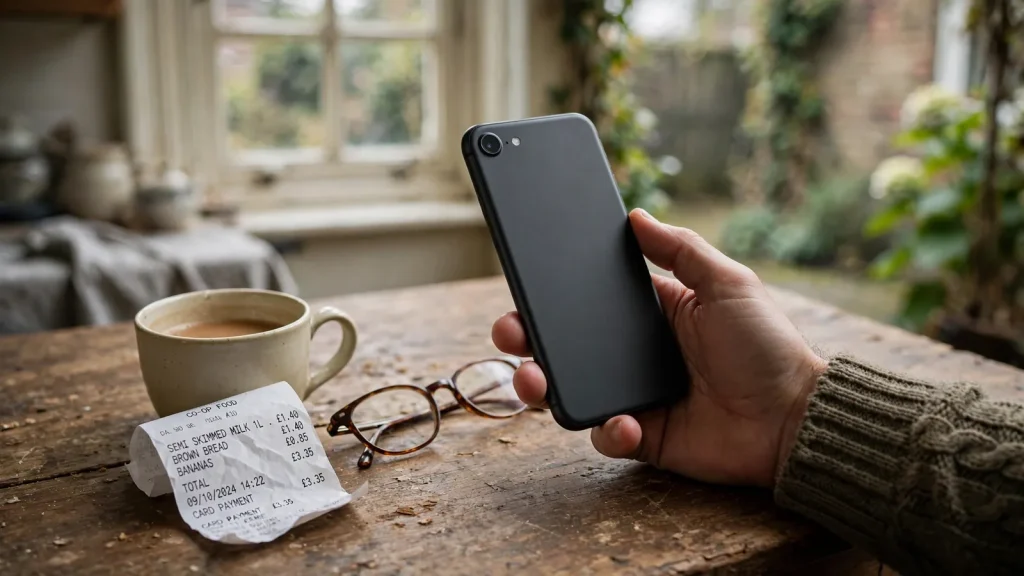
Carrier billing can fund a casino account through a mobile contract or prepaid balance, but it does not work like a card deposit or cash withdrawal.
How Phone-Credit Deposits Work on UK Casino Sites
Paying a mobile casino with phone credit is a form of carrier billing. Instead of entering card details or moving money from a bank account, the casino sends the deposit request through a supported mobile network. The amount is then taken from the account attached to the phone number.
That account can work in one of two ways. On a contract mobile plan, the charge appears on the next mobile phone bill. With pay-as-you-go, the same transaction reduces the available prepaid credit. The payment does not create a separate casino balance outside the operator’s account: it is simply another way to fund the gambling account.
The wording can make this sound more complicated than it is. “Pay by phone” means the mobile network collects the money and passes the payment through its billing arrangement. It does not mean that casino play is charged by the minute, or that every spin is added separately to the phone bill. The selected deposit is processed as one payment.
International Casinos for UK Players: What to Know
What happens at the cashier
The process starts inside the casino cashier rather than in the phone’s ordinary messaging or calling functions. After logging in, the account holder selects the phone-credit option where it is available, enters the deposit amount and confirms the mobile number or carrier details requested by the payment screen.
The operator then sends the transaction for network approval. The network checks whether the account can accept the charge. A contract account may have carrier restrictions or a spending allowance that affects approval. A prepaid account must contain enough available credit for the transaction and any applicable charge.
Once the payment is accepted, the casino credits the gambling account. The mobile network records the amount against the relevant phone account. The two records are separate: the casino shows the deposit in its cashier or transaction history, while the network shows the charge through the bill or the remaining prepaid balance.
I have always treated the confirmation screen as part of the payment, not as decoration. It should show the amount being requested and identify the mobile-billing route before the transaction is completed. That is the point at which an unexpected carrier charge can still be noticed.
Best Offshore Casinos for UK Players: What to Know
Contract billing and pay-as-you-go
The practical difference between the two mobile arrangements is where the deduction becomes visible.
With a contract phone, the deposit is added to the next bill. It may appear as a charge connected with premium-rate or carrier-billing services rather than as a normal card purchase. The bill is therefore the place to check the final entry if the amount shown in the casino account does not match expectations.
With pay-as-you-go, there is no later invoice. The deposit is deducted from the stored phone credit when the transaction is processed. The reduction in balance is the immediate record of the payment, alongside the casino’s own confirmation.
This can make phone credit feel separate from ordinary spending, although economically it is still money leaving the mobile account. A contract bill remains a real payment obligation, and prepaid credit has a cash value because it was purchased in advance. The route is different; the deposit is not free.
Highest-Paying Online Casinos in the UK: RTP Explained
The network charge
The casino deposit and the mobile network’s transaction fee are not necessarily the same thing. Some networks add a small “premium rate” fee to Pay by Phone transactions. A specialist review reported examples ranging from £0.50 to £1.50, but that is a reported observation rather than a fixed UK-wide tariff.
The fee can matter because it may be added to the amount taken from the phone account. On a contract plan, both elements can appear on the next bill. On pay-as-you-go, the available balance can fall by the deposit plus the network charge. The casino’s credited amount may therefore be lower than the total reduction in mobile credit.
That distinction is where many descriptions of mobile phone credit casinos become too polished. The deposit amount is what reaches the casino account; the carrier fee belongs to the network. Checking only the casino receipt can leave the second part unnoticed.
What this payment method does not change
Phone-credit funding changes the collection route, not the casino account itself. It does not alter the account’s game balance, convert the deposit into bonus funds, or change the operator’s record of the transaction. It also does not turn a mobile casino into a service billed through ordinary phone usage.
The payment is tied to a mobile account, so availability depends on the operator, the network and the type of mobile plan. A phone number alone is not a guarantee that carrier billing will be offered or approved.
The payment is tied to a mobile account, so availability depends on the operator, the network and the type of mobile plan. A phone number alone is not a guarantee that carrier billing will be offered or approved. The cashier must display the option and the network must permit the charge.
For UK players considering casinos that pay by phone credit, the key point is the trail: the casino credits the requested deposit, while the mobile provider collects it through the next bill or by reducing prepaid credit. Any separate premium-rate fee belongs in that calculation. That is the whole mechanism.
The Deposit Limits Behind Paying by Phone
The useful feature of Pay by Phone is also its main restriction: the transaction is deliberately kept small. A mobile casino can accept a charge against a phone account, but that does not make the phone account a substitute for a bank account or a full payment wallet. The method is framed for a limited top-up, not for moving a large gambling balance.
A specialist review of UK mobile casino payment options found that most operators set the ceiling for a single Pay by Phone deposit at £30. That figure should be treated as a reported market benchmark rather than a permanent rule applying to every site. The payment page remains the controlling document, and the available ceiling can depend on the operator, the network and the account status.
What amount can be entered?
The amount field is normally built around a modest range. The same specialist review recorded deposits entered at between £5 and £30, with £5 appearing as the minimum at most mobile casino apps. A smaller threshold of £2 was available at some apps.
Best Offshore Casino Sites: UK Licensing Explained · Non-GamStop European Casinos: UK Rules Explained
That distinction matters. The lower figure is not evidence that every casino accepting phone credit will process a £2 charge. It means that the minimum is set by the particular operator and payment route. One app may accept the smaller opening deposit while another will reject it before the mobile network is involved.
The upper end is equally important. If the transaction limit is £30, entering a larger figure will not turn the payment into a bigger deposit. The cashier may prevent the amount from being entered, display an error, or simply offer no qualifying Pay by Phone option for that value. The practical result is the same: the payment route is not intended for high-value funding.
In my experience, the amount field tells more than the marketing label. “Fast mobile funding” sounds broad; a field restricted to a narrow range says exactly whom the method suits.
Small by design.
Why the range stays narrow
A Pay by Phone deposit is tied to a mobile billing relationship or prepaid balance. That creates a natural boundary around the transaction. A contract customer has a phone account that can receive the charge, while a pay-as-you-go customer must have enough credit available. The casino therefore presents a controlled payment size rather than treating the mobile number as an unlimited source of funds.
The limit also makes the method easier to understand at the point of deposit. The account holder sees one defined charge, linked to one casino transaction, rather than an open-ended instruction to fund the gambling account. This is one reason phone credit tends to fit an occasional top-up better than regular bankroll management.
Deposit Limits
The convenience is the short payment path; the compromise is reduced flexibility. The limit also makes the method easier to understand at the point of deposit.
The wording on the cashier may describe the option as “simple” or “convenient”. In operational terms, that usually means the route has fewer amount choices and a tighter ceiling than other deposit methods. The convenience is the short payment path; the compromise is reduced flexibility.
The minimum is part of the operator’s policy
A phone-credit casino does not have to use the same minimum as another casino. The observed £5 minimum at most apps is a useful expectation, but it is not a universal entitlement. Some apps have offered a £2 starting point, while others require the higher entry amount.
This can affect the choice of payment route before any deposit is attempted. A player holding only a small prepaid balance may find that the available phone-credit method cannot be used because the minimum exceeds the balance. A contract customer may see the payment accepted but still face the operator’s own minimum in the cashier.
The minimum and maximum work together:
- the minimum determines whether a small top-up can be submitted;
- the maximum determines how far the method can be used in one transaction;
- the displayed range shows the operator’s current configuration for that account and payment channel.
Neither figure should be inferred from the presence of a Pay by Phone logo alone.
One transaction is not a general balance limit
The reported £30 ceiling concerns one deposit transaction. It should not be read as a promise that every account can make repeated charges without restriction, or that several deposits will always be approved in succession. The operator can apply account controls, and the mobile network can apply its own billing or balance checks.
That is why a casino cashier may show a payment option while declining a particular attempt. The method can be available in principle but unavailable for the amount entered, the account, or the network arrangement. The visible limit is therefore only one part of the decision.
The sensible reading is narrow: Pay by Phone is designed for deposits within the displayed small-value band. It is not a way to bypass a casino’s account controls or to fund a larger balance by assuming that several small entries will be treated as one continuous facility.
What the limit says about suitability
For a modest first deposit or a controlled top-up, the restricted range can be useful. It puts a clear boundary around the amount being committed and avoids the broader choice associated with other payment channels. That may suit someone who specifically wants to pay with phone credit at a UK mobile casino and already has the required balance or billing capacity.
Foreign Casinos for UK Players: Licensing Explained
It is less suitable where the intended deposit exceeds the operator’s Pay by Phone ceiling, where the available minimum is higher than the planned amount, or where repeated funding would make the payment trail difficult to monitor. The method’s selling point is not scale. It is a defined, small transaction.
The final check belongs on the cashier: identify the minimum shown, confirm the maximum for one transaction, and make sure the amount entered falls inside that range. The figures can differ between operators, so the payment screen—not a generic description—is what governs the deposit.
Mobile Casino Payments Beyond Phone Credit
Paying at a mobile casino does not necessarily mean charging a deposit to a mobile account. The same phone can handle Apple Pay, a debit card or Open Banking, with each option creating a different payment trail and a different point at which a transaction may be interrupted.
Phone-credit payments are built around the mobile account. Apple Pay and debit cards instead use a stored card relationship, while Open Banking connects the casino payment to a bank account. That distinction matters because the visible payment screen can look similar even when the underlying process is not.
Apple Pay: a short authorisation route
Apple Pay is designed to remove repeated card-entry steps. A card is stored in the wallet, and the casino’s payment page passes the transaction to the wallet for authorisation. In tested apps, the deposit was instant and took literally two taps.
That makes Apple Pay a strong alternative where the casino supports it and the device already has a suitable card configured. The speed comes from reusing the wallet’s existing authorisation rather than entering payment details into the casino form each time.
Apple Pay
A card is stored in the wallet, and the casino’s payment page passes the transaction to the wallet for authorisation.
Debit cards
Debit card deposits are usually instant, though some banks may flag casino transactions.
Open Banking
Open Banking takes a different route, sending the account holder to the bank for approval.
The limitation is practical rather than dramatic: Apple Pay must be offered by the operator, and the relevant card must be available through the wallet. It is not the same as paying from a mobile bill or prepaid balance. The money still comes through the linked payment card.
Two taps. Different source of funds.
Debit cards: familiar, with a possible bank check
Debit card deposits remain a straightforward way to fund a mobile casino account. The casino payment page requests the card details, the bank authorises the transaction, and the balance is credited when the payment clears.
Debit-card deposits are usually instant. Some banks, however, flag casino transactions. A declined or paused payment therefore does not automatically indicate a fault with the casino account; the bank may be applying its own transaction controls or requesting confirmation.
That extra bank step is the main contrast with Apple Pay. Apple Pay places the authorisation inside the device wallet, whereas a debit-card payment exposes the transaction more directly to the bank’s card controls. Both can be quick, but neither is a phone-credit charge.
There is also an important boundary around card funding in Britain. Credit cards cannot be used for gambling deposits, including credit-card funding routed through a money service business. Wallets cannot be used where they allow credit-card funds to be used for gambling. A debit card is therefore not simply any card saved on the phone; it must be a permitted funding source.
Open Banking: direct bank authorisation
Open Banking takes a different route again. Instead of entering card details or using a mobile balance, the payment sends the account holder to the bank for approval. The casino receives confirmation through the banking connection, while the funds leave the chosen bank account.
The notable feature is the identity step. A specialist review recorded Open Banking verification completing in about two seconds without document uploads. That is a reported experience, not a promise for every operator or bank, but it shows why the method can feel more integrated than a conventional payment form.
Open Banking Verification
Open Banking verification can be completed quickly, for example in about two seconds without document uploads.
Open Banking suits a mobile payment process where the bank’s own authorisation is preferred. It also keeps the transaction connected to the bank account rather than a card wallet or phone-credit allowance. The exact screen sequence depends on the bank and the casino’s payment integration, so the apparent convenience is partly a product of the operator’s implementation.
Comparing the mobile payment experience
| Method | Where the authorisation happens | Observed deposit experience |
|---|---|---|
| Apple Pay | In the device wallet | Instant in tested apps, with two taps |
| Debit card | Through the card and issuing bank | Usually instant, although some banks flag casino transactions |
| Open Banking | Through the bank account connection | A specialist review recorded identity verification in about two seconds without document uploads |
| Phone credit | Through the mobile account | Uses the phone account rather than a card or bank account |
This comparison explains why the phrase “pay by phone” can be misleading. A phone is only the device used to reach the payment screen; it does not identify the funding method. Apple Pay is phone-based but card-funded. Open Banking is phone-accessed but bank-funded. A debit card can be entered on a phone without being a mobile payment in the carrier-billing sense.
For someone comparing mobile casinos that accept phone credit, the useful question is therefore whether the casino offers the preferred alternative as well. Apple Pay prioritises a brief wallet authorisation. Debit cards offer a familiar route but can meet bank controls. Open Banking moves approval into the bank and can combine payment with a rapid verification experience reported by a specialist review.
No method changes the casino games themselves. It changes how the account is funded and how the payment is authorised. That is the distinction advertising copy tends to flatten.
Top online casinos in the UK
- Revery PlayBonus: 100% up to€1,000+ 100 FS · Payout speed: 1-3 business days
- ChanzeBonus: Slots Welcome Bonus #1 200% up to €500 · Payout speed: 1-3 business days
- SlotoSportBonus: 500% up to £ 10 200+ 777 FS · Payout speed: 1-3 business days
- AmunbetBonus: Join now and get 450% up to 2,700 GBP + 450 FS · Payout speed: 1-3 business days
- NightLuckBonus: Welcome Pack + 805% Up To 6400€ + 280 FS · Payout speed: 1-3 business days
- BritsinoBonus: Welcome Package – Get your £2,200 + 2,000 FS · Payout speed: 1-3 business days
Depositing by Phone Is Not the Same as Cashing Out
A phone-credit deposit solves one part of the casino transaction: getting money into the gambling account. It does not create a matching route for money coming back out. This distinction is easy to miss because the deposit feels like an ordinary payment at the point of checkout. The charge is confirmed, the casino balance updates, and the mobile network handles the billing. The withdrawal is governed by a different control.
Online Casinos With No Sister Sites in the UK
The working rule across UK mobile casinos is that the payment method used for the deposit is almost always the method required for the withdrawal. That creates an obvious problem with Pay by Phone. A mobile network can charge a deposit to a bill or remove it from prepaid credit, but that same billing route is not generally designed to receive casino winnings. In practice, the casino may need another approved withdrawal method, or it may require the deposit route to be dealt with before releasing funds elsewhere.
What happens to the original payment
With a phone credit deposit casino, the payment trail ends at the mobile account. On a contract handset, the charge appears on the next mobile phone bill. With pay-as-you-go service, the amount is taken from the available credit. Neither outcome places money in a bank account or creates a withdrawable wallet balance.
That is why the phrase “pay by phone” can be misleading. It describes how the casino collects the deposit, not how it pays winnings. The phone number is being used as a billing instruction. It is not functioning like a bank account that can accept a reverse transfer.
I have seen this misunderstanding arise when a player treats a phone-credit deposit casino UK option as if it were a closed payment loop. It is not. The incoming transaction and outgoing transaction have separate practical requirements.
Why the casino may request another method
A withdrawal normally has to go through a payment channel that can identify the account holder and transfer funds to them. A phone bill or prepaid balance does not offer that same destination. The casino may therefore ask for a bank transfer, debit card route, or another payment option available within the account.
Attention The withdrawal is governed by a different control. The casino may require another approved withdrawal method, as mobile billing routes are not generally designed to receive casino winnings.
The exact process depends on the operator and the account history. A casino phone credit deposit can be accepted immediately while the withdrawal page shows different choices. That is not necessarily a contradiction. The deposit method confirms how funds arrived; the withdrawal method determines where approved funds can be sent.
The important point is not to assume that a successful deposit guarantees an equally simple cashout. Payment availability should be checked before treating phone credit as the main funding method.
“No deposit” does not remove the withdrawal issue
Searches for a pay by phone credit casino no deposit offer often combine two separate ideas. “No deposit” describes a promotion that may be credited without a cash payment. It does not mean that any winnings can bypass account checks or withdrawal rules. A promotional balance still has conditions attached, and the casino still has to establish where legitimate funds can be paid.
The same applies to a mobile casino pay with phone credit no deposit arrangement. Phone credit is relevant only if an actual charge is made. If no deposit is taken, there is no phone-credit transaction to reverse or refund. Any resulting cashout is handled under the operator’s normal withdrawal process and the promotion’s stated conditions.
That distinction matters because a promotional headline can make the route appear simpler than it is. The absence of an initial charge does not turn a mobile number into a payout account.
Practical checks before depositing
Before using phone credit, the sensible checks are narrow:
- identify which withdrawal methods are available after a phone-credit deposit;
- check whether the operator asks for a different method to be verified;
- confirm where any refund or reversed payment would be sent;
- keep the mobile bill or prepaid balance record showing the charge.
The last point is administrative rather than dramatic. If the deposit is questioned, the charge will be visible through the mobile account rather than a bank statement. Contract customers will see it on the next bill; pay-as-you-go customers will see the reduction in available credit.
Phone-credit deposits can be convenient for putting a small amount into a casino account, but convenience stops at the deposit boundary. Cashing out is a separate process, and the payment trail does not automatically run back through the handset.
Using a Mobile Casino in the Browser or App
A mobile casino using phone credit does not necessarily require a dedicated application. Most UKGC-licensed casinos provide instant play through a mobile browser, so the account, cashier and games can be opened from a compatible phone without installing a separate product. The browser route is often the simplest arrangement: open the licensed operator’s website, sign in, and use the mobile layout.
That distinction matters because “app” can describe more than one technical setup. Some casino apps are native wrappers around mobile content. Others are WebView embeds, meaning that the application is effectively displaying a web page inside its own frame. Both can present similar menus and game screens, but the response of the controls may differ.
Some casino apps are native wrappers around mobile content, while others are WebView embeds, meaning the application is effectively displaying a web page inside its own frame.
In a specialist review, the clearest observed difference was at the spin control. A native wrapper responded in the same millisecond as the button was touched, while the WebView version showed a noticeable half-second delay. That is not a payment feature, and it does not change the rules of the game. It is simply a difference in how quickly the interface acknowledges an action.
I have found that the browser version is useful for checking the cashier and account settings before playing. It also avoids filling a phone with extra icons for services that are already available through a web page. An app-style interface can feel more compact, but the label alone does not prove that it is native or that it will perform better.
What to check on a phone
The practical checks are straightforward:
- confirm that the site address belongs to the licensed operator;
- make sure the mobile cashier displays the intended Pay by Phone option before starting a transaction;
- check that the game screen fits the phone without hiding the balance or controls;
- compare the response of the spin button if the service offers both a browser and app-style route.
A mobile casino using phone credit can therefore be accessed in either format, but the deposit method and the interface are separate decisions. Paying through the phone account does not turn a browser site into an app, nor does an app make every payment route available. The cashier determines how the transaction is handled; the browser or wrapper determines how the service is displayed.
The important point is less glamorous than the word “app”. Instant browser play is widely available among UKGC-licensed casinos, while the quality of an app-style interface depends on the way it has been built. In practice, the difference may be invisible in the menus and obvious only when a control is pressed.
Interface first.
Phone Credit and Mobile Slots: The Practical Limits
Phone credit changes how money reaches the casino balance; it does not change the slot itself. Once a deposit has been credited, the game remains subject to the same controls, stake settings and technical rules as a session funded by another permitted method. The phrase “phone-credit slots” is therefore a payment description, not a separate class of games.
That distinction matters because mobile payment pages sometimes make the process sound more specialised than it is. A casino may present Pay by Phone alongside its other deposit options, but the funding route does not unlock different reels, altered game rules or a separate catalogue. It simply puts funds into the gambling account. The slot then applies its own stake controls and spin sequence.
For British players, the most important restriction is the minimum duration of an online slot spin. Each spin must last at least 2.5 seconds. This applies on a mobile casino whether the balance came from phone credit, a debit card or another permitted payment route. A faster connection or a responsive phone does not remove that requirement.
Casino Sites Not on GamStop in the UK: What It Means
Autoplay is also banned for online slots in Britain. A session funded by Pay by Phone cannot be set to repeat spins automatically, even where a game interface on another market might offer that feature. Each spin must be initiated through the available control. In my experience, this is where payment convenience is most often confused with gameplay convenience: a quick deposit does not authorise unattended play.
The practical result is straightforward. Phone-credit funding may suit a small, deliberately bounded slot session, but it is not a shortcut around account controls or game regulation. The mobile screen can make the transaction feel immediate; the underlying play remains controlled by the UK rules applied to licensed mobile casinos.
A further point is easy to miss. The payment method does not determine the slot’s volatility, features or stake structure. Those are properties of the individual game and its operator configuration. Phone credit only supplies the balance.
Payment convenience, not different slots.
What a Phone-Credit Casino Deposit Really Costs
The amount entered at a mobile casino is not always the full cost of paying by phone. The casino receives the selected deposit value, while the mobile network may treat the transaction as a premium service and add its own charge. A specialist review reports that this extra fee can fall between £0.50 and £1.50, although the exact treatment depends on the network and the transaction.
That distinction matters. A £10 deposit can therefore create a charge greater than £10 on the mobile account when a network fee applies. The fee is not a casino bonus cost, a slot charge or a withdrawal deduction. It is a separate network charge attached to the Pay by Phone transaction.
Where the charge appears
The payment trail depends on how the mobile service is funded:
- With a contract phone, the deposit and any applicable network fee appear on the next mobile phone bill.
- With pay-as-you-go service, the amount is taken from the available mobile credit.
This makes phone-credit funding different from a debit-card transaction. There is no separate bank statement entry for the deposit itself; the visible record sits within the mobile account. On a shared family contract, that can make the casino payment visible to the account holder rather than only to the person using the mobile casino.
The same applies to prepaid credit. A reduced balance may be the first sign that the transaction has gone through, so the available credit should be checked before attempting another payment. Repeated attempts can create confusion when the first charge has succeeded but the casino page has taken time to update.
Read the payment wording carefully
The important line is not simply the deposit amount. Payment screens and network terms should be checked for wording about a premium-rate or service fee, and for whether that fee is charged separately or included in the total. A mobile casino may display the amount credited to the gambling account while the network applies its own charge outside that balance.
I have seen “simple” used for this payment route when it really means the charge is moved away from the bank account. It has not disappeared; it has moved to a bill or reduced prepaid balance.
That is the real cost trail.
Checking the Rules Before Paying by Phone
A mobile casino pay-by-phone-credit option sits inside the same regulatory framework as any other gambling deposit. In Great Britain, a casino offering real-money play must hold a current UK Gambling Commission licence. That licence is the first check, not a decorative badge. The licence number should appear at the bottom of the casino’s homepage, where it can be checked against the UKGC register.
I treat an absent or unclear licence detail as a stop sign. A payment label such as “Pay by Phone” describes the funding route; it does not prove that the operator is authorised to accept gambling deposits in the UK. The UK licence is what places the account under the relevant consumer-protection rules.
Checks Before Depositing
- Identify which withdrawal methods are available after a phone-credit deposit
- Check whether the operator asks for a different method to be verified
- Confirm where any refund or reversed payment would be sent
- Keep the mobile bill or prepaid balance record showing the charge
Age verification comes before depositing. Operators must confirm that a customer is old enough before allowing funds into a gambling account. That applies whether the payment is charged to a mobile bill, taken from prepaid credit, or made through another supported method. A phone number is not proof of age, and control of a handset does not replace the operator’s verification duty.
Account limits are another required safeguard. UKGC-licensed operators must provide deposit-limit controls in the account area. These can be configured by day, week or month, so the available setting is broader than a single transaction choice. The limit applies to the gambling account, rather than changing the underlying phone-credit charge.
That distinction matters. A phone-credit casino deposit can be technically available while the account limit prevents it from being accepted. In my experience, the sensible order is simple: confirm the UKGC licence, complete age checks, then review the account’s financial-limit settings before selecting Pay by Phone. Small detail, real protection.
No-Deposit Offers and Phone-Credit Slots
A no-deposit offer and a phone-credit deposit solve different problems. The first is a promotion attached to an account without requiring a cash payment at the point of activation. The second is a payment route: money is added to the casino balance and charged to a mobile bill or deducted from prepaid credit. Calling a promotion “no deposit” does not mean that phone credit is involved, and paying by phone does not make a paid deposit free.
That distinction matters when the aim is to play slots. A promotional balance may be restricted to selected games or may need separate activation. A phone-credit deposit, by contrast, is ordinary deposited money, subject to the casino’s payment and withdrawal rules. The wording can look similar in a banner; the accounting behind it is not.
Jackpot Mobile Casinos UK: Games, Odds and Checks
The real test for a no-deposit offer is the withdrawal clause. Wagering requirements, maximum-bet rules, game weighting and a maximum cashout cap can all affect whether bonus winnings become withdrawable. A specialist review identifies 35x to 40x the bonus amount as the standard range for wagering requirements, but the promotion’s own terms remain decisive. A bonus with a short validity period or a low cashout ceiling can be less useful than its headline suggests.
Phone-credit slots are therefore not automatically “free slots”. If the balance came from a Pay by Phone transaction, it is a funded casino balance. If it came from a no-deposit promotion, it is promotional money with conditions attached. Mixing those descriptions is how a payment method gets mistaken for an offer.
Read the small print first. That is where the offer lives.
Why Phone-Credit Deposits Do Not Stack Like Bonuses
A phone-credit deposit and a casino bonus are separate parts of the account. The payment method records how cash reaches the balance; it does not automatically create promotional funds, change the wagering requirements, or turn a deposit into a special combined reward. A mobile casino may accept a Pay by Phone deposit without attaching any offer at all.
That distinction matters when an advert uses the word “stackable”. In practice, it may mean that a qualifying deposit can be linked to a promotion, not that the phone-credit payment itself improves the terms. The offer rules decide whether the funding method qualifies, whether another promotion must be declined first, and which balance is used before cash can be withdrawn.
I have seen the payment button treated as the important part of the transaction, while the restrictive wording sat in the bonus terms. The less visible conditions can determine whether winnings remain withdrawable:
- wagering requirements must be completed before the bonus balance or related winnings can be released;
- the offer may impose a maximum bet while those requirements are active;
- different games may contribute differently to the required wagering;
- a maximum cashout cap may limit the amount that can be withdrawn from bonus play.
A specialist review source places the standard wagering range at 35x to 40x the bonus amount. The same type of source reports that many promotions restrict bonus winnings to £100–£200. Time also matters: the stated completion window may be 7–14 days, while some offers allow only 72 hours.
The practical reading is simple: paying with phone credit funds the account; the bonus terms govern the promotion. Two different ledgers.
Can I set deposit limits on mobile?
Yes. UK-licensed operators must offer deposit limits, which you can set daily, weekly or monthly in your account settings.
Is it safe to use pay by phone at online casinos?
Yes, provided you use a UK-licensed casino. Check its licence number at the bottom of its homepage; a UK Gambling Commission licence provides the strongest consumer protection.
How long should a mobile casino withdrawal take in 2026?
For UK-licensed operators, e-wallet withdrawals typically take under 24 hours. Bank transfers usually take 3–5 business days, while debit card withdrawals take 1–3 business days.
Can I use pay by phone on pay-as-you-go?
Yes. If the casino and mobile network allow it, the deposit is deducted from your available prepaid credit, which must cover the transaction and any network fee.
Casino Sites
Prepared by the Casino Not on Gamstop editorial staff.