
Anjouan Casino Licence in the UK: What It Covers
 Available in GB
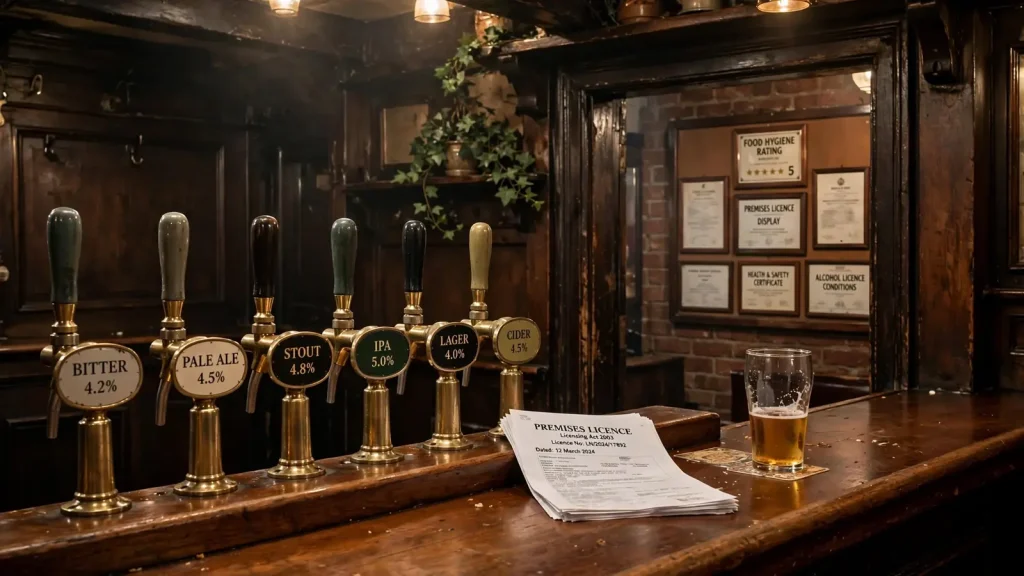
An Anjouan authorisation applies within its own regulatory framework and does not replace the UK Gambling Commission licence required to serve Great Britain.
What an Anjouan Casino Licence Does—and Does Not—Cover
An Anjouan casino licence is permission issued within Anjouan’s own regulatory framework. Its scope stops there. It does not turn an operator into a UK-licensed business, and it is not a substitute for authorisation from the UK Gambling Commission.
That distinction is easy to lose in promotional copy. “Licensed” sounds complete; in practice, it identifies the jurisdiction that issued the licence. It does not automatically identify every country where the operator may lawfully provide gambling services. The location of the company, the website’s domain, its payment processing and the wording of its terms do not change that basic limit.
For operators, the important boundary is the customer’s market. A business serving customers in Great Britain must hold a UK Gambling Commission licence, even when its headquarters, servers or Anjouan casino licence are elsewhere. An Anjouan authorisation therefore cannot be presented as permission to target Great Britain or to operate there as a locally authorised casino.
This is not a minor difference in paperwork. A local licence defines the regulator responsible for the operator and the market covered by that regulator. Anjouan approval may establish that an operator has entered a licensing arrangement in Anjouan, but it does not extend the UK Gambling Commission’s authority, nor does it satisfy the British licensing requirement.
The same reasoning applies beyond the UK: an Anjouan licence does not automatically authorise activity in other restricted markets listed by the relevant rules. Market access has to be assessed separately from the existence of the licence itself.
Casino Sites: A Guide to UK Casino Options
I have seen the word “licensed” do too much work in casino advertising. It is often treated as if it meant “approved everywhere”. It does not.
For a UK-facing operator, the decisive question is not simply whether an Anjouan casino licence appears on a website. The question is whether the business holds the UK Gambling Commission authorisation required for customers in Great Britain. Those are separate permissions, issued by separate authorities, with separate territorial reach. Conflating them gives the licence a scope it does not have.
Top online casinos in the UK
- Revery PlayBonus: 100% up to€1,000+ 100 FS · Payout speed: 1-3 business days
- ChanzeBonus: Slots Welcome Bonus #1 200% up to €500 · Payout speed: 1-3 business days
- SlotoSportBonus: 500% up to £ 10 200+ 777 FS · Payout speed: 1-3 business days
- AmunbetBonus: Join now and get 450% up to 2,700 GBP + 450 FS · Payout speed: 1-3 business days
- NightLuckBonus: Welcome Pack + 805% Up To 6400€ + 280 FS · Payout speed: 1-3 business days
- BritsinoBonus: Welcome Package – Get your £2,200 + 2,000 FS · Payout speed: 1-3 business days
Anjouan Casinos in the Wider Offshore Market
Anjouan casinos sit within the broader market of non-UK-regulated gambling sites. In practical terms, that means the operator runs without supervision from the UK Gambling Commission. The label describes a regulatory position, not a playing format, software type or guarantee of quality. An online casino using live dealers, slots or cryptocurrency payments can fall into this category if it does not hold the relevant UKGC authorisation.
That distinction matters because “licensed” is often used as though it meant “approved for the British market”. It does not. An operator may display an Anjouan casino licence and still be outside the UK regulatory system. The same applies to a site licensed elsewhere: the issuing jurisdiction and the market being served are separate questions.
Where Anjouan fits
The offshore market is not controlled by one international regulator. Operators commonly rely on licences issued by jurisdictions including Malta, Curacao, Gibraltar and Anjouan. These names identify different licensing environments, but none should automatically be treated as interchangeable with a UK Gambling Commission licence.
Gibraltar Casino Licence and UK Player Protections
This is why descriptions such as “Anjouan licensed casinos” can be misleading when presented without context. The phrase may establish that an operator claims a connection with Anjouan’s licensing system, but it does not turn the site into a UKGC casino. “Anjouan licence casinos” is therefore a category within the non-UK-regulated market, rather than a British regulatory classification.
I have seen this distinction blurred in commercial copy. A badge, a regulator’s name and a list of available games can create an impression of equal status between operators. The underlying permissions are not equal. A UKGC-regulated casino belongs to the British licensing framework; an Anjouan online casino belongs to an offshore framework.
That is the dividing line.
UKGC casinos and non-UK-regulated sites
A casino regulated by the UK Gambling Commission is authorised within the British system. The Commission’s oversight is relevant because the operator is offering gambling to the British market under a local licence. A non-UK-regulated casino, by contrast, is an online gambling site operating outside that oversight.
The difference is not removed by the operator’s location, branding or technical presentation. A polished casino site may look similar to a UKGC-regulated platform, use familiar game studios and describe its service as secure. Those surface features do not change which regulator stands behind the operation.
Reachability is a technical condition. Authorisation is a regulatory one.
Nor does the word “international” settle the issue. Some businesses present themselves as serving several countries, while their licensing basis comes from one offshore jurisdiction. Others describe themselves as new Anjouan casinos because their site, ownership arrangement or licence has recently changed. Such language can be commercially useful, but it does not by itself establish UK authorisation.
For the same reason, a page promising the “best Anjouan casinos” is not describing the same thing as a comparison of the best UKGC-regulated casinos. The first phrase refers to a subset of non-UK-regulated operators. The second would concern casinos operating under Britain’s own licensing regime. Combining the two categories creates a regulatory shortcut that the licence wording cannot support.
Why the category is broader than Anjouan
Anjouan is one name in a wider offshore landscape, not a synonym for every casino outside Britain. A non-UK-regulated casino may instead be associated with Malta, Curacao or Gibraltar. Conversely, the presence of an Anjouan licence places a site in the offshore category but does not tell the whole story about its ownership, operation or customer service.
This is also why labels such as “Anjouan crypto casinos” should be read as two separate descriptions. “Crypto” refers to the payment or funding model promoted by the site; “Anjouan” refers to the claimed licensing jurisdiction. One does not validate the other. The same logic applies to phrases such as “new Anjouan casinos”, “Anjouan casino sites” and “casinos with an Anjouan licence”. They describe marketing categories or regulatory claims, not an independent assessment of the operator.
Best Casino App UK: Apps, Browser Access and Checks
The useful question is not whether a site can display an offshore licence name. It is whether that name is being confused with UKGC approval. Once that confusion is removed, the market becomes easier to map: UKGC casinos are locally regulated, while Anjouan operators belong to the non-UK-regulated group.
No ranking follows from that classification. It simply explains where Anjouan casinos sit and why their licence should not be presented as a British operating authorisation.
The Anjouan Licensing Framework: What Verification Can Establish
An Anjouan casino licence is evidence of a licensing relationship, not a complete audit of the gambling operation. That distinction matters because the word “licensed” often does more work in promotional copy than it does in the underlying oversight. A register entry may identify the operator and confirm that a licence exists, but it does not, by itself, establish that every important technical and financial safeguard has been independently checked.
I have seen this confusion begin with a simple substitution: the licence is treated as proof of the casino’s whole operating model. It is not. Verification has a narrower job. It can establish whether the stated operator appears in the relevant Anjouan records and whether the licence information corresponds with the company named in the casino’s terms. The framework then determines what that licence actually requires.
What the framework does not automatically require
The Anjouan framework does not mandate independent random-number-generator testing. That means the existence of an Anjouan casino licence should not be presented as confirmation that the games’ random outcomes have been tested by an approved external laboratory.
The same limit applies to operational audits. An Anjouan licence does not, as a framework requirement, establish that an independent party has audited the casino’s internal controls, transaction processes or broader operational systems. A casino may publish claims about testing or audits, but those claims are separate evidence. They should not be folded into the meaning of the licence itself.
Segregation of player funds is also not mandated. The licence therefore does not confirm that money held for customers is kept separately from the operator’s working funds. This is a structural point rather than a prediction about what a particular operator will do. It describes what the licensing framework does not require as a condition of the licence.
That difference is easy to miss in a badge or footer. A logo communicates status; it does not describe the boundaries of the regulator’s examination.
Complaint handling has a defined first step
The framework does impose a timetable for the operator’s response to a complaint. An operator must respond within 30 calendar days. This creates a stated procedural obligation: the casino cannot treat a complaint as entirely open-ended while remaining within that particular requirement.
The obligation is limited, however. It concerns the operator’s response, not a guaranteed remedy and not a finding in favour of the customer. A response may explain the operator’s position without resolving the underlying disagreement. In practical terms, the framework provides a point at which the casino is expected to answer, but not an assurance that the answer will be accepted or independently upheld.
Non-UK Licensed Casinos: What It Means in Britain
This is where wording such as “complaints covered” can become misleading. A complaints page and a response deadline show that an internal process exists. They do not turn that process into external adjudication.
What the Anjouan authority does not do
The Anjouan authority does not handle, mediate or adjudicate player complaints. It is not an appeal panel for an unresolved account dispute, and it does not take the operator’s place in deciding whether a complaint should be upheld.
That boundary separates internal complaint handling from independent dispute resolution. The operator receives the complaint and must answer within the stated period; the authority does not then step in as a mediator or adjudicator. An Anjouan casino licence therefore does not provide an independent dispute route comparable to the approved alternative-dispute services associated with the UK framework.
The distinction is operationally important. If a casino says that disputes are dealt with “under the licence”, that phrase should be unpacked. It may refer only to the operator’s own complaints procedure and its response obligation. It does not establish that an outside body will review the evidence, require a remedy or issue a binding decision.
No appeal court.
What a careful verification can establish
For online casinos licensed in Anjouan, verification should separate three questions rather than compressing them into one licence claim:
- Identity: Does the public licensing information identify the same company named in the casino’s terms?
- Status: Does the record support the stated Anjouan licensing status?
- Scope: Is the claim being used only to describe that licensing status, or is it being stretched into claims about testing, audits, funds or complaints?
The first two concern the licence record. The third concerns interpretation. A casino can be genuinely licensed while the licence still leaves RNG testing, operational audits and fund segregation outside mandatory requirements. Likewise, an operator can have a complaints procedure without the authority providing mediation or adjudication.
This is why a phrase such as “fully verified” should be treated carefully. It may describe an identity check, while sounding like a complete review of the casino’s controls. From inside the industry, that is a familiar presentation trick: a narrow verification is given a broad label.
The useful reading is more precise. An Anjouan casino licence can establish the operator’s stated regulatory connection and the framework’s complaint-response requirement. It does not, without separate evidence, establish independent game testing, independent operational auditing, segregated player funds or external complaint adjudication. Those are different propositions, and the licence should not be made to carry all of them.
How Offshore Casino Access and Operations Work
A casino website can be reachable from a British internet connection without being authorised to serve customers in Great Britain. That distinction is the central operating fact behind Anjouan-licensed online casinos. A visible website, an account-registration form and playable games show technical availability. They do not establish permission to enter the British market.
An Anjouan casino licence belongs to the licensing system of Anjouan. It does not authorise operation in the United Kingdom or in other markets listed as restricted by that framework. The licence therefore describes the operator’s relationship with its own licensing jurisdiction, not a right to offer real-money gambling in Britain.
Casino Without a Swedish Licence: UK Player Guide
The practical position is more exact than the advertising language often suggests. An operator may present itself as an international business, host its website outside the UK and use an Anjouan gaming licence for part of its corporate operation. None of those details replaces the authorisation required for British-facing activity. Operators serving customers in Great Britain need a licence from the UK Gambling Commission, regardless of where the company, server or management team is based.
That is why the phrase “available in the UK” can be misleading. It may mean only that the website loads, that registration is technically open or that the operator has not applied an effective access restriction. It does not mean the operator has passed through the British licensing route. Reachability is a technical condition. Authorisation is a regulatory one.
From the operator’s side, market access involves deciding where the service will be offered and applying the relevant restrictions. A non-UK-regulated casino can publish general international terms while excluding particular countries. Those terms may refer to prohibited territories, accepted customer locations or the operator’s own interpretation of its licence. Such wording matters because an Anjouan licence does not give blanket permission to accept customers everywhere.
This also explains why the same site may appear open to one visitor and unavailable to another. Location checks, registration controls and later account reviews can be used to identify the customer’s market. A site that remains technically accessible has not thereby confirmed that the account is authorised under British rules. The commercial interface can move faster than the legal assessment.
The label “offshore” is therefore about regulatory position, not physical distance. Anjouan licensed offshore casinos operate outside the UK Gambling Commission system when they do not hold a UKGC licence. Their domain may use familiar British language, display sterling, or market itself as suitable for international customers. Those presentation choices do not convert an Anjouan casino licence into a British operating licence.
Attention A website being technically accessible does not mean the operator is authorised to serve customers in Great Britain.
I have seen the same confusion arise when a licence badge is treated as a universal approval mark. It is not. A badge can identify the jurisdiction connected with the operator’s licence; it cannot silently add Great Britain to the permitted markets. The question is not whether the site can be opened, but whether the operator is licensed for the service it is providing in that territory.
The distinction also applies to the phrase “accepts UK players”. That wording can describe a registration experience, an account that has not yet been restricted, or a marketing claim. It is not proof that the operator is authorised to supply gambling services in Great Britain. For that activity, the relevant requirement remains a UK Gambling Commission licence.
Reachable is not authorised.
The Trade-Offs Behind an Anjouan Gaming Licence
An Anjouan gaming licence can indicate that an operator sits within an offshore licensing structure, but it does not put customer funds on the same footing as money held with a UKGC-licensed casino. The practical distinction appears most sharply when the operator runs into financial trouble.
Player funds are not ring-fenced
Casinos operating under an Anjouan gaming licence do not have to guarantee that player balances are held separately from the company’s own operating money. In other words, a balance shown in an account is not automatically protected from the operator’s creditors.
Non-UK Registered Casinos: Licensing and Legal Position
If the business fails, the customer is treated as an unsecured creditor. That position matters because repayment is not assured and does not take priority simply because the money came from gambling deposits or unpaid winnings. The account balance may be visible, but visibility is not the same as security.
This is one of the less obvious trade-offs behind casinos with an Anjouan gaming licence. Promotional pages tend to present the licence as a trust signal; they rarely explain what happens to balances if the business cannot meet its obligations. From the operator side, that distinction is structural, not cosmetic.
A licence is not a guarantee.
Complaints have less independent distance
A second consequence concerns disputes. An Anjouan-licensed casino does not give customers access to an independent adjudication channel equivalent to the alternative dispute resolution services approved for UKGC operators.
That changes the route available when a casino rejects a withdrawal, closes an account or applies its terms in a disputed way. The initial complaint may still be sent to the operator, and the operator must respond within 30 calendar days under the Anjouan framework. However, an internal response is not the same as an external decision made by a body separate from the business.
Online Casino Malta MGA Licence in the UK: What It Means
The distinction is easy to miss in terms and conditions. “Complaints procedure” can sound more protective than it is. In practice, it may describe a staged exchange with the casino rather than a process that ends with an independent ruling. If the operator maintains its position, the customer has no comparable UKGC-approved ADR route to take the case forward.
What the trade-off means in practice
The two issues reinforce each other. If a dispute involves an unpaid balance and the operator later fails, the customer faces both the absence of independent gambling dispute resolution and the weaker status of an unsecured creditor. Neither outcome proves that every operator will mishandle funds or complaints. It does mean that the licence itself does not remove those risks.
My own reading of offshore terms starts with the remedy, not the badge. A licence name can describe the operator’s regulatory home; it does not promise ring-fenced balances or an independent decision-maker. Those are separate protections, and under an Anjouan gaming licence they should not be assumed.
Anjouan Online Casinos: Payments, Withdrawals and Bonus Terms
Payment pages at an Anjouan online casino can look familiar: card payments, e-wallets, bank transfers and cryptocurrency may all appear among the available methods. The difference is often in the processing route. Offshore operators may use alternative processors, so the company shown on a bank statement or wallet transaction may not match the casino brand. That is not a technical detail to ignore; it can affect reversals, payment support and the evidence available if a transaction is disputed.
A deposit method is not automatically a withdrawal method. A casino may accept a card or cryptocurrency for funding while requiring withdrawals through a different channel, after additional checks. The terms can also distinguish between the payment method used, the currency selected and the account status. In practice, the cashier page is only the starting point. The withdrawal rules, account terms and verification policy control what happens next.
Withdrawal timing is not a single promise
Published information about withdrawal speed at non-UK-regulated casinos is inconsistent. One set of descriptions says that payments can arrive within 24 hours to five business days, depending on the method. Other accounts say that withdrawals can take three or four weeks. Both versions matter because the difference is not merely a matter of wording: the longer timetable may leave the funds waiting through internal review, processor checks or repeated requests for documents.
Non-UKGC Licensed Casinos: Licences and Risks
There is also no regulatory clock comparable to a mandatory enforcement timetable. A stated processing period may therefore function as an operator policy rather than a deadline backed by an outside authority. “Fast withdrawals” in promotional copy can mean that the casino approves a request quickly, not that the money has reached the account.
I have seen this distinction cause avoidable confusion. The cashier shows a completed request, while the payment processor still has work to do. Then a verification request appears after the withdrawal was submitted. The result is a delay that the headline payment claim did not explain.
What to inspect before accepting a bonus
Anjouan casino bonuses should be read as conditional financial terms, not as additional cash. The key condition is wagering: the bonus balance, and sometimes other specified amounts, must be played through before a withdrawal is permitted. A specialist review has reported welcome offers carrying wagering requirements of 35x or more, but that is a report about a particular offer at a particular time, not a stable rule for every operator.
The calculation must be found in the casino’s own terms. It may apply to the bonus alone, to the bonus and deposit together, or to bonus funds and free-spin winnings under separate conditions. A headline such as “welcome bonus” says very little about the amount that must be wagered, which games count, whether maximum bet rules apply, or when the offer expires.
The same care applies to free spins. Their winnings can have a separate wagering requirement and a withdrawal cap, while the spins themselves may expire within a limited period. A player who accepts the promotion without checking those clauses can convert a seemingly useful offer into a balance that cannot be withdrawn under the expected conditions.
Promotional wording also tends to place the attractive term first and the restrictive term in the conditions. “No deposit” may describe the funding requirement while leaving wagering, identity checks and withdrawal restrictions untouched. “Instant” may describe the request queue rather than the completed payment. Those are sales labels, not guarantees.
Verification can interrupt a withdrawal
Identity checks are not limited to registration. An operator may ask for documents when a withdrawal is made, particularly where the payment route, account details or transaction pattern requires further review. Some offshore operators may request notarised documents or a video call before releasing funds. Those demands can be burdensome, especially when they appear only after a balance has been built.
The practical point is to keep the account information, payment ownership and identity records consistent from the beginning. Mismatched details can create another reason for a withdrawal to pause. A casino may also require the original payment method to be confirmed before processing a payout, even where deposits were accepted immediately.
There is no useful way to treat a bonus and a withdrawal as separate decisions. The bonus terms determine whether the balance is eligible for withdrawal; the cashier rules determine how it is paid; and verification determines whether the operator will release it. Each layer can add conditions.
The commercial wording is simple. “Claim now” means “accept these rules first.”
Reading Anjouan Casino Reviews Without Mistaking Claims for Proof
Anjouan casino reviews often combine three different things: the operator’s own statements, the reviewer’s description of the site, and evidence of regulatory protection. Those categories are not interchangeable. A polished review may confirm that a casino displays an Anjouan casino licence claim, describes its games, or lists available account features. It cannot, by itself, establish what the licence actually requires or what protection applies when a dispute develops.
The wording matters. “Secure”, “fair” and “licensed” are promotional shorthand unless supported by a specific, checkable explanation. “Fair” might describe the reviewer’s impression of the interface rather than independent testing. “Secure” may refer only to encrypted connections. “Licensed” identifies a regulatory claim, not a UK Gambling Commission operating licence or access to UK remedies.
I have seen the same distinction missed in review tables: a responsible-gambling logo is treated as though it were a mandatory tool, while a statement about customer support is presented as proof of independent oversight. At an Anjouan-licensed casino, GAMSTOP integration is not required, and there is no obligation to provide an independent alternative-dispute route comparable to the services approved for UKGC-licensed operators. A review that merely repeats the site’s responsible-gambling page has not demonstrated otherwise.
The practical gap is wider than the marketing copy suggests. Non-UK-regulated casinos may apply lighter responsible-gambling and data-protection standards than operators licensed by the UK Gambling Commission. Players using them lose access to the UK’s Financial Ombudsman Service and to mandatory responsible-gambling tools. Those are structural differences, not minor omissions in a review.
A useful reading method is therefore to separate:
- what the operator claims about its licence;
- what the reviewer has personally observed;
- which protections are independently verifiable;
- what recourse remains if the account or terms become disputed.
A favourable rating cannot turn an absent safeguard into a present one. Good presentation is not regulatory proof.
Why This Guide Cannot Name the Best Anjouan Online Casinos
A responsible ranking needs more than an attractive homepage, a familiar game catalogue or a statement that an operator holds an Anjouan casino licence. Each business would need to be checked against its public licence-register entry, including the registered company name and the licence expiry date. Those details must correspond to the operator actually offering the gambling service, not merely to a similarly named business or a corporate group mentioned in promotional material.
That verification is especially important because an Anjouan licence does not authorise operation in the United Kingdom. A site can display an Anjouan credential while still lacking the UK Gambling Commission licence required to serve customers in Great Britain. A ranking that presented such operators as the “best” could therefore be read as a recommendation to use them, even though the licence itself is not UK market authorisation.
There is also a financial distinction that promotional rankings tend to compress into a badge. Anjouan-licensed casinos do not guarantee that player funds are held separately from operating money. If an operator fails, the customer is an unsecured creditor. That status affects the practical value of any apparent reputation: a high review score cannot replace a legally enforceable route to recover funds.
I have seen how quickly a list becomes an implied endorsement. Once an operator is placed near the top, readers reasonably assume that its licence, company identity and current standing have been checked. Without that operator-by-operator evidence, labels such as “best”, “trusted” or “top-rated” say more about presentation than regulatory assurance.
For that reason, this guide does not name the best Anjouan online casinos. It does not turn unverified operators into recommendations or treat a licence logo as proof of current authorisation. Any future assessment would first need to match the public register record, expiry information and company name, then keep that information separate from marketing claims. Until those checks are established for specific operators, a responsible ranking would be speculation dressed as guidance.
Better no ranking.
Anjouan Casino Lists: What Can Be Verified
A dependable Anjouan casino list is a register-based exercise, not a collection of names copied from promotional pages. Each entry needs to connect a trading site with a specific licence record and the company that actually operates it. Without that link, the label “licensed” remains an assertion made by the operator or an affiliate.
A usable directory would verify at least:
- the operator’s legal company name;
- the public Anjouan licence-register entry;
- the licence status and expiry date;
- the trading name shown on the casino site;
- whether the registered company name matches the name in the site’s terms;
- the approved activity described by the licence.
That last comparison matters. A casino can display an Anjouan badge while its terms identify another corporate entity. It can also show a historical approval, a certificate image or a regulator’s name without establishing that the current website is covered. The evidence has to identify the present operator, not merely a related brand.
The register itself would still answer a narrower question than advertising often implies. An Anjouan entry would show a licensing relationship; it would not establish that the operator has undergone the same controls expected from a UK Gambling Commission licence. The framework does not require RNG testing, routine audits or segregation of player funds. Those omissions make a directory entry poor evidence of game testing, financial separation or operational quality.
There is also no regulator-managed complaints route to add to a listing as a customer safeguard. The Anjouan authority does not investigate, mediate or decide player complaints. A directory that presents the licence without stating this leaves out a material part of the arrangement.
For that reason, names gathered from banners, review pages or casino footers do not form a verified list by themselves. A responsible directory would publish the matching company details and register evidence for every entry, then show when that information was checked. If those records cannot be matched, the honest label is “unverified”, not “Anjouan licensed”.
That distinction is administrative, but it changes the meaning of the list.
What payment methods work best at non-UK-regulated casino sites?
E-wallets and bank transfers are among the available options; some offshore casinos also accept credit cards, cryptocurrency, or payments charged to a mobile phone bill or prepaid balance. Check the casino’s terms for withdrawal times and limits, as these can vary by payment method and operator.
Why do some online casinos choose an Anjouan licence over a UKGC or Malta licence?
An Anjouan licence places a casino in an offshore licensing framework rather than the UKGC’s British system. It does not authorise the operator to serve customers in Great Britain, and the licensing jurisdictions are not interchangeable.
Is an Anjouan licence as good as MGA or UKGC?
No licence should be assumed equivalent to another: an Anjouan licence does not provide UKGC authorisation or comparable independent dispute resolution. Anjouan’s framework also does not mandate RNG testing, audits, or segregation of player funds.
Are Anjouan-licensed casinos safe and fair?
An Anjouan licence alone does not guarantee that a casino is safe or fair. Anjouan’s framework does not mandate RNG testing, audits, or segregated player funds, and its authority does not adjudicate player complaints.
What is the biggest risk of playing at a non-UK-regulated casino?
You lose protections available through the UK system, including access to the Financial Ombudsman Service and mandatory responsible-gambling tools. If an operator fails, players may be unsecured creditors, and withdrawals can face limits or take substantially longer without a regulatory enforcement clock.
Are non-UK-regulated casinos legal for UK players to use?
UK law does not explicitly prohibit British players from using gambling services licensed in other countries, and players do not commit a criminal offence by using unlicensed sites. However, operators serving customers in Great Britain must hold a UK Gambling Commission licence.
Are sites that are not on GamStop legal for players in the UK to access?
UK law does not explicitly prohibit British players from using gambling services licensed in other countries, and players do not commit a criminal offence by using unlicensed sites. But sites outside the UK Gambling Commission system are not covered by its oversight, and operators serving Great Britain require a UKGC licence.
Are gaming sites not on GamStop permitted for UK players?
UK law does not explicitly prohibit British players from using gambling services licensed in other countries, and players do not commit a criminal offence by using unlicensed sites. However, operators serving customers in Great Britain must hold a UK Gambling Commission licence, and casinos outside its system are not part of GamStop.
Casino Sites
Prepared by the Casino Not on Gamstop editorial staff.